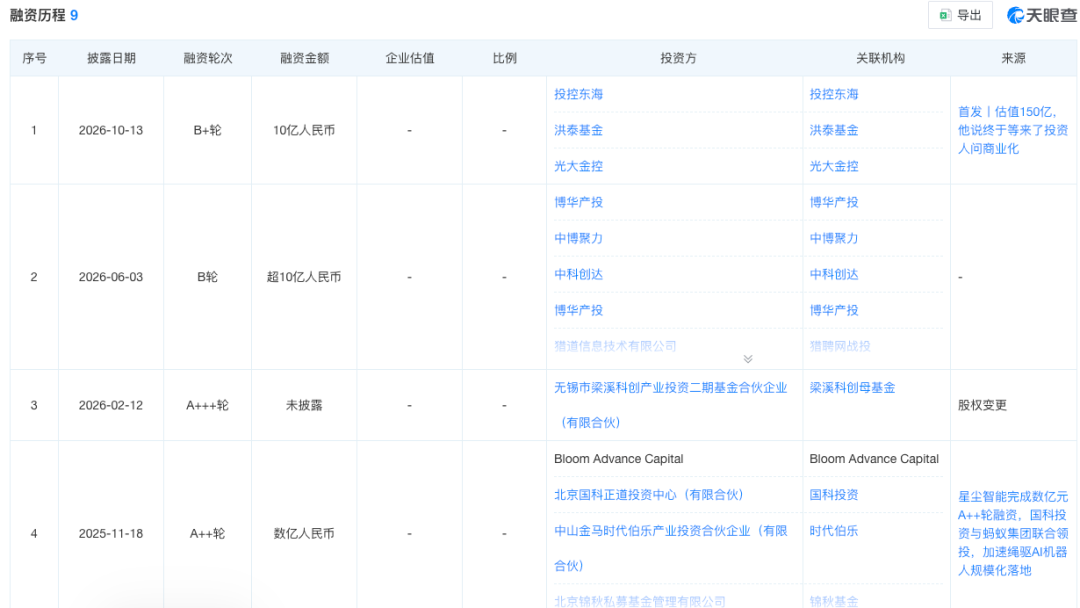
Embodied-intelligence startup Astribot has closed a new financing round of about RMB 1 billion, lifting its post-money valuation to RMB 15 billion, the company announced on 13 October.
The round
The round was led by Shenzhen Capital’s Donghai arm, with state-backed and financial investors including Hongtai Fund, Ninghai Xingtaihe and Shanheng Capital joining, and existing shareholder Xianmu following on. It follows Astribot’s Series B close in June by only about three months. Across the past year the company has run four consecutive rounds, A-plus, A-plus-plus, B and this one, pushing its valuation from just over RMB 10 billion to RMB 15 billion.
The bet on cable drive
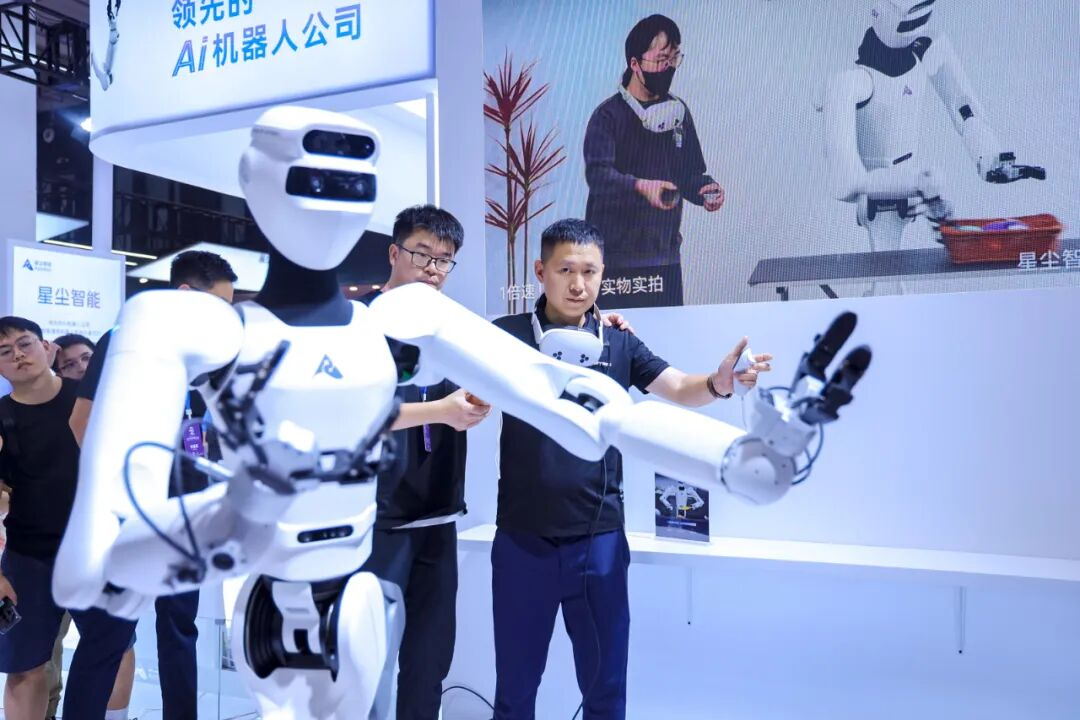
Founded in Shenzhen in December 2022, Astribot is led by CEO Lai Jie, who spent over 17 years in robotics, ran Baidu’s Xiaodu robot team and joined Tencent Robotics X as architect, where he led the wheel-leg robot Ollie. Most humanoid makers use motors with harmonic reducers. Astribot instead chose cable-driven actuation, mimicking human tendons to cut joint weight and improve compliance for tasks like grasping cups, folding laundry and close human interaction. The trade-off is real: cables wear, tension drifts and precision slips over time.
Its Lumo-2 base model, released in July, is described as the industry’s first implicit world-action model aimed at home use, ranking first across more than 22 real-robot evaluations in temporal reasoning, physical understanding and manipulation complexity. Commercial deployments span retail, tourism, industry and research, with partners including JMA, Thundersoft, Bo Deng, SEMIS, CCTV and JD.com. Its robot retail store Robot MART has been deployed across six cities since November 2025.
The wider market
IT Juzi data shows embodied financing jumped from 105 deals and RMB 9.5 billion in 2024 to 333 deals and RMB 40.6 billion in 2025, then to 322 deals and over RMB 93.4 billion in the first half of 2026, up 350 per cent year on year. As money piles in, investors are shifting from round size to a harder question: can the cable-driven route scale, and can orders turn into recurring revenue.

Editor’s note: This is an adapted translation of the original OFweek report. It has been trimmed and restructured for readability for an international business audience. The full original (in Chinese) is at https://robot.ofweek.com/2026-10/ART-8321205-12005-30707314.html.