Alibaba’s QwenWork enters the AI-office war with Qwen3.8-Max underneath

On 3 August Alibaba opened public beta for QwenWork, its enterprise agent product, folding together QoderWork, MuleRun and Wukong into one entry for local desktop control, long cloud tasks and team collaboration. It ships alongside Qwen3.8-Max, Alibaba’s new flagship: 2.4 trillion total parameters, 95 billion active per inference, a 1-million-token context and vision. In a … Read more

360 launches Nano Work, betting enterprise agents on 20 years of security

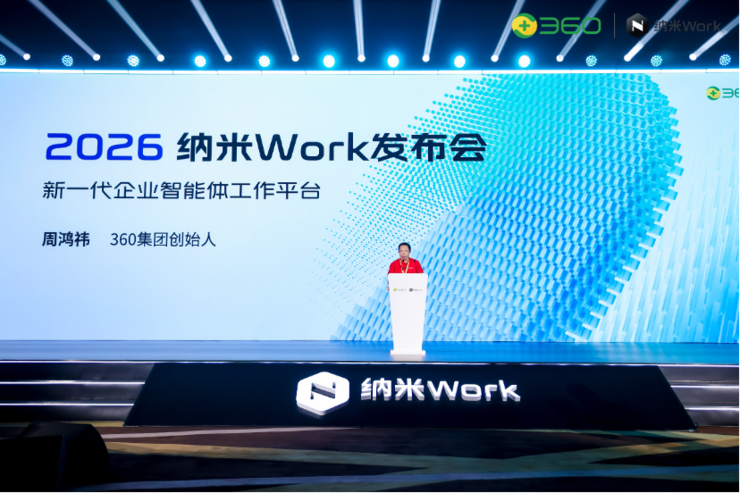
On 28 July, 360 founder Zhou Hongyi launched Nano Work, an enterprise agent platform aimed at business owners, founders, one-person companies and employees — what he calls a ‘super organisation.’ Before shipping, 360 used itself as the lab: it ran agents like OpenClaw across more than 1,000 real internal scenarios, collected over 56,000 feedback items, … Read more

Canchen Tech raises tens of millions to build AI ‘virtual organs’ for drug testing

Canchen Tech (CANCHEN TECH) has closed a seed-to-angel series of rounds worth tens of millions of yuan, with investors including Orient Securities Capital, SongHe Capital, Tsinghua-based funds and TusStar, the company told Leiphone. It is building a system-level virtual-organ simulation platform — digital twins spanning molecule, cell, tissue and organ — to replace parts of … Read more

Xiaomi’s MiMo bet: why a hardware company is still paying for a base model

Xiaomi has reorganised its AI around MiMo, its in-house base model, folding the XiaoAI assistant’s tech into three pillars: the MiMo model team led by Luo Fuli, cloud engineering under Luan Jian, and on-device OS work pushed into the phone business. The move matters because MiMo is no longer an optional model. As Xiaomi’s ‘human-car-home’ … Read more

The global AI selloff: is the bubble finally bursting?

Leverage met a crowded trade Leopold Aschenbrenner’s Situational Awareness fund, peaking near 45 billion dollars in assets and running about 4x leverage, was forced to sell roughly 16 billion dollars of public equities to Citadel on 30 July, with assets collapsing to about 10 billion in a self-reinforcing spiral that dragged down its own holdings. … Read more

The EU AI Act starts fining. China’s model makers face a new gate.

Three tiers of pain The penalty structure runs in three bands. Use of banned, unacceptable-risk AI can draw up to 35 million euros or 7 per cent of global annual turnover, whichever is higher. Most compliance and regulatory breaches, including those for general-purpose model providers under Article 101, reach 15 million euros or 3 per … Read more

From 1% to 69%: how US startups came to depend on China’s open models

From 1% to 69% Citing the ATOM report, the essay notes that Alibaba’s Qwen rose from about 1 per cent of new open-model fine-tuning and adaptation in January 2024 to 69 per cent by February 2026. The US still holds the lead in closed systems from OpenAI, Anthropic and Google, but its startup ecosystem has … Read more

The car industry’s next battleground is the humanoid robot

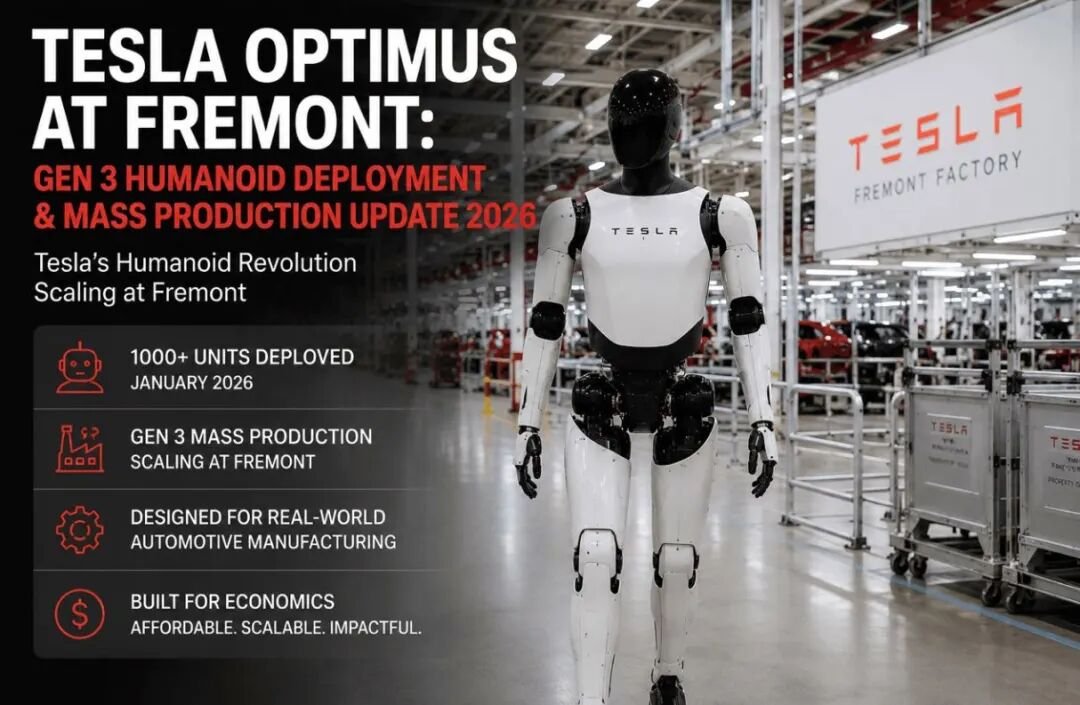
Tesla’s product play Tesla targets a 20,000 to 30,000 dollar Optimus, roughly the price of a Model Y, by reusing its motor, battery-management and sensor supply chain and driving cost down through scale. The deeper move is the data flywheel: with more than a thousand Optimus units inside its own factories by 2026, each robot … Read more

China’s open-source AI models top the global usage charts

Calls and downloads ‘Calls’ mean individuals who lack local deployment pay per token to use a model online. ‘Downloads’ are organisations, banks, governments and energy firms pulling models in to embed in their own systems, the core ‘AI plus’ indicator, and China leads there as well. Across Africa, with 1,500 to 3,000 languages, many local-language … Read more

Huawei’s chief semiconductor scientist breaks his silence and praises DeepSeek’s Liang Wenfeng

The forerunner’s bet Liao frames the past 30 years as two vertical lines, the processor line from CPU to AI and the connectivity line from telephone to mobile network, with a counter-intuitive proposition: the more successful and monopolised the application layer, the more the underlying chip withers, because a dominant customer sets direction and a … Read more