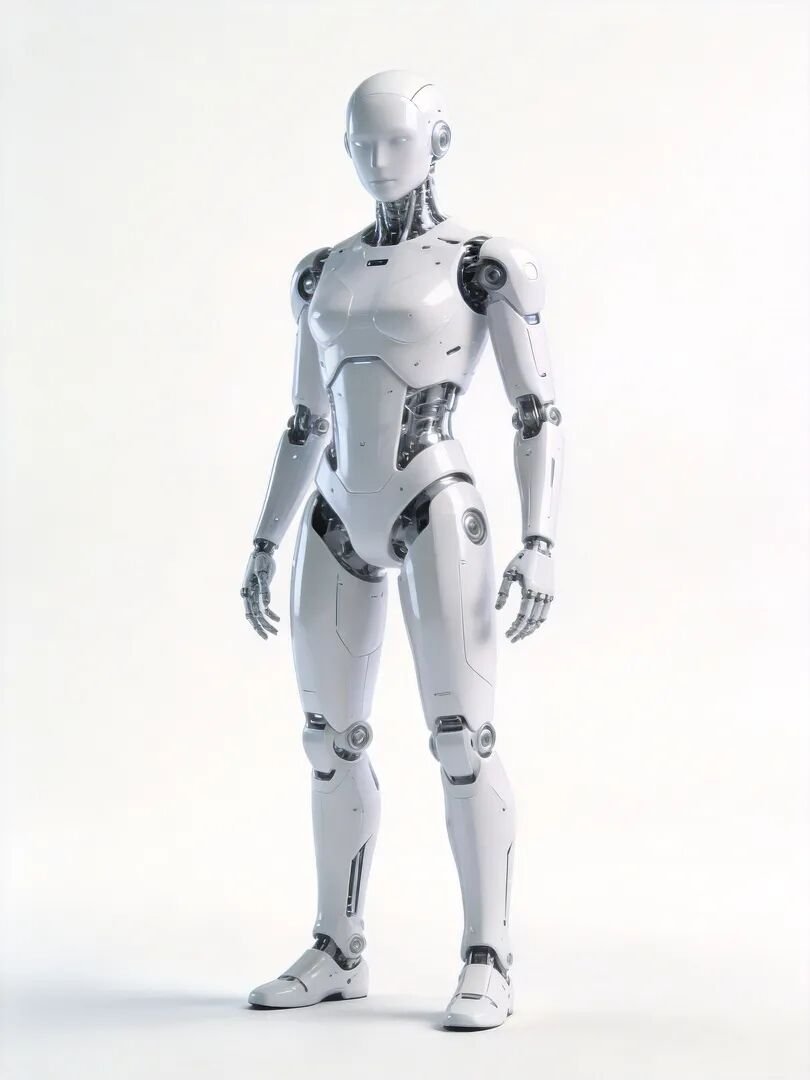
At WAIC on 17 July, Weiyi showed up with a range of industrial embodied-AI robots, and the pitch was that these machines are already in volume production, running in top-tier factories for over a year. No lab demos.
The financials make the case. Per the prospectus, revenue rose from 221 million yuan in 2022 to 600 million in 2024, 171 per cent growth in three years, and the company turned profitable in 2024 with a net profit of 15.74 million yuan.
While most robotics firms are still burning cash building deployment systems and stuck in losses, Weiyi has already found a working application, shipped product, and made money, ahead of much of the field.
The edge is a physical-AI-plus-spatial-intelligence route. Instead of the traditional programmed-puppet industrial robot, Weiyi compresses deployment cycles from months to days, fitting the flexible-production needs of 3C and semiconductor manufacturing.
At WAIC, its multi-arm inspection robot carried 0.2-micron detection accuracy and 1-metre-per-second high-speed scanning, identifying products and planning multi-arm paths without manual teaching. Its assembly robot learns by watching once, then does the task, no programming, with changeover cut from days to hours or minutes.
The old model: industrial robots are hard-coded, follow fixed paths, and stall when something upstream changes. Weiyi’s pitch is to move the machine from passive execution to active intelligence. It sees, judges, acts, and adapts, deployable the same day.
The market is large. Industrial robots are a trillion-yuan opportunity, and Weiyi is opening both next-generation applications and a high-ceiling active-intelligence category.
Funding data underlines the bet. Per IT Juzi, first-half 2026 embodied-AI financing hit 93.5 billion yuan, five times the year before, across 322 deals, up 137 per cent.
Weiyi is moving fast on the listing. After filing in Hong Kong in September 2025, it refiled in March 2026. If it lands as the first industrial embodied-AI stock, it enters a new growth phase.
The fundamentals give it a runway. It has broken the software-hardware boundary, fusing a physical-AI brain with an environment-defined body, giving machines perception, understanding, autonomous action and continuous learning.
*Translated and adapted from OFweek Robotics (https://robot.ofweek.com/2026-07/ART-8321202-12003-30696411.html).*