Xiaomi has released and open-sourced Xiaomi-Robotics-U0, which it calls the first unified generative model for embodied AI, and the bottleneck it targets is the one everyone agrees on but few have solved: robot training data. Language models drank from the internet; robots have no equivalent “physical-world internet.” Useful data, vision, action and state together, mostly comes from real machines, teleoperation or costly collection.
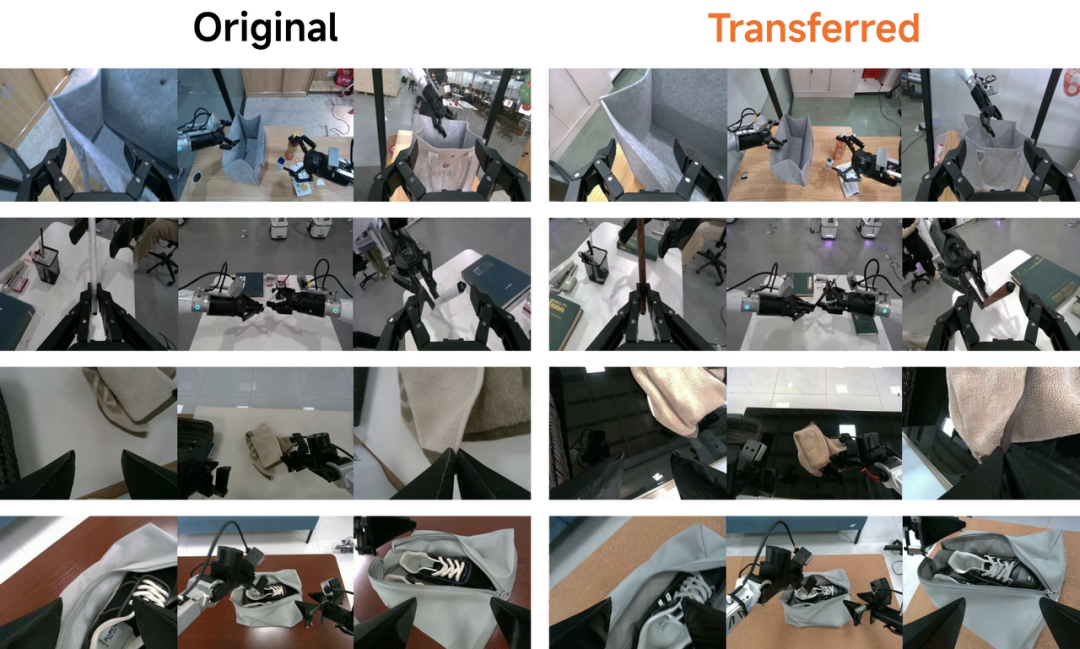
One model, four jobs
U0 collapses what were separate pipelines, scene generation, embodied transfer, robot-interaction video generation, plus general text-to-image and editing, into a single framework. Take one recorded arm motion placing earbuds in a case: U0 can swap the earbuds’ look, shift the lighting, change the desktop background or drop in a reflective distraction, all while preserving the original action labels. No second shoot required.
In the WorldArena benchmark from Tsinghua and Peking universities, submitted under the anonymous code UNIS, U0 took the global top score. On real hardware, policies trained with U0-augmented data improved task completion by an average 26.3 per cent in out-of-distribution settings, unfamiliar light, strange backgrounds, and shrugged off the stalls that hit raw teleoperation data.
Controllable and cheap
The trick to usable synthetic data is control. U0 disentangles generation into five dimensions, workbench layout, foreground object, background clutter, lighting and backdrop, each adjustable by language without disturbing the action trajectory. Change only the light, keep the arm and object fixed. That is what makes the output still match the original motion labels and remain trainable.
Speed is the other half. With a FlashAR+ accelerator, single-sample generation at 1024×1024 dropped from 450.77 seconds to 5.44 seconds, an 82.9x gain. Against GPT-Image-2.0, U0 held multi-view geometry and arm pose, the exact properties that break when a general image model “helpfully” shifts an object between camera angles and ruins the data.
The strategic read: Xiaomi is treating robot-data production as infrastructure, the same way it treats phones and cars, and giving it away. Expect a wave of Chinese labs fine-tuning on U0-augmented datasets rather than collecting from scratch.
Read the original report (LeiPhone)
Translated and adapted from LeiPhone (leiphone.com).