On 22 August, inside Beijing’s National Speed Skating Hall, the Ice Ribbon, the opening of the second World Humanoid Robot Games cut to a real tennis court. A humanoid stood at the baseline, and against serves topping 50 km/h it judged the landing, moved, turned and swung, the ball clipping the net tape and dropping in.
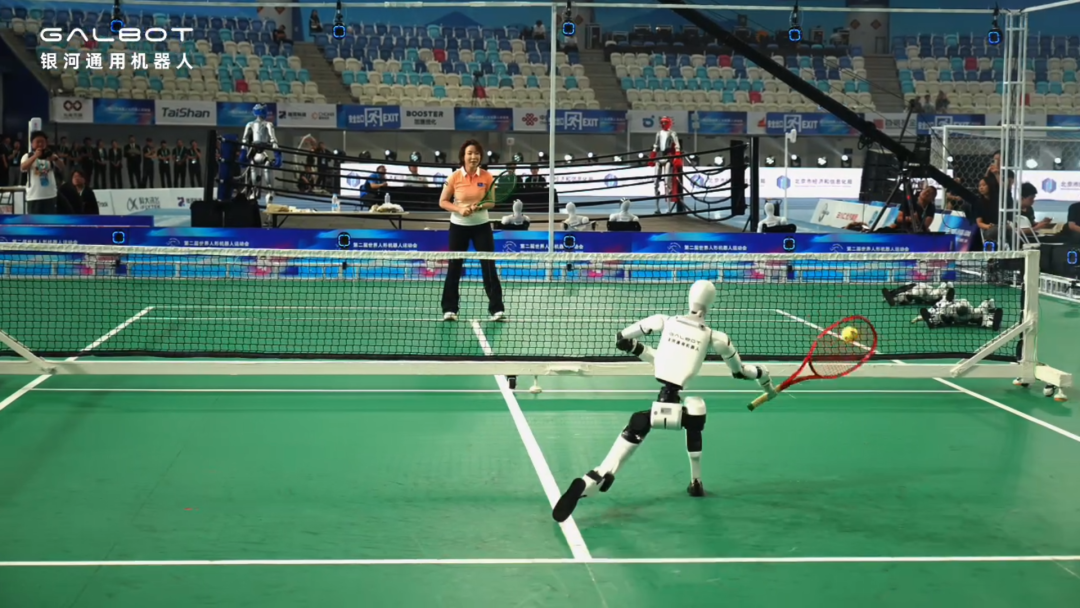
Serve, forehand, backhand, baseline rally, net volley, it held up. In a warm-up doubles, it covered for a human partner and switched tactics, and in one high-speed exchange it made an extreme save, fell hard, then pushed off the floor and kept playing. Galbot says this is the world’s first fully autonomous tennis rally by a humanoid, and it has named the moment AstraTennis.
The point of the demo is architectural. Galbot’s embodied large model, AstraBrain, fuses three jobs in one system. The brain understands and decides, judging where the ball lands and how to play. The cerebellum runs motion control, balancing the body and swinging with human-like flow. The brain-stem translates decisions into cerebellar commands. The company calls it the world’s first whole-body, end-to-end large model integrating brain, cerebellum and neural control, where past approaches split the three into modules with weak links at the seams.
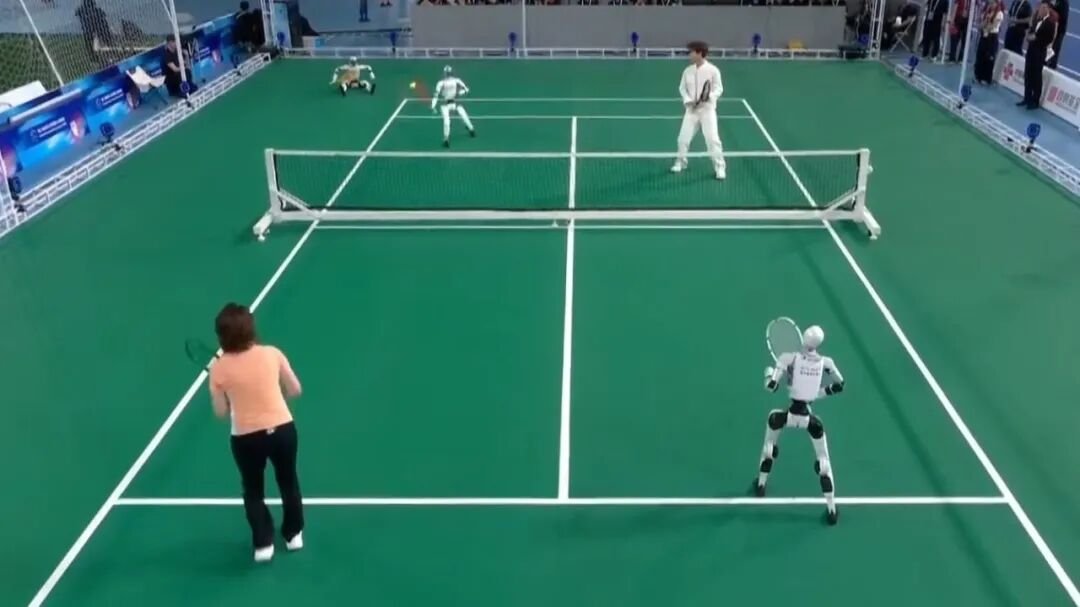
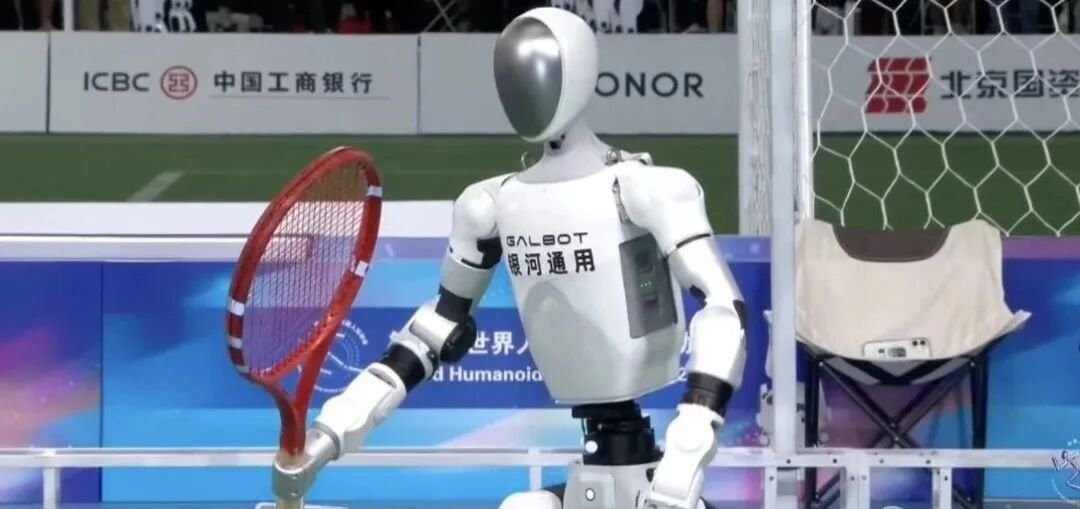

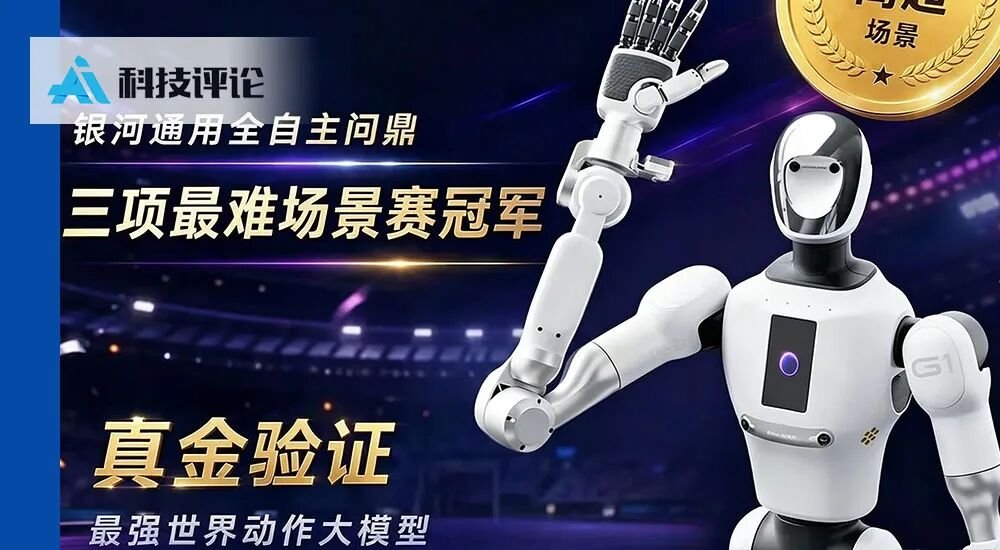

The real-time loop is the proof. As a ball arrives, the brain decides in milliseconds whether to attack or defend while the cerebellum already slides, crouches and draws the racket. At contact the brain updates, this shot was not sharp enough, next one goes for the line. A CVPR 2026 paper had already shown the cerebellum reaching 92.58 per cent zero-shot generalisation and sub-1.5 millisecond inference latency. AstraTennis is that system’s first outing under real pressure.
Founder and CTO Wang He calls tennis the humanoid’s final exam, because it forces both the cerebellum and the brain at once. The team’s AstraBrain Latent mines the latent patterns of how to play from imperfect, incomplete human motion data, ordinary forehands and sidesteps, rather than waiting for perfect teleoperation. A decade after AlphaGo proved machines can think, Galbot wants to prove they can act.
Editor’s note: This is an adapted translation of the original Leiphone report. It has been trimmed and restructured for readability for an international business audience. The full original (in Chinese) is at https://www.leiphone.com/category/ai/DtuJryomWlykalLZ.html.