As multimodal and VLA models mature, embodied intelligence is racing toward industry. Robots reason better, but in real homes, factories and shops, what decides capability is not only how smart the brain is, but how accurately they perceive the physical world. Navigation, fine grasping and human interaction all rest on reliable three-dimensional vision.
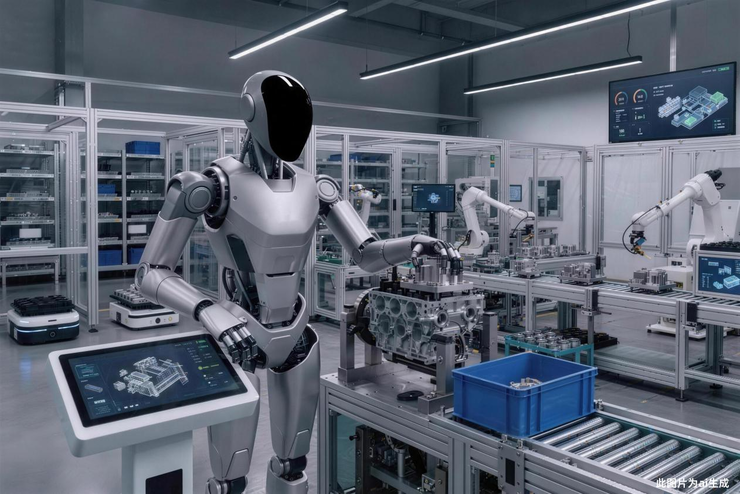
Guangxin Technology has launched an embodied-intelligence vision suite built on AI stereo vision, fusing perception algorithms with an efficient compute architecture to cover environment sensing, spatial understanding, navigation and fine manipulation. The case for it is threefold: real environments are messy, transparent glass, reflective metal, weak-texture walls and black objects break traditional stereo matching. Tasks are more varied, so one vision system must serve SLAM, detection and VLA at once. And edge compute is precious once large models land on the robot.
AI stereo that sees through hard surfaces
Guangxin brings AI into stereo vision with a self-developed stereo-matching algorithm. Where traditional methods lean on local texture, the AI model reads scene structure and object relations, holding stable depth on transparent, reflective and black materials, and reconstructing millimetre-level detail. For tiny nearby objects it adds richer constraints for sharper edges and smoother surfaces.
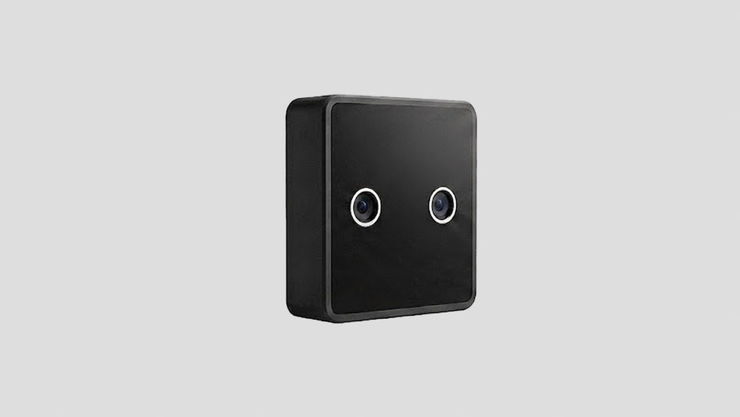
The suite uses global generalisation perception, one hardware platform for depth, SLAM and detection with over-the-air upgrades, instead of separate sensors per function. An optimised compute architecture cuts resource use so more compute serves VLA inference and SLAM.
Libra: one family, two jobs
The Libra 1000 targets close fine manipulation, a 2cm baseline for wrist mounting, with a fisheye option beyond 180 degrees horizontal field of view. The Libra 3000 targets mid- to long-range spatial sensing, a 7cm baseline for head mounting, for obstacle avoidance, SLAM and mapping, and can integrate spatial-perception algorithms on board. Both support high-speed GMSL output and fit mainstream robot platforms.
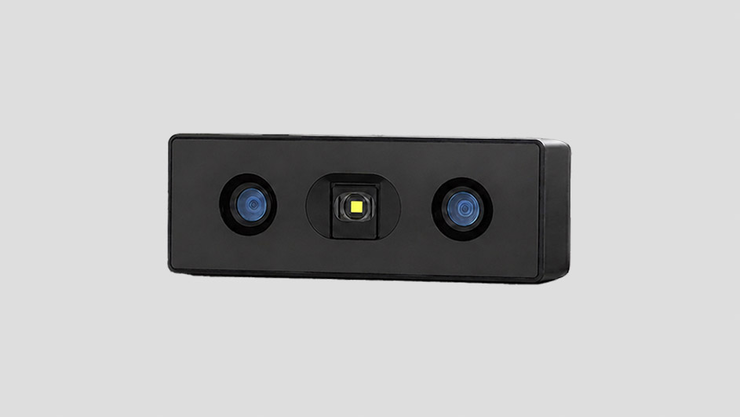
This launch is Guangxin’s play for the physical-AI era: vision perception evolving from a single hardware feature into the base layer for autonomous sensing, decision and execution. As embodied intelligence reaches real scenes, the company argues robots need not more vision hardware but a more efficient, reliable and unified visual capability.
Editor’s note: This is an adapted translation of the original LeiPhone report. It has been trimmed and restructured for readability for an international business audience.