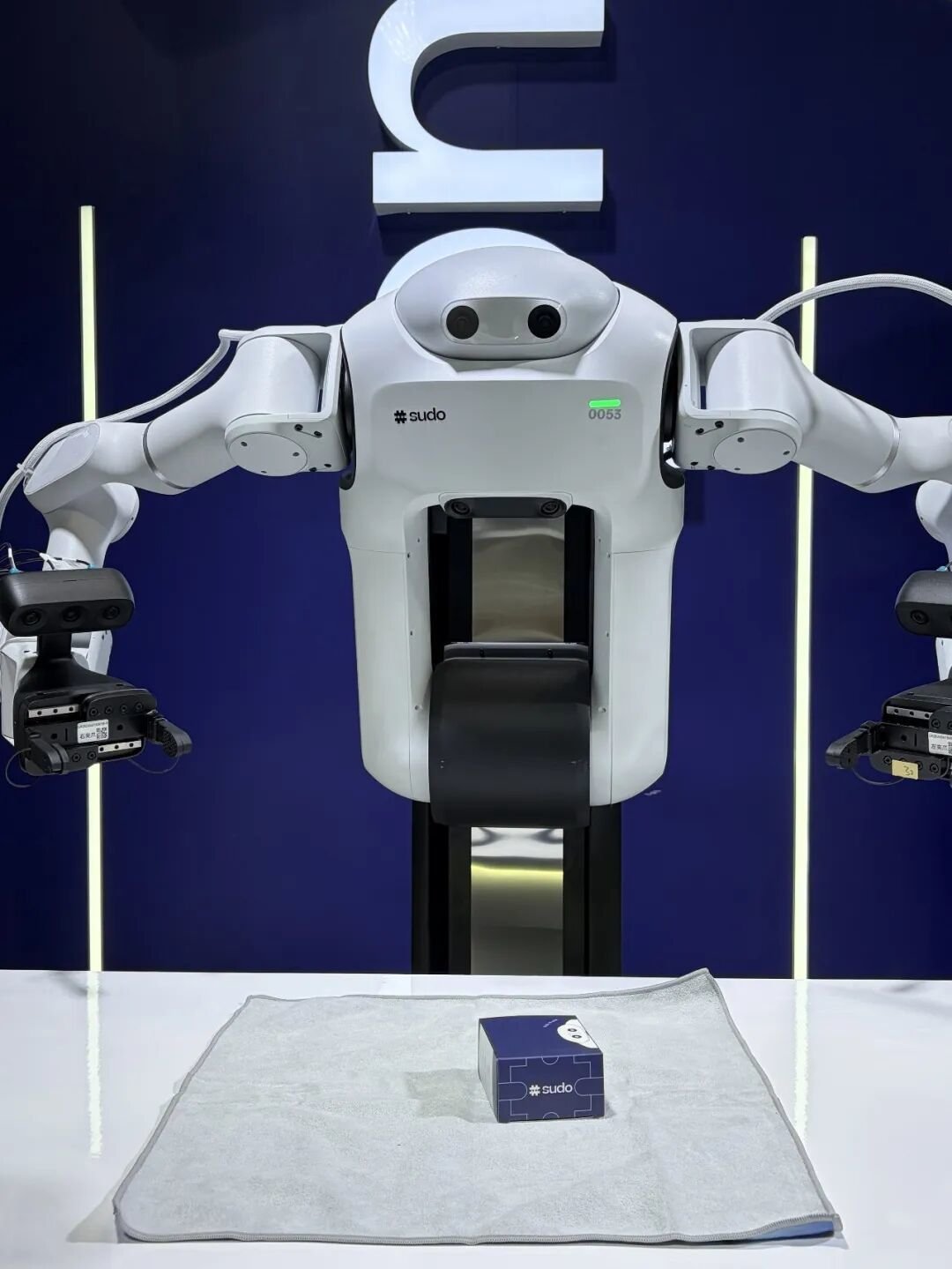
At WAIC 2026 the embodied-intelligence zone was again the busiest. Sudu’s booth drew a different crowd: robots stood quietly at a workbench doing plain things, grabbing items, wrapping an object with a cloth using both arms, inserting a part into its hole. No showmanship, but the stability, success rate and generalisation stood out.
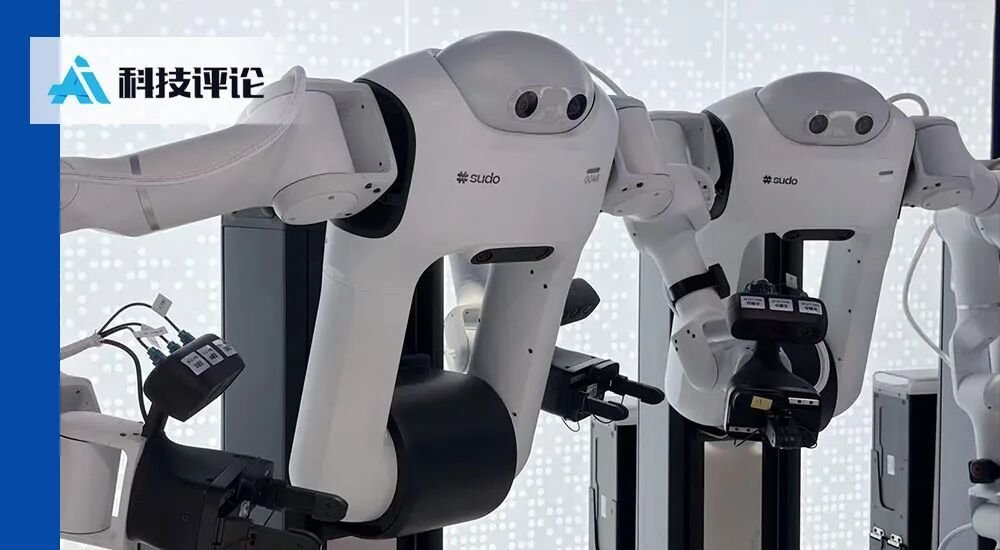
This is not Sudu’s first splash. In April it revealed the full-stack #sudo R1 platform. In a 60-minute video the robot grabbed more than 100 objects it had never seen, glass, reflective metal, soft cloth, irregular toys, at near-100 per cent success. In June, at ICRA and CVPR, it demonstrated the system live to random audience items. Founded only a year ago, Sudu already carries a 20-billion-yuan valuation.
From one skill to ten-plus in three months
Sudu defines the robot’s basic physical unit as an atomic capability. The idea is that future ability should not come from engineers retraining per task, but from accumulating basic capabilities like a human does, then combining them. Founder Su Hao, a Fudan professor who created ShapeNet and PointNet and led SAPIEN and ManiSkill, said at the WAIC keynote on 17 July that physical intelligence lacks not more isolated demos but the aggregation of scattered knowledge into a systematic understanding of the physical world.
Experience accumulated in simulation
The hard gap is data. Sudu chose an unusual route, letting robots accumulate experience in simulation first. Its team, behind ShapeNet, PointNet, SAPIEN and ManiSkill, knows how to make digital environments mirror real physics. ManiSkill supports GPU-parallel data generation, and Sudu built its own robot-learning data pipeline that now produces million-scale data every day. It pairs large-scale simulation with fine real-robot data, a virtual-real blend that gives the robot both the breadth of simulation and the feel of real hardware.
Hardware as an extension of the algorithm
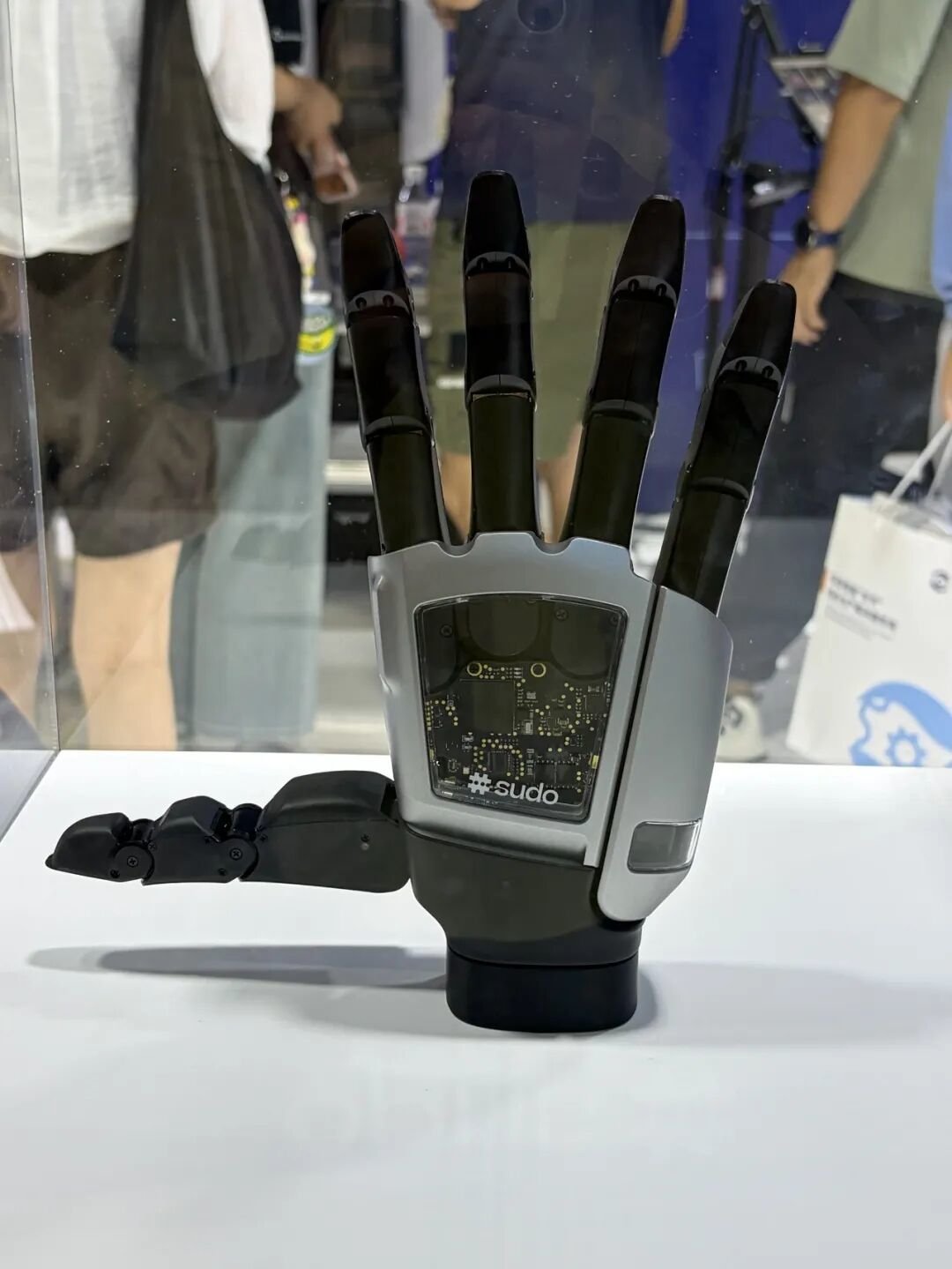
In a corner of the booth sat a self-developed 22-DOF direct-drive dexterous hand, thumb and little finger with five DOF each, the other three fingers four. Sudu added a self-spin DOF to the thumb and strengthened the little finger’s adduction, plus nail-like tips for precise point contact. Direct drive puts the actuator straight on the joint for cleaner force control and easier algorithms. Sudu insists on white-box design so every link, mechanical, sensor, algorithm, stays understandable and tunable.
Industrial landing at 99.5 per cent plus
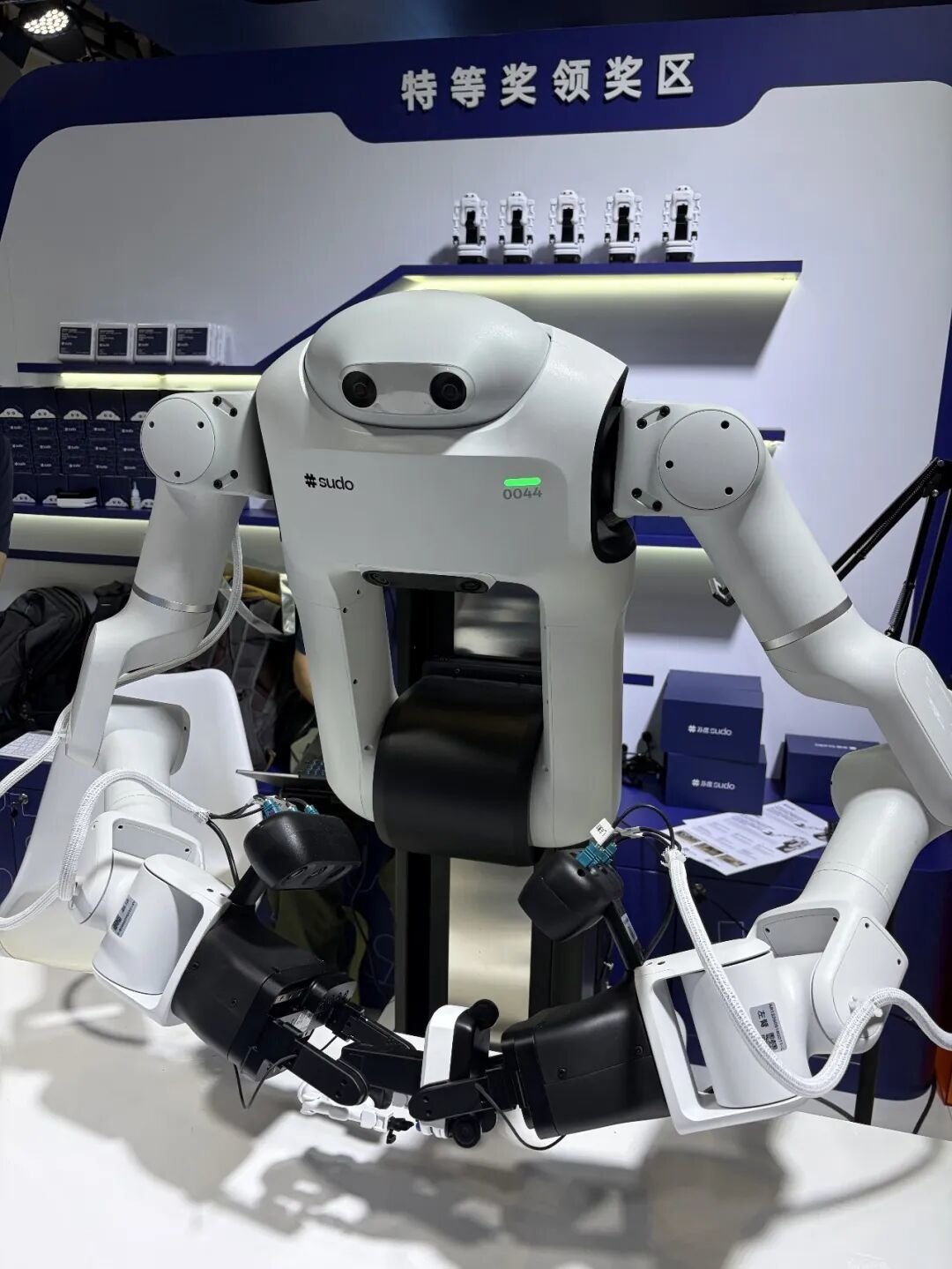
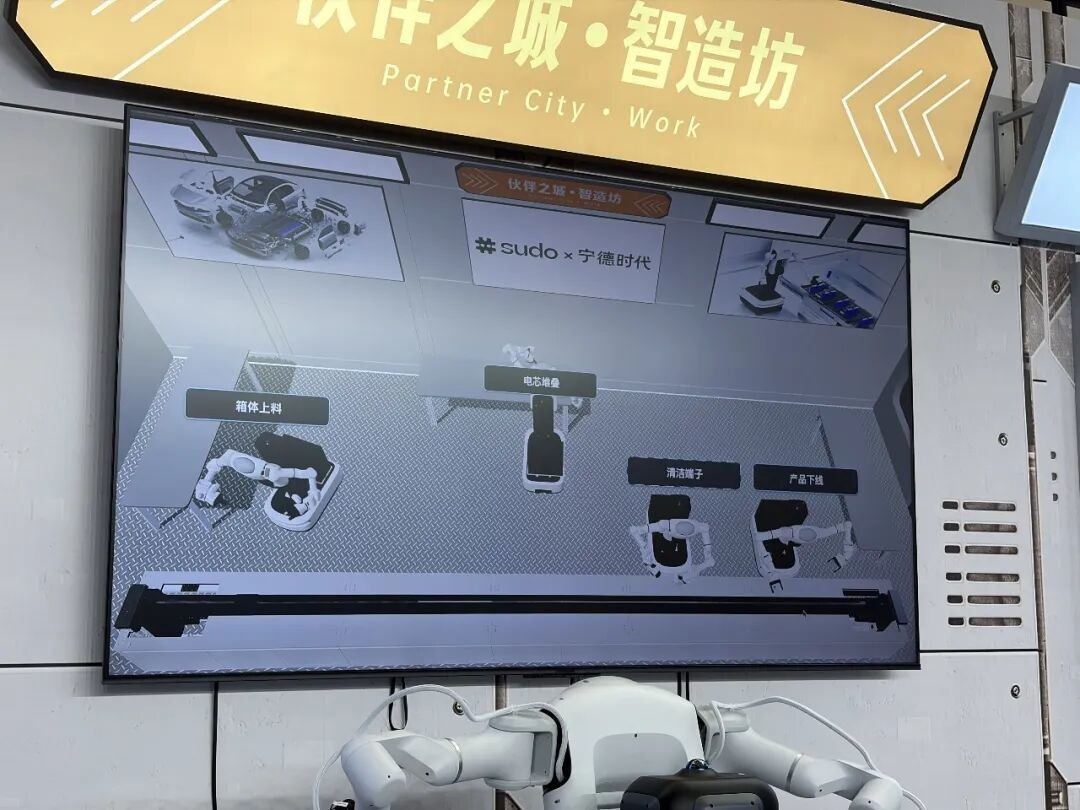
In the industrial zone, Sudu’s battery-assembly robots for CATL ran across four stations, a validated line solution with grasp success above 99.5 per cent. It is also planning with a global leading retailer for inventory, replenishment and shelf inspection, and with a top foodservice chain for service robots. Sudu targets hundred-unit delivery in 2027 and thousand-unit scale in 2028, but cares more that capability replicates with each deployment than about the raw count.
Editor’s note: This is an adapted translation of the original LeiPhone report. It has been trimmed and restructured for readability for an international business audience.