Beijing’s securities regulator accepted an IPO coaching filing from Huixi Technology on 28 October, putting a four-and-a-half-year-old chip designer on the path to an A-share listing with CITIC Securities as sponsor. The company was founded in April 2022.
The filing documents a rare thing in Chinese semiconductors: a strategic pivot that appears to have worked, executed inside a single product generation.
From assisted driving to embodied intelligence
Huixi started as a supplier of automotive intelligent computing platforms and assisted-driving chips. In October 2024 it launched the Guangzhi R1, a 7nm automotive-grade part rated at 500 TOPS and marketed at twice the performance of Nvidia’s Orin-X, with the further claim of being the first domestic high-compute assisted-driving chip natively suited to Transformer models.
The ambition was to be the fastest high-compute driving chip into Chinese production cars. That did not happen. Huixi did not secure the passenger-car programmes it had planned for 2025, and the window closed. Horizon Robotics and Nvidia together hold about 60 per cent of the high-end assisted-driving market among Chinese brands. Two early investors took their volume elsewhere: Xiaomi designed its own silicon and Nio bought from Nvidia.
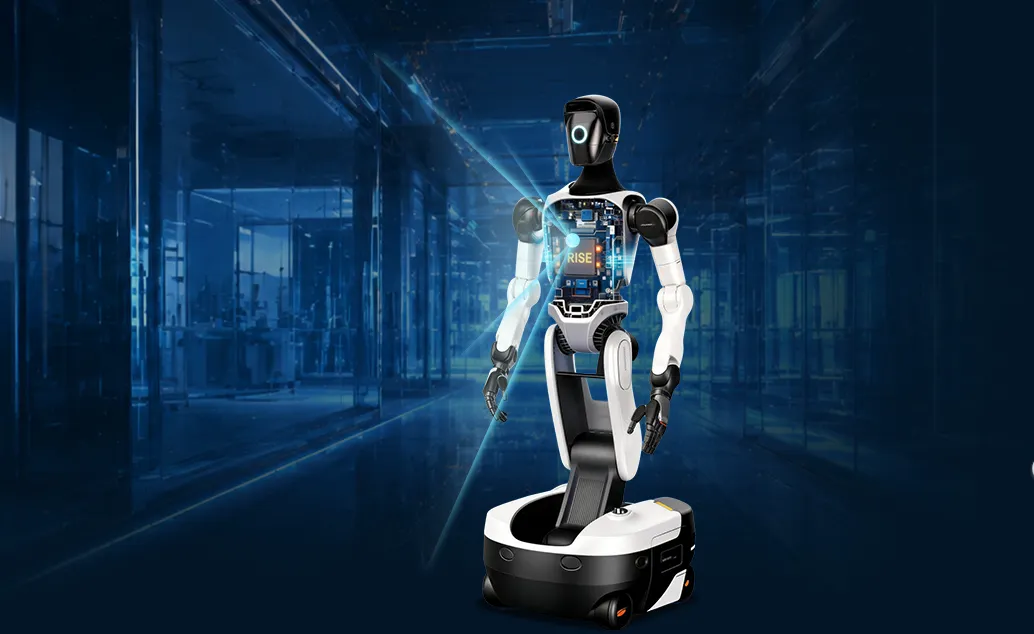
The R1 had been designed to run large models at the edge, which turned out to be exactly what a humanoid robot needs. From 2025 the RISE computing platform built on that part began shipping, first inside AgiBot’s Spirit G2 humanoid, then integrated and validated on an L4 unmanned logistics vehicle from Neolix.
At the World Robot Conference in August the company showed the Huixi Embodied series, with the R1 PRO for robots using a split architecture for high-level reasoning and low-level control at 375 TOPS, alongside the RCM400 and RCM500 modules.
The evidence that mattered
Between 23 and 28 June, eight Spirit G2 humanoids ran the tablet quality-inspection station at a Longqi Technology plant in Nanchang for six consecutive days. They completed 17,625 tasks with a 99.99 per cent success rate. That result did more for the sales case than any TOPS figure.
The team carries weight. Founder Xu Ningyi took his bachelor’s, master’s and doctoral degrees in electronic engineering at Tsinghua and led architecture work on Baidu’s Kunlun cloud AI chip. Co-founder Zhang Jianyong also came out of Tsinghua and ran autonomous driving at Nio, leading the EyeQ4 and Orin platforms from sample to volume launch. He Guanghui is a Tsinghua PhD and Shanghai Jiao Tong professor working on AI chip architecture. The company now employs more than 200 people.
Capital followed the pivot. A Pre-B round above RMB 800 million closed in February with AgiBot taking a strategic stake. In October came Pre-B+ and B rounds totalling roughly RMB 1.7 billion, led not by Shunwei or Xiaomi but by the Beijing Municipal AI Industry Investment Fund, with the national AI industry fund and the Beijing Robot Industry Fund participating. Equity raised in 2026 exceeds RMB 2.5 billion.
Ownership is deliberately concentrated. The controlling shareholder, a Hefei partnership, holds 18.4280 per cent of the equity but 68.7694 per cent of the votes through weighted voting rights, so the founding team keeps control through successive rounds. The registry still shows 23.8255 per cent because the B round and the coaching agreement both closed on 22 October and the change has not cleared the commercial register.
Profitability is absent and the filing does not disclose revenue. The comparison set is unflattering: Black Sesame Technologies booked RMB 822 million of revenue in 2025 against RMB 1.417 billion of research spending and a RMB 1.425 billion annual loss, while Horizon reported RMB 3.758 billion of revenue against RMB 5.154 billion of research spending.
Customer concentration is the other exposure. AgiBot is both shareholder and first volume customer. Leju and Neolix have completed validation, but whether orders spread beyond one account decides whether Huixi moves from a working production line to a working profit line. Industry research cited in the report puts Huixi at roughly one fifth of global high-compute robot chip shipments in the first half, second overall and first among domestic suppliers.
Editor’s note: This is an adapted translation of the original OFweek report. It has been trimmed and restructured for readability for an international business audience. The full original (in Chinese) is at https://www.ofweek.com/ai/2026-11/ART-201714-8120-30710069.html.