A market that doubled in half a year
Frost & Sullivan has published its 2026 global humanoid robot market study, and the headline numbers are striking. In 2025 the world sold 35,000 units for US$500 million of revenue. In the first half of 2026 alone it sold 36,000 units for US$540 million, passing the whole of last year on both measures in six months.
More interesting than the boom are the gaps underneath it.
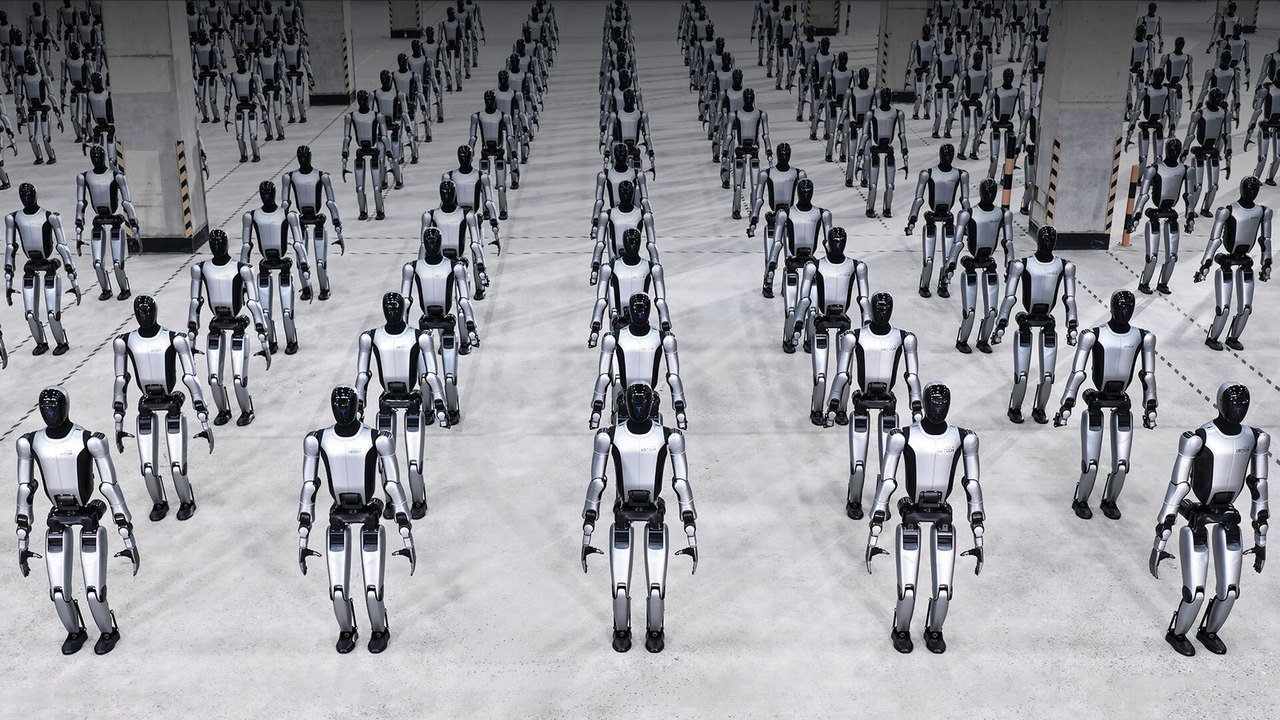
Gap one: the biggest sellers are not the ones making money
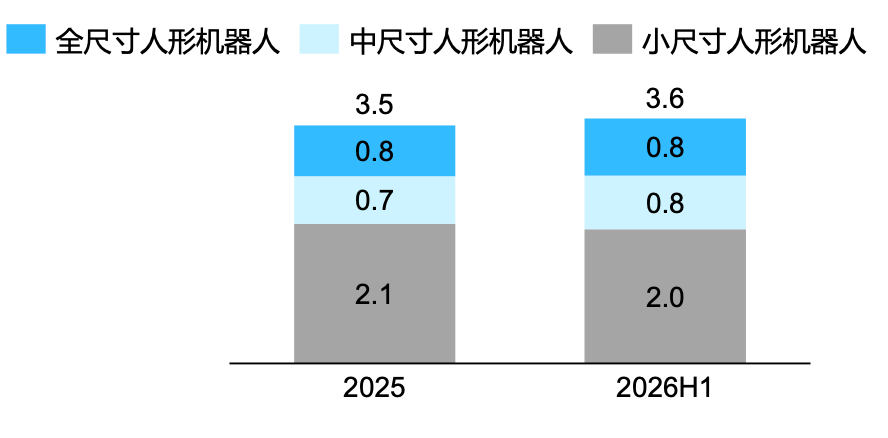
Break the 36,000 units apart. Small robots under one metre tall sold nearly 20,000 units in the half, more than half of global volume. They generated only US$19 million of revenue, under 4 per cent of the total.
Full-size embodied-intelligence robots, at least 1.6 metres tall with more than 200 TOPS of onboard compute and the ability to work autonomously, sold only 5,800 units, about 16 per cent of volume. Those 5,800 units took in more than US$320 million, more than 60 per cent of the revenue of the market.
The humanoid industry has separated volume from value. The small robots that carry volume are essentially large toys and teaching aids. What is expensive are the machines built to adult height and strength that can walk into a factory and work. High unit sales do not mean high value.
Gap two: the top five are all Chinese, and the Western names are absent
On the ranking, the top five by humanoid robot revenue from 2025 to the first half of 2026 are all Chinese companies: UBTech, Agibot, Unitree, Galbot and Leju. Together they hold more than half of the global market.
UBTech ranks first. In 2025 it booked RMB 870 million of humanoid robot revenue and shipped more than 13,800 units, taking about 25 per cent of the global market. In the first half of 2026 it recorded RMB 620 million of revenue and more than 16,000 units, holding first place. In the most valuable segment, full-size embodied intelligence, its lead is wider, at about 45 per cent in 2025 and about 26 per cent in the first half of 2026, first in the world both times.
Tesla and Figure, the overseas names that dominate headlines, do not appear in the ranking at all. The report is direct about why. Most of them are still iterating on prototypes or using robots internally, and have not formed market-facing sales.
One detail is worth noting. When the ranking counted revenue it deliberately excluded intra-company and related-party transactions, counting only orders backed by real money from independent third parties. Selling to yourself does not count. On that basis it is much clearer who is swimming without a costume.
Another point that is easy to miss. The five Chinese companies are not crowding onto one path. UBTech is focused on full-size bipeds aimed at automotive and electronics production lines. Unitree is strong on motion control, with its advantage more in research and performance. Agibot and Galbot favour wheeled full-size platforms, concentrating on factory pilots and data collection. Leju works mostly at small and medium sizes in research and education. One group is competing to get on the job, the other is competing for developers.
The real test is in the factory, not on stage
Revenue still has to come from somewhere. The report splits use into four categories: entertainment and performance, research and education, data collection, and production work. The first three are largely about cultivating the market and training models. Production work is the one where robots actually go into factories and replace people.
That line is growing fastest. Revenue was US$47 million for the whole of 2025, and reached US$78 million in the first half of 2026, about 60 per cent more than the whole of last year, with unit sales rising from 700 to 1,200.
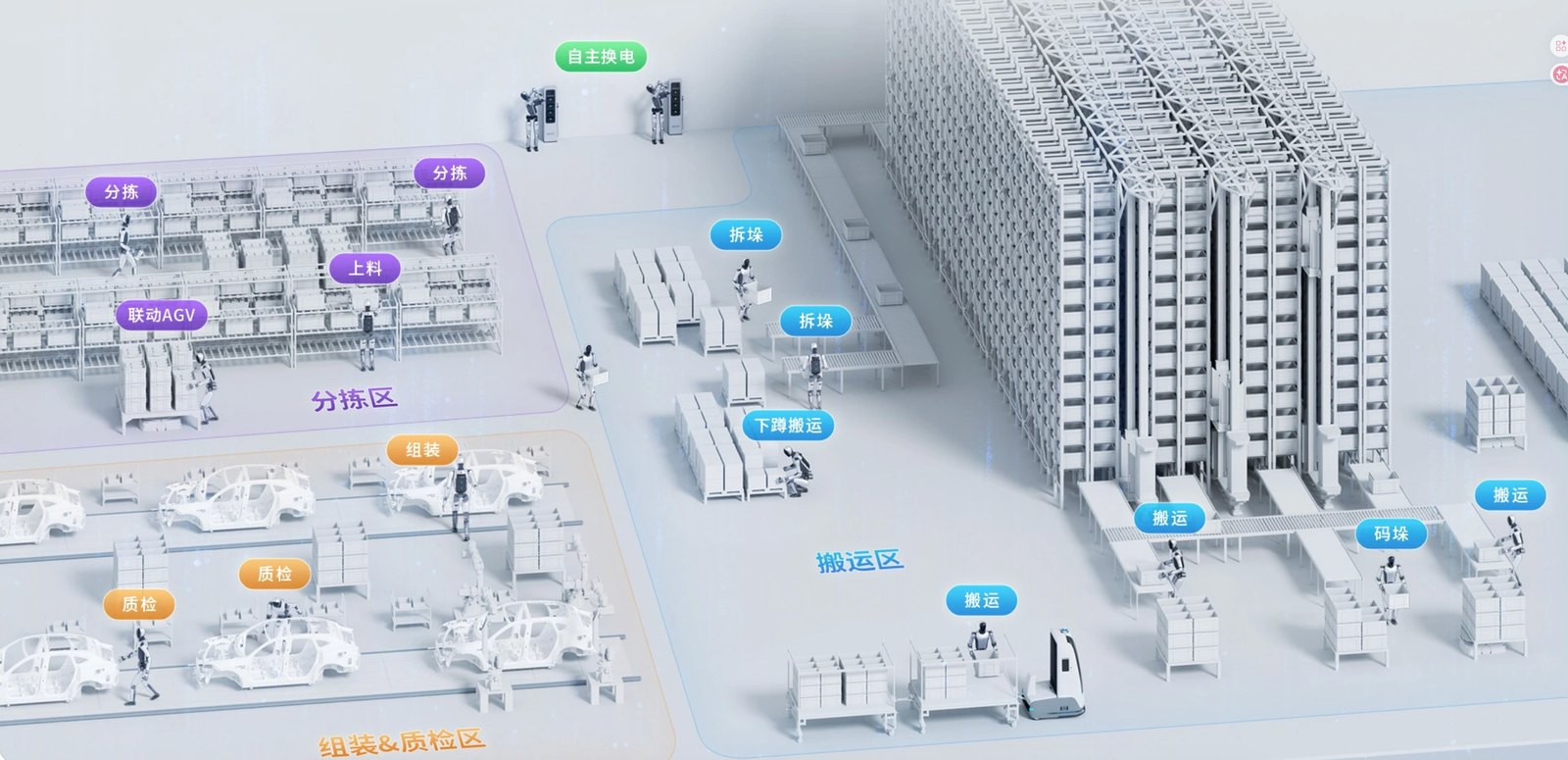
The absolute figure is still small. Seventy-eight million dollars is just over a tenth of a US$540 million market. Robots entering factories have only just begun. Audiences applaud when a robot somersaults on stage, but a factory wants continuous stability, few breakdowns and the ability to adapt to a new workstation. That is what customers pay for.
UBTech put its industrial humanoid super factory into production in September this year, with planned annual capacity above 10,000 units. Its Walker series has entered production lines at several automakers and electronics plants for real-world validation.
The signal in this ranking is not that China won again. It is that the standard of judgement in the industry has changed, from who performs best and publishes the prettier specifications to who can get into a factory and collect money from third parties. The 36,000 units are the face of the market. The 5,800 full-size robots that can work are the substance. Over the next few years, whoever can turn stage tricks into production shifts is the one that deserves to stay at the table. This ranking is only the opening.

Editor’s note: This is an adapted translation of the original OFweek Robotics report. It has been trimmed and restructured for readability for an international business audience.