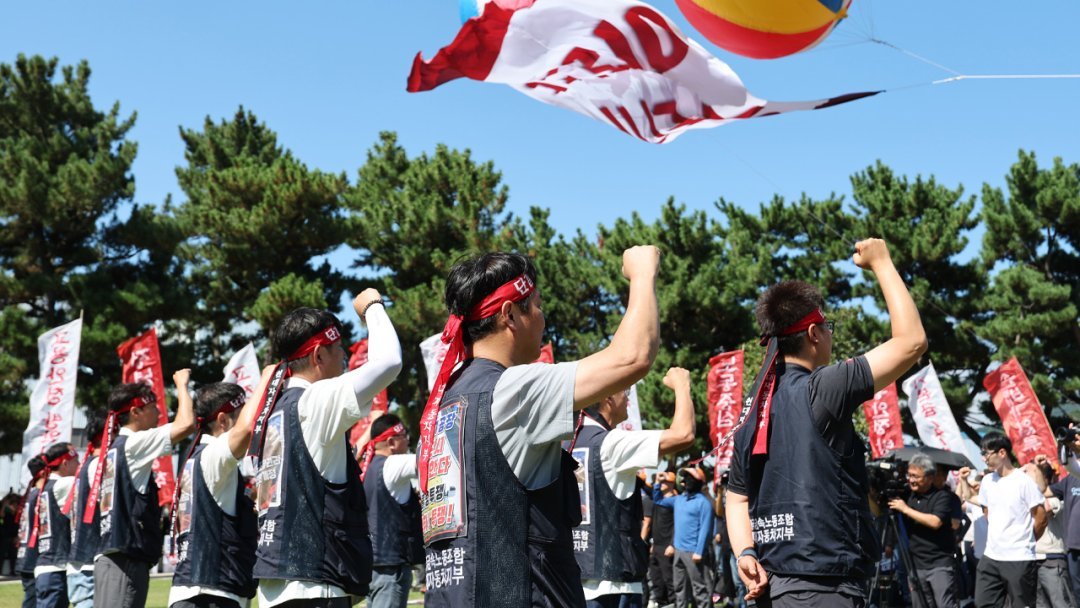
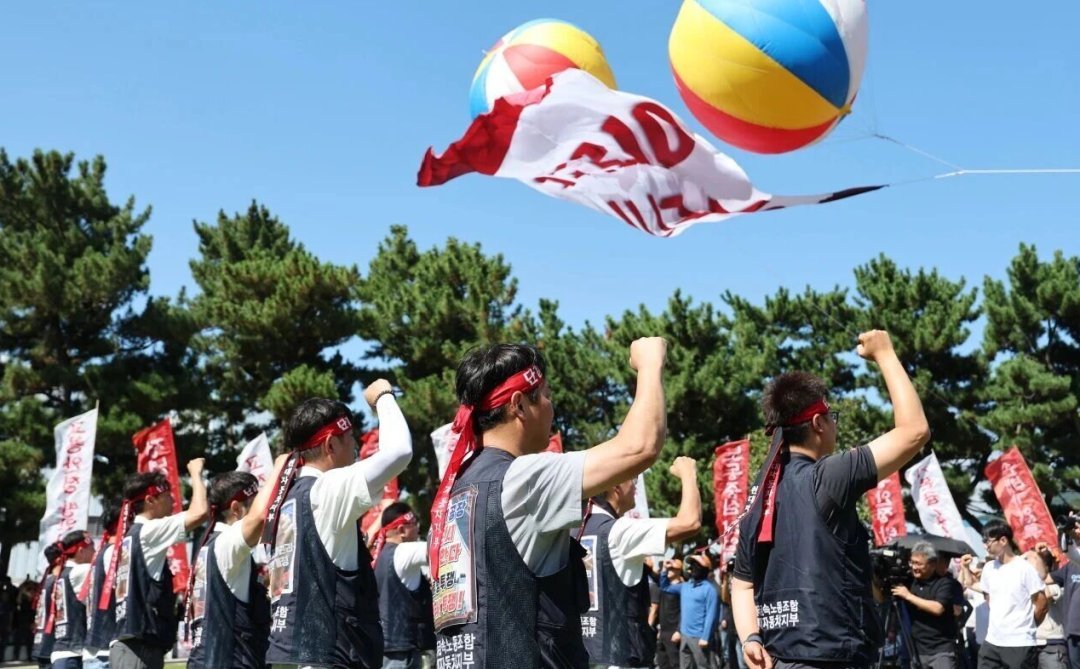
A world first. After 16 rounds of talks between the union and management stalled, the long-brewing strike at South Korea’s Hyundai Motor finally erupted in full. Unlike earlier small gestures of leaving two hours early, this was real: an eight-hour full strike, Hyundai’s first since 2016 a decade ago, involving more than 39,000 union members.
Beyond wages and bonuses, the usual labour topics, this time humanoid robots and the employment and income changes automation may bring were put on the negotiating table. The robot paradox began before any robot showed up.
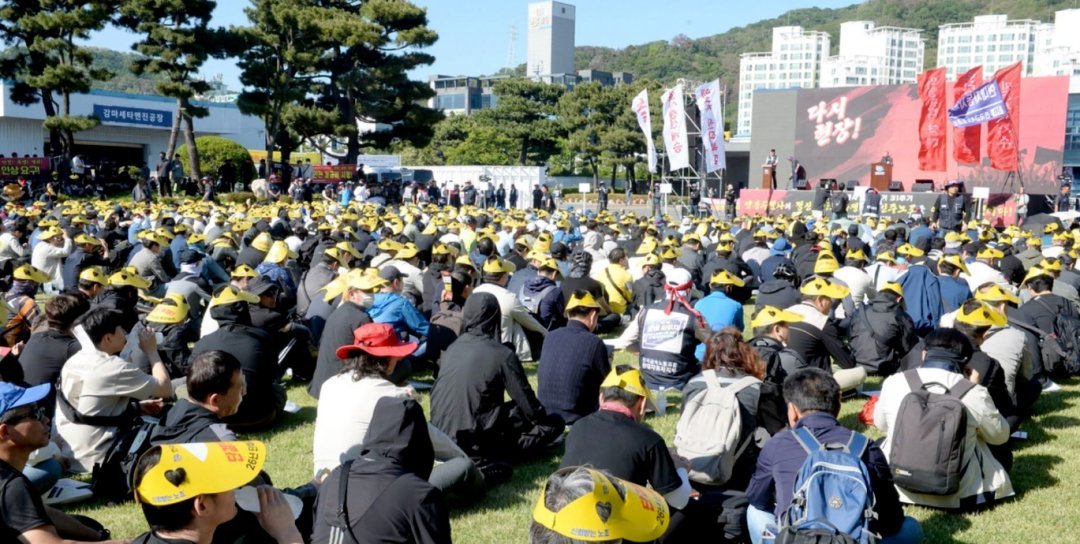
By Hyundai’s union directive, all early-shift production staff due at 6:45am on 21 August stayed away, and late-shift staff due at 3:30pm did not report. Including non-production staff, about 39,000 union members joined, holding a protest at the Seoul headquarters. The Ulsan, Jeonju and Asan plants all stopped, and with both shifts out for eight hours each, the line was effectively down 16 hours, near paralysis. Ulsan is Hyundai’s manufacturing heart and one of the world’s largest single-site car factories.
Per Yonhap, at about 460 vehicles per hour, cumulative lost output is estimated at 55,200 vehicles, and at selling prices the lost sales exceed 2.3 trillion won, about RMB 11.17 billion. The union also warned of further four-hour daily strikes on 24 and 25 August, widening the loss. Hyundai and its union have clashed for decades, but this decade-later full strike is different: robots. It may be the first full auto strike in history triggered by humanoid-robot deployment.
The spark traces to Atlas, the robot Boston Dynamics showed at CES early this year. Boston Dynamics is now a wholly owned Hyundai subsidiary. A month ago Hyundai said it would buy SoftBank’s remaining near-10 per cent stake in Boston Dynamics for about US$325 million, some 500 billion won, on top of the roughly 1 trillion won consortium led by Hyundai that took about 80 per cent in 2021. Five years on, Hyundai completed full control. With clear industrial scenarios at hand, the robots “going to work” became natural.
Hyundai has a clear Atlas timeline: from 2028, phased deployment at Hyundai Motor Group Metaplant America (HMGMA) and Kia’s Georgia plant, starting with materials logistics, unloading, sorting and sequencing parts. More than 25,000 Atlas units are planned. From 2030, work will extend to assembly, if technology, safety and economics meet mass-production standards.
But the robots have not entered the plant and workers are already anxious. Although Hyundai says Korean plants have no deployment timeline yet, the union fears that once Atlas proves itself in the US, Korea is next. The union’s stance is clear: until a labour agreement is reached, no humanoid robot using new technology may enter the production floor. Union secretary-general Byun Joon-hwan said the company must first build safeguards protecting employees before robots arrive.
The standoff shows a new fault line in manufacturing: the same automation that lifts productivity now sits inside the wage bargain. For robotics vendors, the Hyundai case is a reminder that factory adoption is as much a social licence as an engineering one.
Editor’s note: This is an adapted translation of the original OFweek Robotics report. It has been trimmed and restructured for readability for an international business audience.