On 8 November Jensen Huang published a letter to Nvidia’s staff admitting he had been unfaithful to his wife. The same day the board opened an independent investigation, run by a committee of independent directors with outside counsel. On 18 November the Republican chairs of three House committees want him in Washington for a closed-door briefing.
That sequence is why this is not a corporate-lifestyle story. A personal admission became a governance question, and a governance question is becoming an export-control question. The company’s own statement says the board has no reason to believe national security or its trade secrets have been harmed. Congress has not accepted that framing yet.
The company at the centre of it
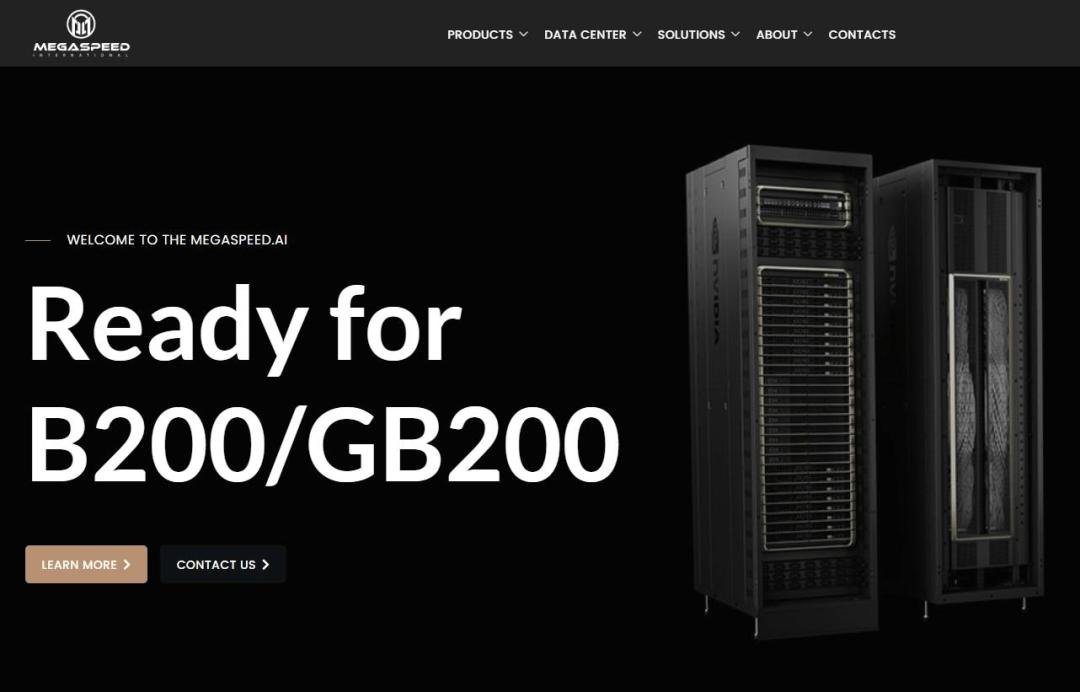
The name that turned a tabloid story into a policy file is Megaspeed, a cloud computing firm registered in Singapore. Its corporate ancestor is 7Road International, set up in September 2015 as the offshore business vehicle of 7Road, the Chinese games company behind browser titles such as Tan Tan Tang and Shen Qu.
The lineage matters because of what came later. 7Road began investing in GPU rental in 2021, for cloud gaming and animation rendering. Cloud and related revenue reached about RMB 106 million in 2022. In March 2023, 7Road International was renamed Megaspeed. In the same month Huang Le, who publishes as Alice Huang, became managing director, and the registered shareholder changed to an entity called Huang Le Limited.
Eight months later the shareholding changed again. A Singapore company called Swiftdata took over, and Tan Yong Pong replaced Huang Le as director on 10 November 2023. Four days after that transfer completed, Megaspeed obtained Nvidia cloud partner status, the credential that lets a firm resell compute built on Nvidia GPUs.
In February 2024, Tan Yong Pong appeared in Malaysia as director of Speedmatrix, a newly incorporated affiliate. Trade data cited by US media, drawn from the platform ImportGenius, puts Speedmatrix’s purchases of advanced AI equipment at no less than USD 4.8 billion between June 2024 and February 2026. That includes servers built around Nvidia accelerators.
A balance sheet that changed shape in twelve months
The scale is visible in the accounts. A short report published in May by Culper Research reproduced Megaspeed financial data showing total liabilities and equity of about USD 33 million at the end of 2023. By the end of 2024 the same total was close to USD 3 billion. Two line items account for most of the change, roughly USD 2.9 billion of refundable amounts received and a receivable from a subsidiary of a similar size.
Cross-border GPU rental is not illegal in itself. What makes it sensitive is that advanced AI chip exports carry deployment and end-use conditions, so where the hardware physically sits and who can reach it are regulated facts rather than commercial details.
Pressure had been building before the letter. In October 2025 Senator Tom Cotton wrote to the Commerce Department asking it to examine Megaspeed’s ownership, its affiliates and the destination of its advanced chips. Nvidia said it had visited Megaspeed facilities repeatedly and found no evidence of illegal transshipment. Megaspeed denies involvement in unlawful diversion. On 31 October this year Singapore’s Ministry of Home Affairs said a police investigation is ongoing and declined to comment further.

What the market did
Nvidia closed at USD 186.64 with a market value of USD 4.50 trillion. It has lost close to USD 1.37 trillion, about RMB 9.14 trillion, in a month, and the ranking of the world’s most valuable company has gone back to Apple. The stock was down almost 6 per cent in US after-hours trading after the letter.
The personal exposure is large enough to be a governance issue on its own. Nvidia’s May 2026 filing with the Securities and Exchange Commission shows Huang with a beneficial holding of about 871 million shares, or 3.58 per cent of the company. A 1995 living trust on which he and his wife are co-trustees holds roughly 529 million of those shares. Bloomberg put his personal fortune at about USD 175 billion in October.
Reaction split along predictable lines. President Trump said he had not spoken to Huang about the matter, called him a good man who had done a great deal for the country, and said he would be willing to take him on the coming Asia trip. Elon Musk reposted a defence of Huang’s contribution to the industry and said he agreed with it. A Polymarket contract asking whether Huang will leave the chief executive role before 31 December 2026 is pricing about 14 per cent on yes.
Nvidia’s board has 11 directors. Huang is the only executive director. The rest are independent, drawn from Caltech and Stanford faculties and from former senior roles at Goldman Sachs, PepsiCo and Eli Lilly.
Why a partner list is a policy instrument
The uncomfortable detail for the industry is the four-day gap between a change of ownership at a Singapore cloud company and the grant of Nvidia cloud partner status. Nothing public suggests that gap was improper. But it shows how much of the enforcement surface sits inside commercial onboarding rather than inside a customs declaration.
Export rules are written on paper about destinations and end users. The hardware travels through resellers, rental fleets and regional cloud partners. Every layer between the fab and the rack is a place where a licence condition can be satisfied on paper and fail in practice. If Congress decides that partner vetting needs to become a regulated control rather than a vendor process, the compliance cost lands on every GPU rental business in Asia, not only on one company in Singapore.
That is the precedent worth watching on 18 November. A closed briefing about a relationship can end with new questions about how cloud partners are screened, what due diligence records must be kept, and who signs off when a customer’s ownership changes. The affair is the reason the hearing exists. The partner programme is what the hearing can change.
Editor’s note: This is an adapted translation of the original Sohu Tech report. It has been trimmed and restructured for readability for an international business audience. The full original (in Chinese) is at https://www.sohu.com/a/1099122224_120161578.