French robotics company Genesis AI has closed a USD 500 million Series A round at a post-money valuation of USD 3.5 billion. Together with an earlier USD 105 million seed round, the less-than-two-year-old company has disclosed roughly USD 605 million in total funding. What drew attention in the announcement was not the size of the cheque but the company’s willingness to publish a clip of its robot failing.
Who is writing the cheques
The round had three lead investors. Premji Invest sits behind Azim Premji, founder of Indian IT group Wipro. Khosla Ventures, founded by Vinod Khosla, had already backed the seed round and doubled down. Eclipse has long focused on robotics and industrial automation.
The rest of the cap table reads like a map of adjacent industries converging on the same problem. It includes NVentures, NVIDIA’s venture arm, AMD Ventures, Samsung Next, Ericsson and Zoom, alongside Bpifrance and HSG, formerly Sequoia China. Individual backers include former Google chief executive Eric Schmidt, former Tesla chief financial officer Zach Kirkhorn, Yahoo co-founder Jerry Yang, Zoom founder Eric Yuan and French telecom entrepreneur Xavier Niel. When NVIDIA and AMD appear on the same shareholder register, the question is no longer whether a company can build a robot. It is who gets to define the data entry point of the next computing platform into the physical world.
The open-source engine behind the valuation
Co-founder and chief executive Zhou Xian, born in 1994, earned a robotics doctorate at Carnegie Mellon University. He is also an independent landscape photographer whose star and aerial images have drawn tens of millions of views on Unsplash. In 2022, while still a doctoral student, he started a research project also called Genesis, pulling together researchers from more than 20 universities including Carnegie Mellon, MIT and Stanford to build a general physics simulation engine. It was released open source in late 2024. Published benchmarks put it 10 to 80 times faster than NVIDIA’s Isaac Gym, and it grew into one of the largest open-source embodied AI projects. Co-founder and president Theophile Gervet is also a Carnegie Mellon doctorate holder who did research at Mistral AI and was an early member of Skild AI.
The company was formed in late 2024 and emerged publicly in July 2025 with its seed round. Just over a year later it was a unicorn.
Why it does not build a humanoid
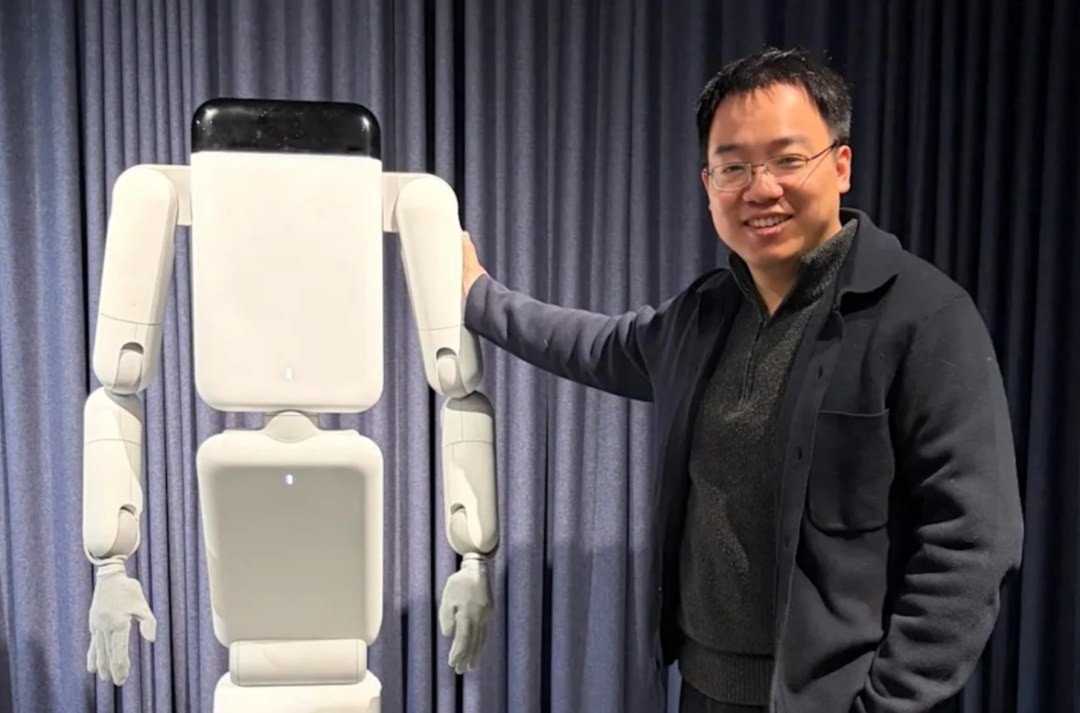
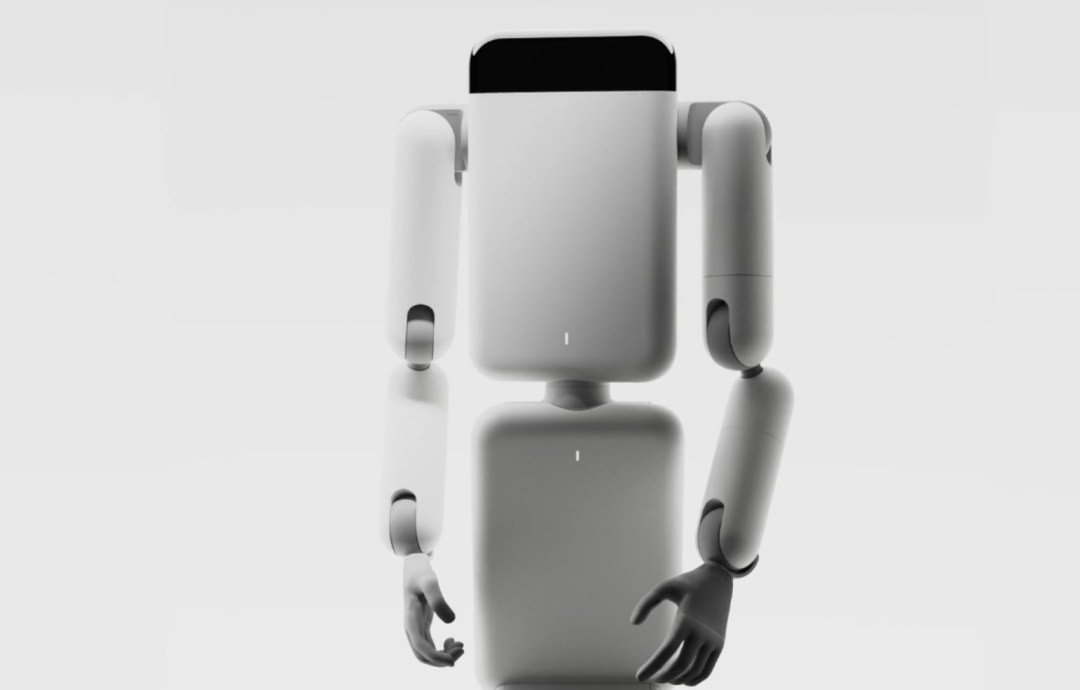
In June 2026 the company unveiled Eno, its first general-purpose robot. It has no head and does not walk on two legs. A wheeled base carries a modular torso that rises to human working height and folds down to roughly the size of a suitcase. An optional chest screen displays the next action so nearby workers can follow what it is about to do. In a field of bipedal humanoids from Figure and Agility, the design looks out of place. Genesis AI argues that capability should be human-like even if form is not. Factory, warehouse and laboratory floors are mostly flat and task zones are fixed. Wheels are more stable and power-efficient there, and free engineering resources from dynamic balance so the team can focus on whether the hands can do useful work.
Why the hands matter more than the legs
Eno’s most important feature is a dexterous hand matched one-to-one to the size of a human palm, developed with hardware partner Wuji Technology. Its fingers can actively back-drive, yielding to resistance rather than forcing through it, a precondition for working safely beside people. More valuable than the hardware is the data pipeline behind it. Instead of hiring operators to teleoperate robots, the company fitted more than 100 frontline workers around the world with sensor gloves and head cameras, letting them perform ordinary tasks while recording hand displacement, force and viewpoint.
The system targets a one-to-one-to-one mapping between human hand, collection glove and robot hand. The muscle memory of a veteran warehouse worker becomes a training sample directly. The company says the glove hardware costs about 100 times less than conventional setups and raises collection efficiency by as much as fivefold, figures not yet independently verified. Turning ordinary workers into data producers is the real insight. When training data grows out of real labour, the whole cost structure changes.
How far is a demo from production
A round the time of the funding announcement, a lab clip spread through the industry. A model drove a pair of off-the-shelf robot arms through a full sequence: pick up a carton, scan it, pack it, seal it with tape, peel a printed label and stick it on, all in under a minute. On the second run the box fell and the label tore badly. Rather than hide the failure, the founder called it stutter data, meaning exactly the kind of accident the system should learn from.
The company illustrates the point with arithmetic. A 20-step process with 99 per cent success at each step completes without error only 82 per cent of the time. A clean single move cannot compensate for one failure in a long sequence. Zhou is equally blunt about bottlenecks. The team does not expect another leap in basic science. The constraint is execution and hardware, and the dexterous hand currently lasts only a few weeks under normal working intensity. He estimates model architecture contributes about a tenth of the final result; the rest comes from data and infrastructure.
To turn technology into a business, the company hired former Twitter chief privacy officer Damien Kieran as head of legal in May 2026 and former Tesla and Amazon manufacturing executive Pali Kumar to run operations. It has built 30 to 40 Eno units, selected a US contract manufacturing partner, and plans targeted customer deployments by the end of 2026 with a volume push in 2027. The first stop is a multi-stage partnership with LG CNS, validating in LG’s US business settings and LG CNS industrial customers. A robot-plus-software rental model is also under study to lower the upfront cost for customers. Revenue and paying customer counts were not disclosed.
Why capital is paying
Premji Invest partner Videsh Agrawal offered the investor view. What persuaded them, he said, was that the robot could complete long, multi-step tasks independently at close to human speed, rather than performing in an edited short video. That marks the pricing shift: capital is starting to pay for delivery certainty instead of imagination.
Genesis AI is pursuing a fully integrated stack. It controls data collection, the GENE-26.5 foundation model, the Genesis World 1.0 simulation platform, the dexterous hand and the Eno body itself. Released in May 2026, GENE-26.5 demonstrated egg cracking, vegetable cutting, Rubik’s cube solving, piano playing and laboratory pipetting. GENE understands and plans tasks, Genesis World rehearses actions millions of times in simulation, and new real-world data feeds back into the model.
Others are choosing the opposite path. Agility has opened its robot bodies so customers can add their own intelligence, while several firms sell interfaces and tools to become the Android of robotics. Both routes have attracted heavy capital. Vertical integration lets a company trace a failure from data through model to hardware, at the cost of being slow and heavy. Open platforms are lighter but hand the hardest intelligence layer to someone else. Real factory data around 2027 should settle the argument.
NVIDIA already owns Omniverse and the full Isaac Gym simulation toolchain, yet led a strategic investment in Genesis AI in October 2026 at a valuation then reported near USD 3 billion, and returned for the Series A a month later. A giant that makes its own shovels investing in a company that digs faster is a strong signal about where synthetic physical-AI data is heading.
What Chinese builders can take from it
The clearest lesson is a change in the yardstick. For two years the default ticket to funding was looking most like a human or performing the hardest trick. This company reached a USD 3.5 billion valuation by obsessing over unglamorous measures: glove cost, hand lifespan, success rates across long workflows. As capital pays for delivery certainty, the window for raising a high valuation on one demo video is narrowing. The team also came out of a university open-source project that stitched together simulation, data, model and hardware, a pattern that fits China’s strengths in real-world scenarios and dense supply chains. What has often been missing is the engineering patience to grind data, model and hardware against one another. Perhaps most useful is the posture toward failure: a botched demo treated as data, a hardware weakness admitted openly, the role of the model deliberately played down. The industry never lacked clever demonstrations. What it lacks are machines that work for years on a factory floor, can be repaired, and whose costs can be added up.
Editor’s note: This is an adapted translation of the original OFweek report. It has been trimmed and restructured for readability for an international business audience. The full original (in Chinese) is at https://robot.ofweek.com/2026-11/ART-8321202-12005-30712376.html.