Jensen Huang admitted an extramarital affair and apologised on 8 November. The same day, Nvidia’s board announced an independent investigation and stated, in the same breath, that it has confidence in him and his leadership team. Both halves of that sentence were deliberate.
The reason is structural rather than sentimental. Over three decades Huang converted his own judgement into company strategy, and each commercial win bought him more room to do it again. The more successful the company became, the more the organisation learned to route through him.
Fewer layers means a heavier centre
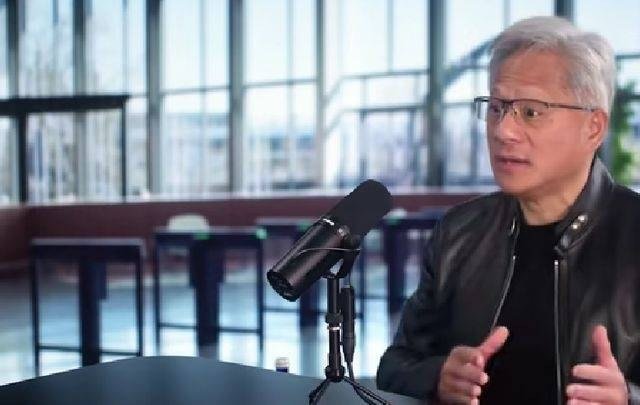
Nvidia keeps its management layers thin, and that amplifies one person. Huang told Lex Fridman this year that more than sixty people report directly to him, almost all of them engineers across memory, CPU and GPU. He does not hold regular one-to-one meetings. He gathers the relevant managers in a room and works the problem with all of them present.
That fits a company that now has to deliver chips, networking, memory and cooling as one system, where every part has to agree with every other. Bringing people together removes relay reporting. Huang sits in the middle, interrogates the proposal, arbitrates the disagreement and decides the trade-off.
His information channels also reach the bottom of the organisation. Nvidia has run a Top 5 email system for years, described by Tae Kim in The Nvidia Way: every week or two, employees write up what they are working on, or what they have noticed about competitors and new technology, and send it to a group their managers and Huang can read. He reads hundreds a day and replies directly when something interests him.
On top of that flat structure sits a culture of blunt, public criticism. At an all-hands in 2011, discussing the Tegra 3 chip, Huang asked the camera operator to frame the project lead, Mike Rayfield, and keep zooming in, then criticised the programme and told him to make the chip right. His explanation was that everyone should learn from the mistake, and that he opposes managers who hear feedback in private and paraphrase it to the team.
Replace the chief executive and the whole organisation has to relearn how to work. A successor inherits a vast pile of specific decisions and has to convince every function that his trade-offs will be as good. The appointment takes effect in a moment. The trust took Huang thirty years.
The power that cannot be handed over
Huang can ask Nvidia to sacrifice present profit for a market that may not mature for a decade, and the board lets him. That permission was earned at the edge of failure. In 1997 the company had about six months of cash left. NV1 and NV2 had bet on the wrong technical path and were incompatible with Microsoft’s DirectX, so the product had to be rebuilt. The normal route, build samples, test, revise, rebuild, would have burned the money before launch. Huang and his team validated the design in simulation and committed to volume production without physical samples. RIVA 128 kept the company alive.
The CUDA decision says more. Nvidia began shipping CUDA-capable GPUs in 2006 so they could do general computation as well as graphics. It did not pay for years. Chip costs rose, applications were scarce, gamers would not pay extra for the capability, and shareholders wanted the focus back on margins. Asked on stage how long the investment took to work, Huang said about ten years. Supporting CUDA meant accepting damage to the existing business with no large market in sight, and he had to argue the case to his board repeatedly until they accepted the reasoning.
By 2013 that reservoir of trust let Nvidia turn on a weekend. Vice-president Greg Estes recalls Huang sending an email on a Friday night declaring a move into deep learning, and the company heading that way by Monday. In 2019 came the USD 6.9 billion acquisition of Mellanox, buying the high-speed networking that matters when thousands of processors have to swap data, announced with the argument that future data centres would be designed as one computer. When the AI race did become a contest over whole systems, the piece was already in place.
Three per cent of the shares, most of the authority
Huang’s influence runs far beyond his stake. As of 23 March this year he beneficially owned about 3.58 per cent of Nvidia. The company has one share, one vote. He holds no super-voting stock and no chairmanship, because Nvidia has no chair and delegates that duty to an independent lead director.
The board has eleven members, several of whom joined in the 1990s and watched him take a company that could have failed at any moment to its present position. Mark Stevens took part in Sequoia’s early investment in 1993, when the firm put in USD 1 million at a valuation of about USD 7 million. He left the board in 2006 and returned two years later at Huang’s request. By June 2024 his Nvidia shares were worth about USD 5 billion. Brooke Seawell joined in 1997 and later recalled his doubt about a founder just past thirty who had never been a vice-president. By June 2024 his stake was worth about USD 700 million.
Those histories shape how a director reads a risk. Outsiders see one bold bet. They remember several, and how each one came back.
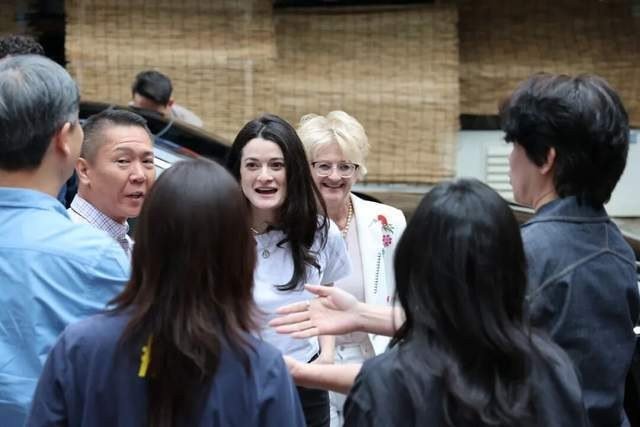
The relationships now extend to a second generation. Huang’s daughter Madison is senior director of product and technical marketing for Nvidia’s physical AI platform, promoting Omniverse, Cosmos and Isaac, which is precisely the direction the company is pushing into robotics. His son Spencer works in the robotics business. His son-in-law Nico Caprez is vice-president of global AI infrastructure growth, handling relations with neoclouds and data centre operators. Co-founder Chris Malachowsky’s son works at Nvidia, as does director Aarti Shah’s son, who joined in February 2024. Huang is openly relaxed about employees recommending their own children, on the reasoning that parents do not recommend people who would embarrass them.
The relationships do not transfer
Removing Huang would add operational risk on top of governance risk. The credit he has built outside the company cannot be reassigned by memo. Customer demand, supplier cooperation and the government’s attitude to chip sales all run through him personally.
In September 2024, Larry Ellison described a dinner at Nobu in Palo Alto where he and Musk pressed Huang for more GPUs, using the word beg for the pleasure of paying more and receiving more silicon. On the supply side, TSMC founder Morris Chang has said the relationship began with a letter around 1997, in which Huang asked for manufacturing, admitted the company was in financial trouble and promised that success would make Nvidia an important customer. He kept that promise, and when Blackwell ran into yield problems from a design defect in 2024, Huang fronted the explanation, took responsibility and thanked TSMC for the fix.
Politics adds another layer. In July 2025 Nvidia disclosed that Huang had gone to Washington to meet Trump, and the same month the company said it was applying to resume H20 sales with assurances that licences would be granted. A board weighing a succession has to ask who inherits that queue of relationships, and what the handover costs in the meantime.
Nothing visible suggests any party is seriously considering a change. Trump said he believed Huang’s explanation and noted that the FBI is investigating. For a board, replacing a chief executive has to solve a problem. Right now it would first dismantle an operating arrangement that has worked for years, then absorb the uncertainty of a transition.
The company is built so that its founder is not a figurehead but an input. That is a competitive advantage until the day it is a single point of failure, and the board has decided, for now, that the first half of that sentence is the one that pays.
Editor’s note: This is an adapted translation of the original Sohu Tech report. It has been trimmed and restructured for readability for an international business audience. The full original (in Chinese) is at https://www.sohu.com/a/1100032731_122014422.