Robot Frontier reports that Oaknut Robotics has completed an angel round led by China Merchants Venture and NIO Capital, with Tsinghua-based Shuimu alumni seed fund following. Four months after a nearly 100 million yuan seed round in March, the firm has raised two rounds, totalling several hundred million yuan.
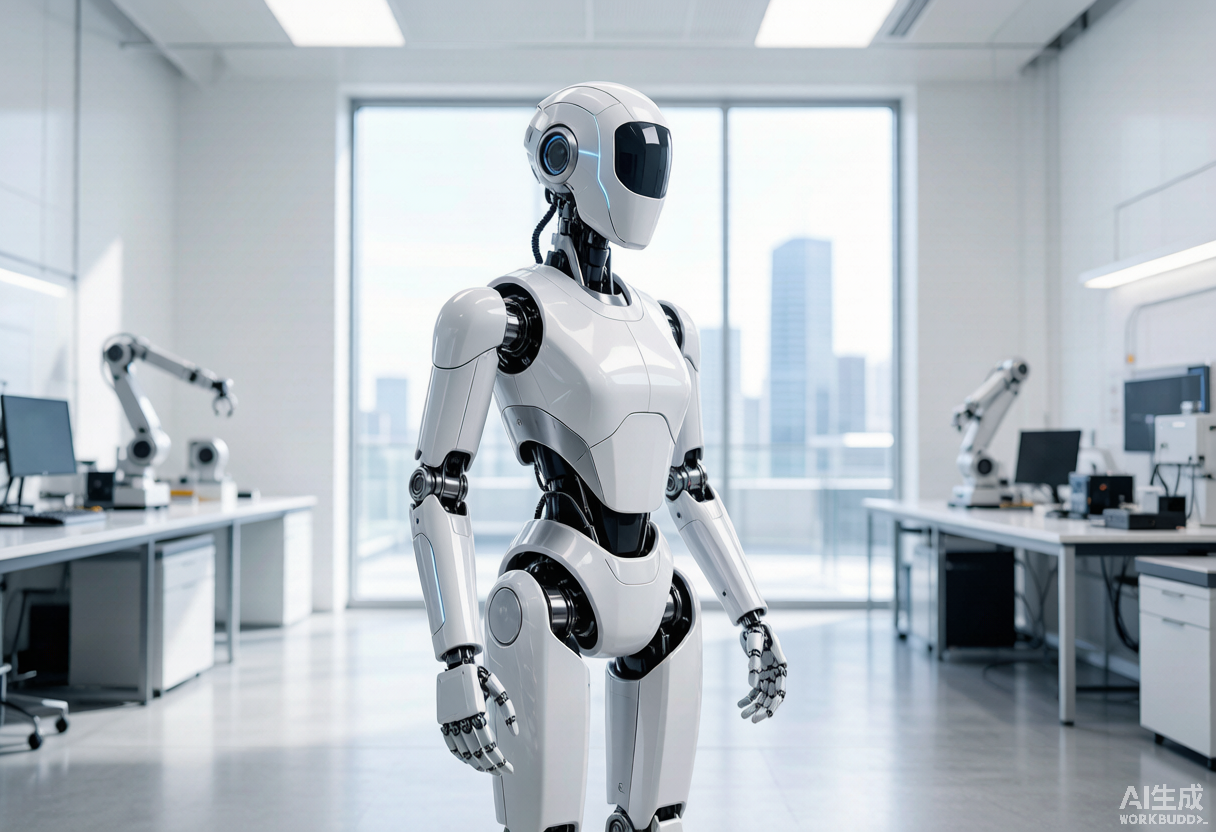
Oaknut Robotics was founded in late 2024 as the world’s first general embodied-intelligence company built on an “instinct-driven” core paradigm. The core team comes from Tsinghua and Harvard, spanning mechanical engineering, neuroscience and AI, with nearly 15 years in robot manipulation.
Founder Jiang Yao is an associate researcher at Tsinghua’s mechanical engineering department. He earned a Tsinghua PhD in 2016, then did postdoctoral work at Harvard’s engineering school, spending nearly 15 years on robot manipulation. He proposed instinct-driven embodied manipulation in 2017. The company came out of stealth in June this year.
The route comes from long observation of human manipulation. When hit by pain, a person instinctively pulls back, no training needed. Jiang believes manipulation has similar inborn instincts. Oaknut wants to give machines that bottom-layer ability, so they act from physical feedback even without seeing a task before.
Most embodied firms followed VLA and data-driven paths. Oaknut rejects the vision-led, model-inference, massive-data training norm. Using touch as the physical-sensing base, it builds perception-operation links bottom-up, forms muscle memory through instinct reflex, lets the robot evolve its own operation ability, and achieves cross-entity, cross-platform, cross-task generalisation.
Today the firm also released Natus AGE-0, the industry’s first general manipulation foundation model centred on tactile perception, able to start from zero data cold. Natus needs no massive scene labels, binds to no specific robot body, and limits to no fixed material or condition. Relying on touch and contact-mechanics principles, it extracts general physical laws and gives the robot inborn manipulation instinct, achieving zero-shot generalisation across bodies, materials and conditions.
Unlike models that memorise fixed trajectories from samples, Natus replicates human biological behaviour: instinct reflex, behaviour emergence, experience reinforcement. It uses touch as the signal source for reflex, lets the robot explore and interact flexibly in varied hardware and industrial conditions, then keeps screening and consolidating reusable experience, iterating the operation ability.
But exploring every task from scratch hurts industrial efficiency and stability. So above Natus, Oaknut builds Magis, a general-skill model. Magis uses the precise tactile-semantic data Natus produces in real interaction, like object weight and friction, to enhance visual data and train skills, moving the robot from “knows at once” to “skilled at once”.
Oaknut is polishing a standardised dual-arm flexible production cell, using self-made visuo-tactile sensors, end-effectors and the embedded Natus instinct model, for one-stop flexible production in fast-moving consumer, daily-chemical and food scenes. It finished a global top cosmetics ODM line POC in two months and earned revenue.
Four months, two rounds, one first instinct model, one real industrial site. The open question: can this nine-year non-consensus route turn the elusive “feel” of robotics into stable, repeatable productivity?
Editor’s note: This is an adapted translation of the original Zhidx report. It has been trimmed and restructured for readability for an international business audience.