GPT-6 Astra is hanging over a lot of robot brain companies like a sword on a thread. On 22 October, Unitree founder Wang Xingxing showed a video. With no robot-specific task training, Astra drove a robot arm to paint in watercolour, and it rinsed the brush when it changed colour. Wang then said a general-purpose model would break through into physical AI in one to two years, three at the outside.
Unitree is known for bodies and motion control. That it now warns the industry about general models matters more than the demo itself. Astra already reads camera frames and robot state, then decides arm position, posture and gripper action. It has moved into task understanding, spatial reasoning and motion decisions. Those were the jobs of the robot brain companies.
The destruction is a metaphor. American firms are pushing toward the most valuable part of the robot, and Astra is not the only one about to surface.
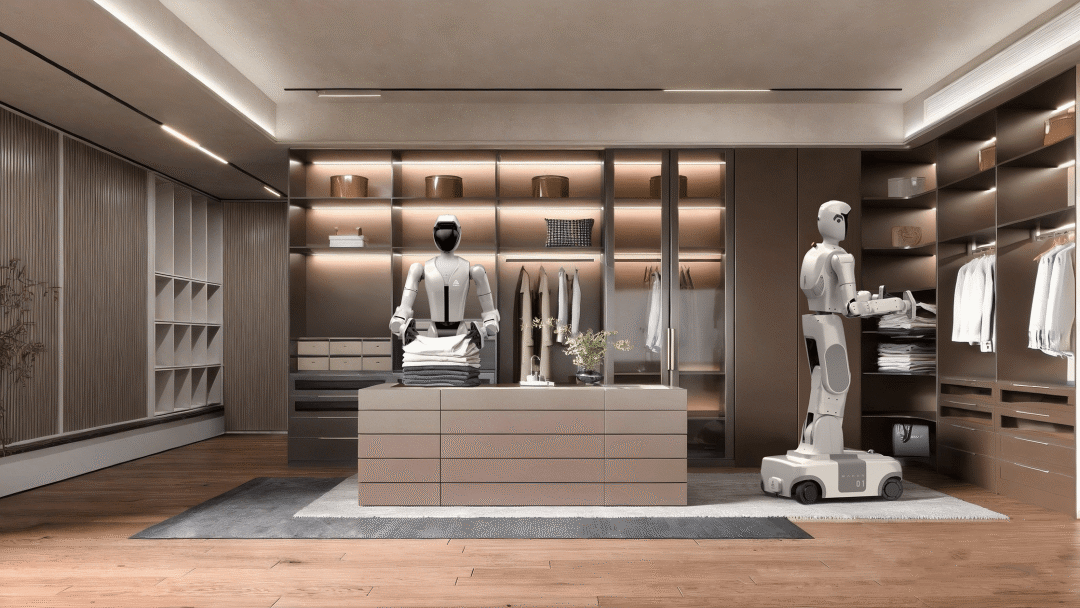
Capital has already repriced the brain
On 27 October, Bloomberg reported that Physical Intelligence, an American robot foundation-model company, was in talks to raise more than USD 1 billion at a valuation close to USD 20 billion. The company has no revenue.
Unitree listed in August at an issue market cap of about RMB 61 billion. Roughly converted, the valuation under discussion for PI is 2.3 times that. A private round and an IPO issue price are not directly comparable and the two businesses are different, so 2.3 is not an industry multiple. But the preference is visible. Capital will pay a platform premium for a general brain that can be reused across bodies, rather than pricing by robot shipments.
The United States does not lead on the cost, supply chain or shipment volume of the humanoid body. It still leads on general models, compute and top AI talent. China has proven it can build robots in greater numbers and at lower cost. For Chinese founders, competing on mechanical structure, joints and whole-machine specifications is producing less and less durable differentiation.
Hardware still matters. Hardware alone no longer does. The open question is whether China’s scenarios and data can grow into a platform of its own, now that the American brain is descending into the physical world.
The money moved early. IT Juzi counts 322 financing deals in Chinese embodied AI in the first half of 2026, totalling RMB 93.5 billion, about five times the same period a year earlier. Reuters summarised the shift in November in one line: Chinese robot makers have mastered motion, and the brain race is next.
Chinese firms run model, body and scenario together
On a CATL battery test line, a wheeled dual-arm robot plugs flexible wiring harnesses. The harness sits in a different position every time, so the robot adjusts its angle and force by itself. The machine is Moz1, from Qianxun Intelligence, which is not a pure body company. It also develops its own Spirit series of vision-language-action models, running the full-stack route of a large model plus robot hardware.
Public information shows the PACK line running Moz1 has produced close to 1,000 battery packs, with insertion success steady above 99 per cent and cycle time at the level of an experienced worker. That 99 per cent covers one fixed process and does not mean the robot can handle general tasks in an unfamiliar room. It does mean the robot has entered a real production rhythm. Moz1 has also gone into a JD MALL store, and public plans point to pharmacy sorting and commercial cleaning next.
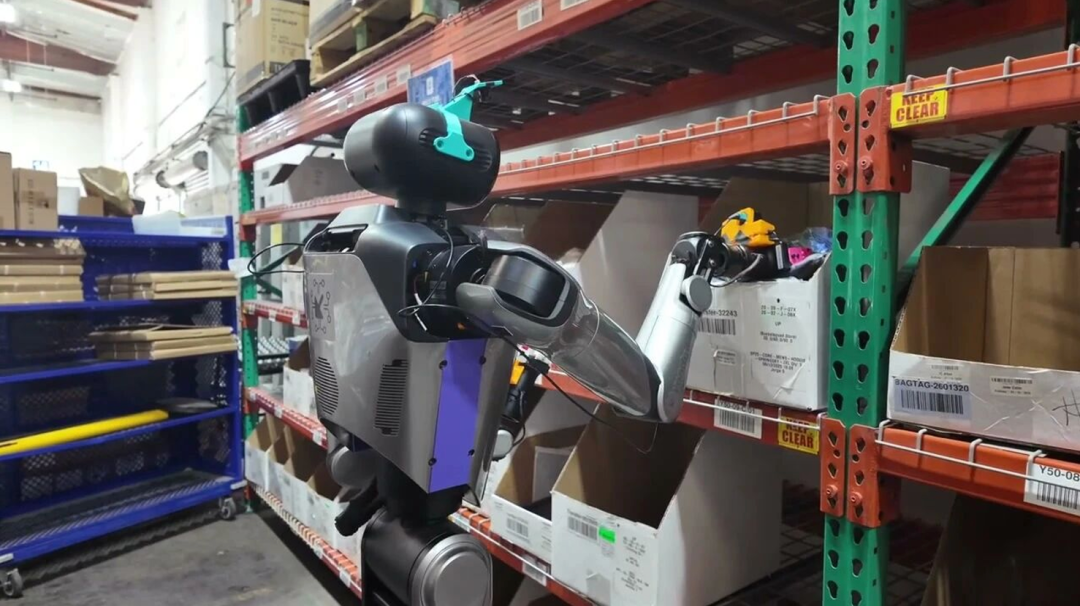
Learning efficiency comes next. Zibianliang Robot open-sourced its HOST framework in August 2026, letting a robot learn a new skill from an average 29-second human video. Across 50 desktop tasks it averaged 62 per cent success, and the data samples required fell to one fiftieth of a pi-0.5 fine-tune.
Galaxy General leans on simulation and reality together, training AstraBrain on synthetic data from its AstraData infrastructure and then transferring to real machines. Data spending is rising with it. By April 2026, Qianxun had accumulated more than 200,000 hours of multi-type real interaction data, expanded its collection team to 1,000 people, and set an annual target of 1 million hours. Ant Group’s Robbyant took the cross-embodiment route. Its LingBot-VLA 2.0 technical report discloses about 60,000 hours of filtered pre-training data, including 50,000 hours of robot trajectories and 10,000 hours of first-person human operation video, covering 20 robot configurations.
Some go straight at world models. Jijia Vision runs GigaWorld, GigaBrain and its own Maker body at once, trying to close a loop from scenario to data to model. The distance between a public demo and stable cross-scenario work is still long. What has to be tested is not a leaderboard or a video but whether a model keeps completing tasks across different sites.
Others enter from adjacent capability. Wuyi Vision sells AperData for collection and training-data supply and AperOne for training, evaluation, deployment and operations. Its value is in lowering the cost of training and deployment, though 51Sim revenue still includes intelligent driving and thousand-unit deployment remains an annual target. Momenta wants to reuse its R7 driving world model across more vehicle forms and plans to enter embodied AI from 2027. Its validation and revenue still come mainly from roads, which makes it a potential entrant rather than a competitor.
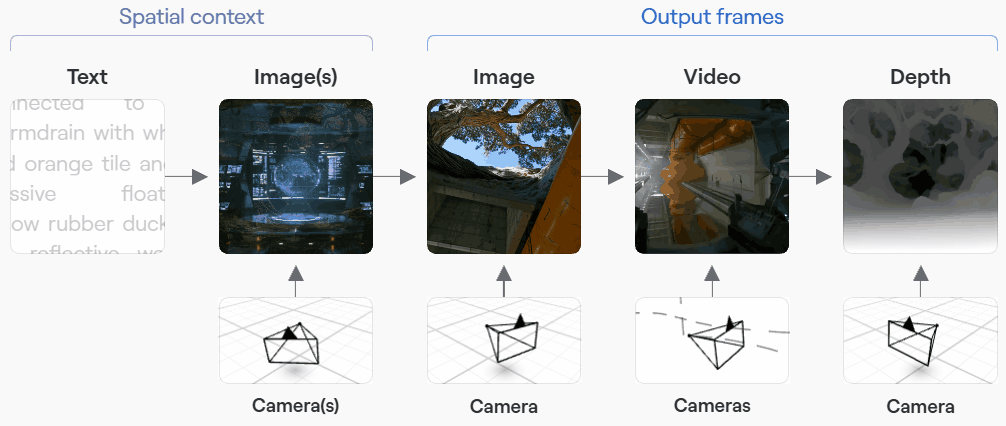
The American route starts from the model
The leading American firms start from the model. Physical Intelligence, Skild AI and Generalist all want a general model that transfers to different robot bodies first, and then attach it to specific hardware and scenarios.
In October 2026, Physical Intelligence opened a beta of its Pi API. Outside teams can upload data, fine-tune models and deploy to their own robots. The product is not a standard robot but a layer of intelligence that can serve many kinds of hardware. Skild AI makes a general robot model its core and treats deployment as part of how the model evolves. Bloomberg, citing company disclosures, put its January 2026 round at a USD 14 billion valuation. By September the company said annual recurring revenue had passed USD 100 million, with more than 60 paying customers and USD 50 million of confirmed revenue. Those are self-reported figures, and whether they hold is a more practical question than the valuation.
Generalist focuses on fast learning. GEN-1.5 receives a 3 to 12 second demonstration and then executes a new task without gradient updates, averaging 59 per cent success on 10 short, simple tasks. That number cannot be compared directly with Zibianliang’s 62 per cent, because task sets, demonstration formats and evaluation settings all differ.
What the two sides share is a direction: models that get cheaper to reuse as they get more general, and a customer base that pays for the model rather than the machine.
What to watch next
Chinese firms also have a route of their own. Most of them stay inside the body and project delivery. To move up they need a general brain platform, so that one model set serves more tasks and more bodies.
Judging this race by shipment volume and data hours will mislead. The tests that matter are cross-embodiment and cross-task success rates, repeat orders from real customers, and whether model revenue can grow independently of hardware and project delivery. Those decide whether China can turn a scenario advantage into pricing power over the brain itself.
Editor’s note: This is an adapted translation of the original OFweek report. It has been trimmed and restructured for readability for an international business audience. The full original (in Chinese) is at https://robot.ofweek.com/2026-11/ART-8321205-8420-30710843.html.