Global humanoid shipments are climbing fast. IDC puts 2025 worldwide volume above 18,000 units, up around 508 per cent year on year, with Chinese makers dominant, and Morgan Stanley has raised its 2026 China forecast from 28,000 to 50,000 units. As the race moves from basic mobility to stable multi-task work in messy environments, tactile sensing has become the variable that decides who actually ships.
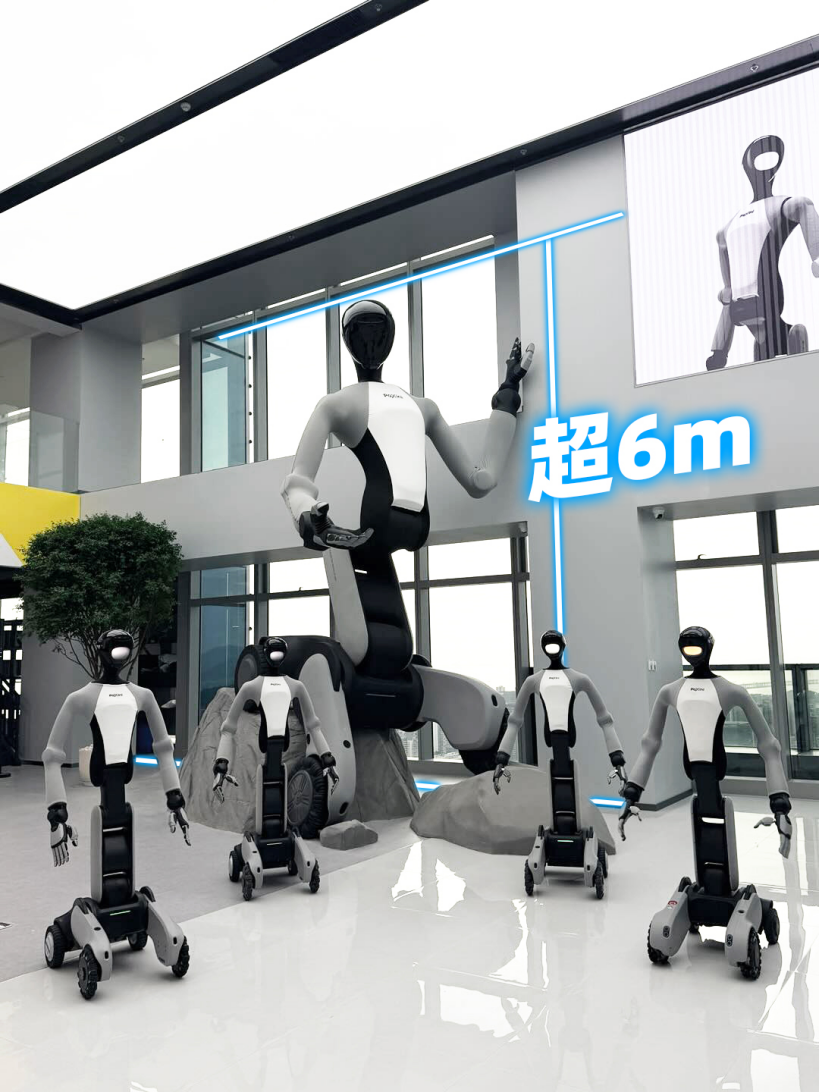
PaXini, a Shenzhen tactile-sensing leader valued at roughly 10 billion yuan, opened its “ONE FOR ALL” showroom on the 39th floor of a Bao’an tower. The strategy binds perception hardware, data capture, model training and deployment into one loop, then concentrates it in humanoid robots. The firm has built a stack around high-precision multi-axis tactile sensors, bionic dexterous hands, tactile humanoids and embodied data and models.
Closing the tactile blind spot
In the tactile zone, PaXini shows three generations of Hall-effect multi-axis sensors that catch sub-millimetre deformation in real time, parsed by a self-developed processing unit into force, slip, friction and texture. A 3,000 square-metre floor anchored by a 6-metre TORA-DOUBLE ONE sculpture frames the pitch: touch as the physical base of embodied AI.
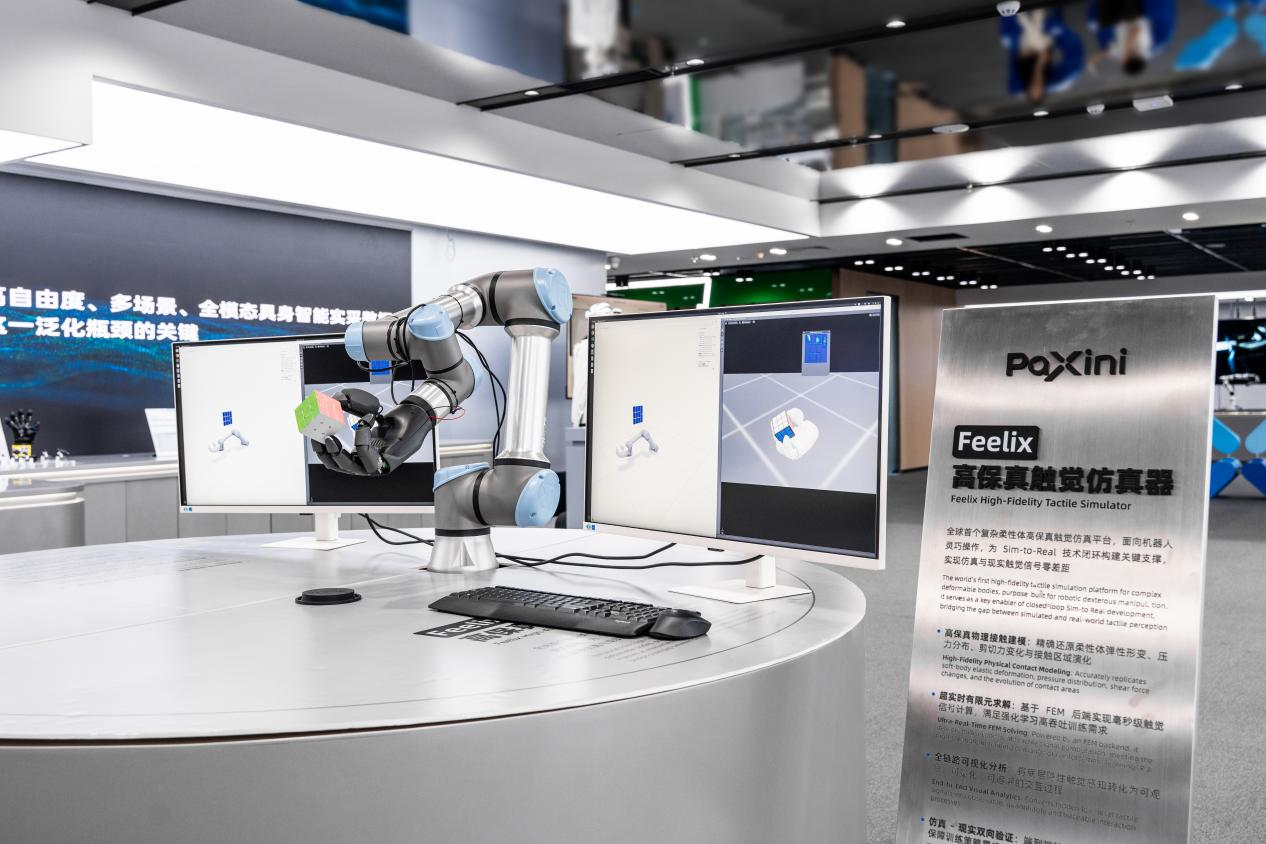
PaXini runs a data flywheel across five regional capture networks, building a billion-scale multimodal dataset of vision, force, touch and motion. In the dexterous-hand zone, generations of hands show autonomous grasp, tactile closed-loop control and unworn teleoperation. In live scenes, TORA-ONE and TORA-DOUBLE ONE work in pairs on transfer, sorting, inspection and upkeep, while two units run a smart restaurant: prep and greeting, end to end.
An open platform, not just a showroom
The space also brokers business, research, media and co-branded partnerships, letting PaXini turn tactile infrastructure into paid pilots. With recent rounds near 4 billion yuan and cumulative funding around 3.5 billion yuan, PaXini is betting that touch, not just vision, is what turns humanoids from exhibits into workers.
Editor’s note: This is an adapted translation of the original OFweek report. It has been trimmed and restructured for readability for an international business audience.