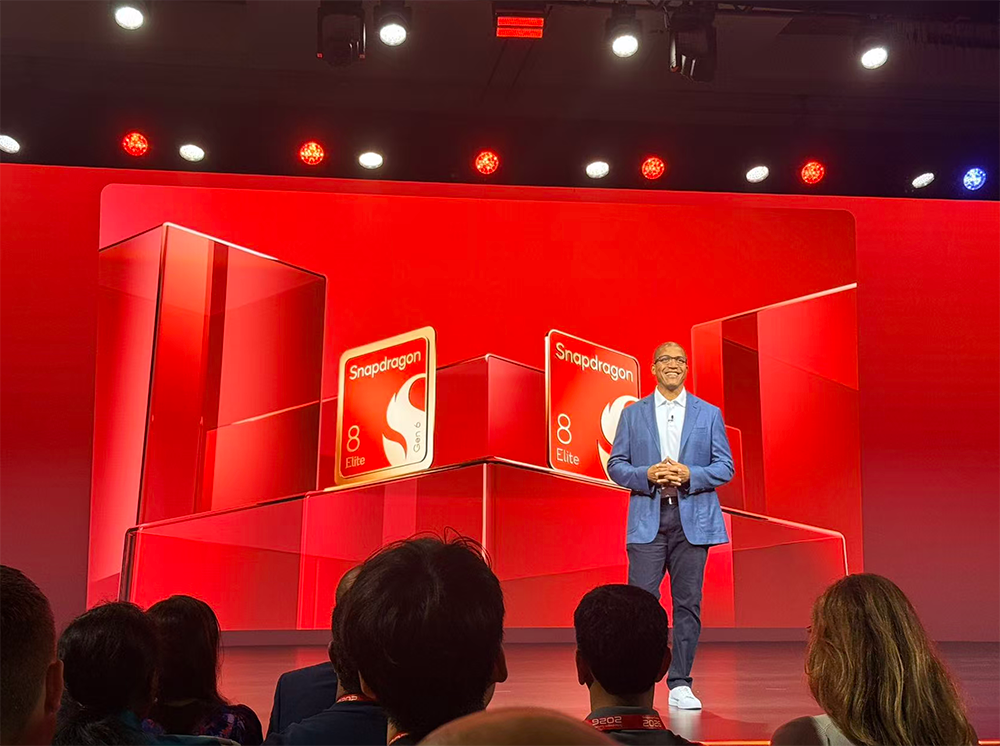
At the Snapdragon Summit 2026 in Maui on 22 September, Qualcomm unveiled two flagship mobile chips built on a 2-nanometre process, the sixth-generation Snapdragon 8 Super Elite and the sixth-generation Snapdragon 8 Elite. This is the first time the flagship line has shipped two Elite platforms at once and the first use of 2-nanometre in the Snapdragon range.
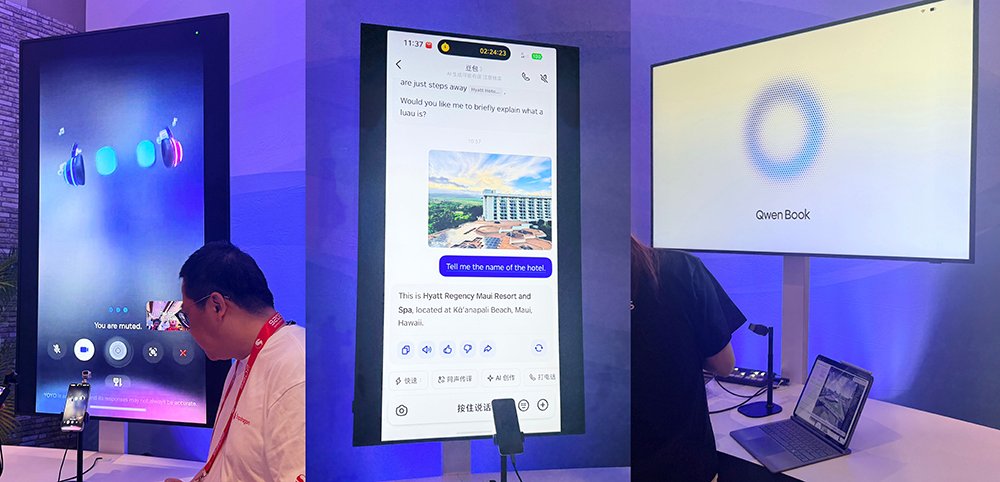
Chief executive Cristiano Amon said the agentic era is only beginning and agents need a new system architecture, with Snapdragon built for it. Qualcomm also showed early agentic devices on its platform, including Honor’s Robot Phone, Alibaba’s Qwen Book agentic computer and Nubia’s NaviX Ultra with the Doubao assistant.
Snapdragon 8 Super Elite: a mobile CPU at 5GHz with an AI core in the GPU
The Super Elite is Qualcomm’s strongest mobile platform, redesigned around agents and upgraded across AI, general computing, gaming and imaging. The custom Oryon CPU uses eight cores, two super cores and six performance cores, reaching 5GHz, the first mobile CPU past that mark. A new FlexCache design shares a pooled L2 cache across cores and shifts it by demand, which keeps agents responsive when they hop threads across cores to call tools.
The sensor hub now keeps continuous awareness without waking the main processor, using a dual Micro NPU that lifts performance 85 per cent and efficiency 20 per cent and supports a 200-million-parameter model for on-device personal context.
The Hexagon NPU adds an Element Accelerator for Transformer workloads, supports a 32,000-token context and a 50 per cent larger shared memory, cutting external memory reads. Prefill performance rose up to 80 per cent on some models. With StepFun, Unlikely Fire and Longsys, Qualcomm deployed StepFun’s StepEdgeOmni 30-billion-parameter mixture-of-experts model fully on device, cutting memory needs over 50 per cent without losing accuracy. UFS 5.0 streams model weights from flash so devices use larger models than their memory would allow.
The Adreno GPU gains 44 per cent performance and 14 per cent efficiency and, for the first time, a dedicated AI core called Matrix Cores that keeps AI work inside the graphics pipeline, enabling Adreno Neural Fusion for AI super-resolution and frame generation. Peak performance now lasts over twice as long under load.
The Spectra ISP became a multimodal engine that turns camera input into context, doubling video throughput so commercial devices can shoot 8K at 60 frames per second, with 4K at 240 frames per second for slow motion. Smart pixel control assigns 16 bits of AI data per pixel, 256 times finer than before.
On connectivity the platform carries the X105 5G modem, the first ready for the 3GPP Release 19 standard with satellite support, and FastConnect 8800, a Wi-Fi 8 chip. A new Offset Package-on-Package thermal design moves heat out faster and lets device makers explore new forms.
Snapdragon 8 Elite: the new architecture for a wider range of flagships
Where the Super Elite targets the most advanced AI workloads, the Elite brings the same redesign to a broader set of flagship phones, balancing performance and intelligence. It upgrades the Hexagon NPU for responsive efficient AI, the Oryon CPU for fast flagship performance, advanced graphics, smart-pixel imaging and the X105 modem with FastConnect 8800.
The phone becomes the start of the personal agent
Amon argued that the industry is moving from a phone-centred model to an agent-centred one, where the agent sits at the centre of the experience. He said the field can finally see what an AI phone is, moving from apps and assistants to agents that understand intent and act on the user’s behalf.
Three points stand out. First, AI is shifting from app-driven to intent-driven, and because the phone is personal, always present and multimodal, it fits the agent naturally, with control staying in the user’s hands. Second, the phone is the first home of the personal agent and will route across phone, PC, car, watch, glasses and other devices as one continuous experience, acting as the compute, memory and connection hub. Third, agents need a fresh system architecture that senses, reasons, plans, remembers and acts.

Amon noted that agents will appear on many device types and the phone becomes the hub of the personal AI system, with workloads split between cloud and available compute by task. This demands rethinking the compute engine, with higher CPU performance for orchestration, efficient NPU inference and GPU parallel work, all within an all-day battery budget.
Conclusion: the personal-agent race opens, and Qualcomm laid the pipes first
Around how agents work, Qualcomm redesigned the flagship phone chip, handling AI, compute, connectivity, memory, sensing, security and power together. By tuning the CPU cache, adding an AI core to the GPU with dedicated fast memory, enlarging the NPU’s Transformer accelerator and memory, and keeping low-power sensing in the sensor hub, the new dual flagships run longer continuous agent tasks within a tight power budget.
The personal-agent race is only starting. Qualcomm brought the infrastructure from the bottom up, and now the burden moves to device makers and software developers to turn always-on agents into daily productivity.

Editor’s note: This is an adapted translation of the original Zhidx report. It has been trimmed and restructured for readability for an international business audience. The full original (in Chinese) is at https://www.zhidx.com/p/596608.html.