Schaeffler opened a plant in Taicang on 20 October where humanoid robots assemble the joint modules that other humanoid robots will use. The German drive-technology group calls it closed-loop manufacturing, and it is the first site in its network where robots build robot components at volume.
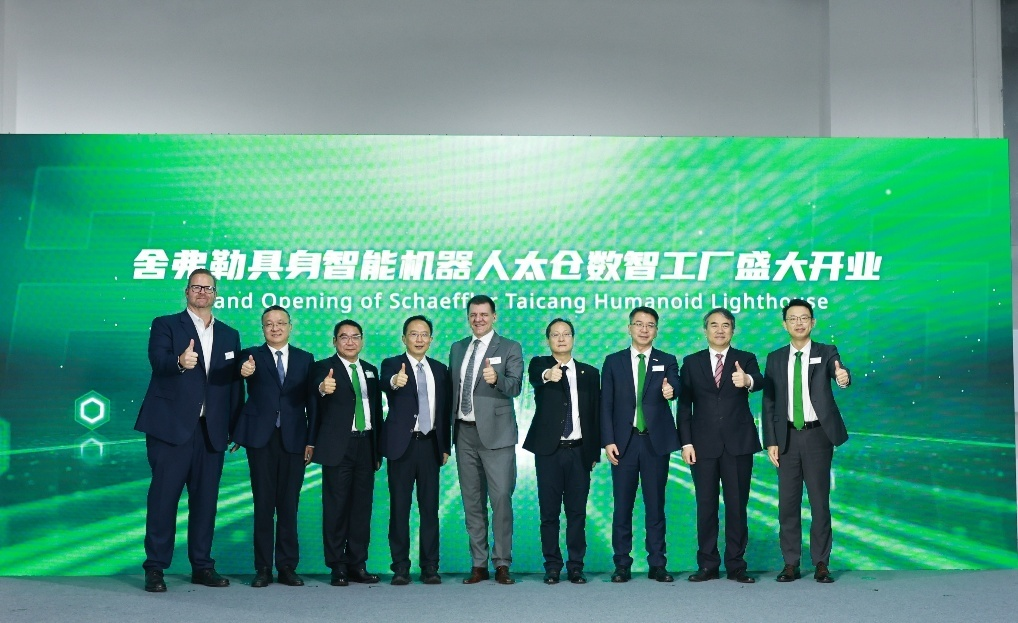
The facility occupies about 7,500 square metres and combines a smart assembly line, a scenario-based training and data-collection centre, a digital twin platform and a computing centre. It covers the full path from teaching a single robot skill to deploying it in a real manufacturing setting, and it marks the start of mass production for joint modules including actuators.
Six robots, five stations
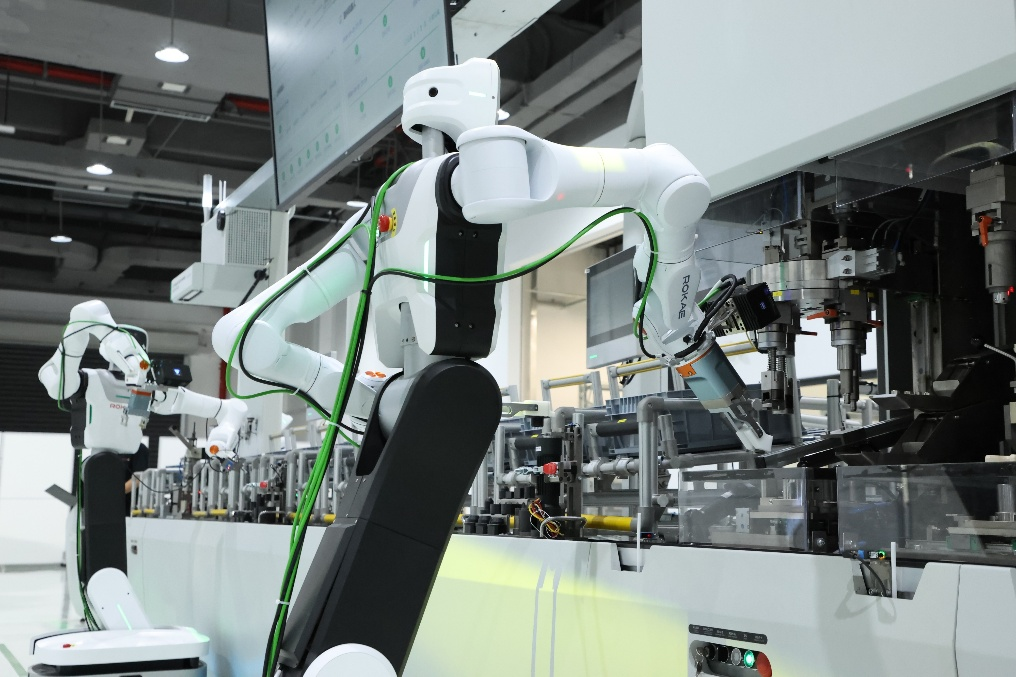
Schaeffler designed the line itself. It runs five workstations and six humanoid robots that handle bin transfer, part sorting and picking, press-fitting and screw assembly, functional testing, marking and packing. A two-way digital twin maps the physical line to a virtual model in real time, with sensors capturing assembly accuracy, cycle time per process step, energy load and asset status. Changes are tested in the virtual environment before they touch the real process.
Training data is drawn from scenarios replicated from about 100 Schaeffler plants worldwide, so skills learned in the centre can be tested directly on an assembly line. Training, simulation and production data feed each other.
The order book is the real headline
In the third quarter of 2026 Schaeffler won new orders from two Chinese customers, lifting its total order intake in humanoid robotics to EUR 400 million. That figure converts an industrial-robot pilot into a business line. Chief operating officer Jochen Schröder said the aim is to be the leading global supplier and preferred technology partner in humanoids, and that combining decades of manufacturing know-how with physical AI and digital twins extends the group’s position in core components.
Schaeffler China chief executive Zhang Yilin framed the site as a local play: China’s embodied AI and humanoid industry is at an inflection point, and the group is using local research, manufacturing and supplier coordination to move faster inside that ecosystem.
The strategic read is blunt. A German tier-one supplier is hedging the slow electrification of its traditional drivetrain business by selling the hardware of the next automation wave, and it is building that capacity in China rather than in Baden-Württemberg. If humanoid joints become a volume component, the production learning curve will have been climbed in Taicang.
Editor’s note: This is an adapted translation of the original Gasgoo report. It has been trimmed and restructured for readability for an international business audience. The full original (in Chinese) is at https://www.gasgoo.com/robot/news/70475423/.