Tesla now has 1.74 million paying Full Self-Driving customers worldwide, and the company still cannot tell its Chinese owners when the software will be fully available to them. The gap between those two facts was the most revealing part of its third-quarter earnings call on 22 October.
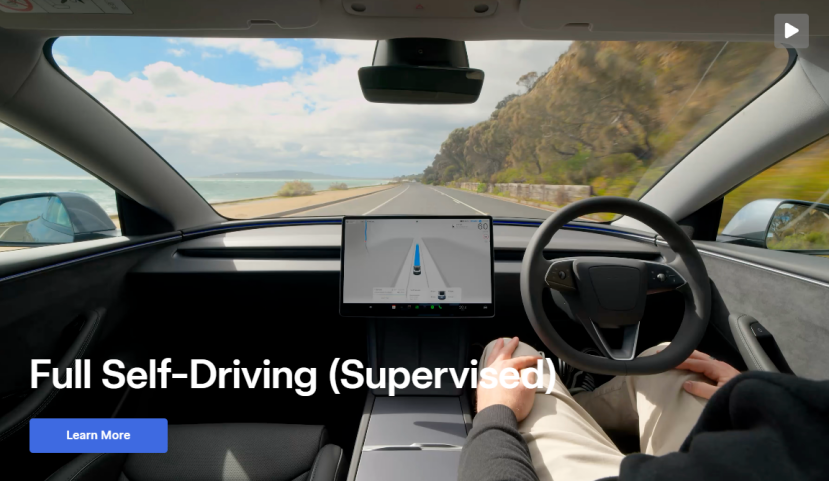
Paid FSD users grew 67 per cent year on year, and subscription customers accounted for half of the base for the first time. In North America, more than 75 per cent of new vehicles activated paid FSD at delivery, a record. Elon Musk described FSD as the single biggest driver of demand for Tesla cars.
Two markets, two timelines
Chief financial officer Vaibhav Taneja said Tesla is still pushing for broader regulatory approval of FSD in China and remains in contact with the relevant authorities. Management gave no timetable. On Europe, Musk was more optimistic, pointing to broader EU approval before the end of the first quarter of 2027.
The Chinese wait is now more than two years old. Tesla published a global FSD roadmap in September 2024 that targeted China and Europe in the first quarter of 2025, subject to approval. In February 2025 some Chinese owners received an urban assisted driving update. In March the company paused a planned free trial, citing pending software approvals.
Targets then moved. April 2026 pointed to the third quarter. In May an official list of supported regions briefly included China, then dropped it in August. The third quarter has now passed without a new date.
Why the delay is not only regulatory
Localisation carries weight. China regulates automotive data security and the safety and scope of driver assistance systems, and Tesla’s global stack has to meet local road conditions, data-handling rules and product approval processes. Tesla China confirmed a local AI training centre in February, and the company had already moved data storage to Shanghai. Its North American data, the foundation of an end-to-end model, does not cover the non-motorised traffic, temporary roadworks, junctions and regional driving habits that define Chinese cities.
The competitive backdrop changed while Tesla waited. BYD launched an assisted driving push in February 2025 that extended the capability to cars under RMB 100,000. According to the Ministry of Industry and Information Technology, penetration of L2 combined driver assistance in passenger cars reached 70.5 per cent in July, with NOA at 34.2 per cent.
The pricing question nobody has answered
Tesla moved the United States to a USD 99 monthly subscription this year and stopped offering a one-off purchase. China still lists FSD at RMB 64,000 up front, with no subscription product. Management endorsed a market estimate of close to USD 1 billion in FSD annual recurring revenue without disclosing the figure itself.
Chinese buyers have been trained to expect assisted driving bundled into the car price. Horizon Robotics chief executive Yu Kai has argued that FSD’s arrival could teach Chinese consumers to pay for high-level driver assistance as a separate product, which is the more interesting possibility for the whole industry.
Tesla still holds the data advantage and the end-to-end model. What it no longer holds is time. Every quarter of delay raises the standard its software must clear on arrival, and the customers who already paid RMB 64,000 are waiting for features rather than a subscription price.
Editor’s note: This is an adapted translation of the original Gasgoo report. It has been trimmed and restructured for readability for an international business audience. The full original (in Chinese) is at https://auto.gasgoo.com/news/202610/22I70475607C601.shtml.