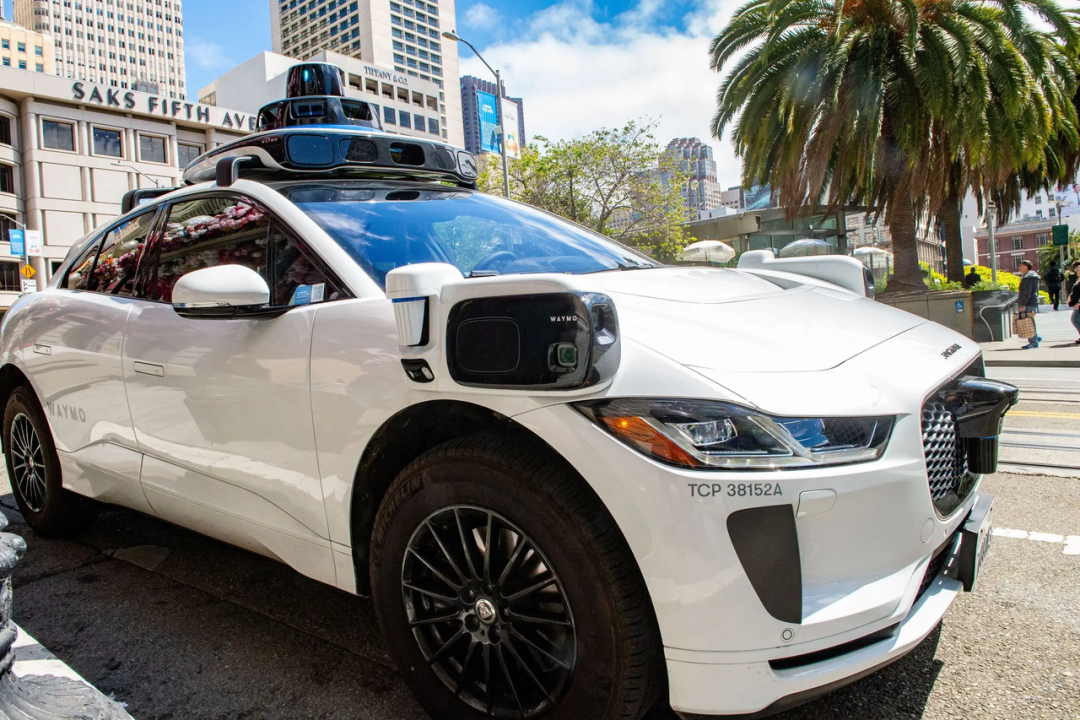
This northern summer in San Francisco, hailing a Waymo is often faster than hailing a Lyft. Across the Pacific, Baidu’s Apollo Go completed 3.2m rides in the first quarter of 2026, up more than 120 per cent year on year. For many users, driverless cars have moved from a curiosity to a daily default. That shift has pushed the Robotaxi industry into a new stage, where the contest is no longer one company’s technology but a whole city’s systemic strength: regulation, road network, users and operations.
From technology to the city
In 2026, Waymo’s order volume in San Francisco at one point surpassed Lyft’s, while Apollo Go’s first-quarter rides crossed 3.2m. Capital followed the proven demand: global private autonomous-driving deals reached 23.3bn dollars in the first four months of 2026, more than double the full-year 2025 total, headlined by Waymo’s 16bn dollar Series D at a 126bn dollar valuation with Sequoia, a16z and DST Global. On a ranking by research firm Autnmy AI that refreshes every 12 hours, Apollo Go leads at 78.4 and Waymo follows at 77.1, roughly 15 points ahead of third place.
Once the top US and Chinese players both achieved driverless operation and rides went mainstream, the proposition changed. Can a Robotaxi system embed into a city’s transport and run stably for years? The answer rests on law, user acceptance, dispatch efficiency and maintenance, which is a city’s capability, not a company’s.
Shenzhen’s three cards
Shenzhen and Los Angeles mirror each other across the Pacific: both are outward-facing port metropolises with immigrant-heavy populations and dense innovation ecosystems. But Shenzhen has three advantages. First, legal certainty: in the US, AV regulation sits with states and the federal government, so Los Angeles cannot write its own AV law, while Shenzhen holds local and special-economic-zone legislative power and passed China’s first AV regulation in 2022, covering testing, paid operation and accident liability. Second, scenario richness: with 18m residents and village roads where cars, e-bikes and pedestrians share one junction, Shenzhen offers the mixed, long-tail traffic that is rare on Los Angeles’ wide car-dominated roads, and exactly the hard cases driverless systems need. Third, user soil: a smaller city with short commutes and a median age of 32, where acceptance and repeat-ride potential run high.
The endgame is replication
Apollo Go now operates across Shenzhen’s Nanshan, Bao’an and Pingshan districts, bringing Baidu’s 13 years of work: more than 22m orders, 27 cities, over 330m kilometres driven and more than 220m fully driverless. The deeper point is replication. Shenzhen’s mature AV rules are a source-code template other cities can localise, and the Shenzhen-Hong Kong corridor spans both left- and right-hand traffic systems. On 23 July Apollo Go took Hong Kong’s first driverless test licence and began tests at the airport island on 27 July, the world’s first fully driverless run in a right-hand-drive market and China’s first crack at that format.
Read the original report (LeiPhone)
Translated and adapted from LeiPhone (leiphone.com).