At the end of October Unitree Robotics and Sequoia China set up a joint early-stage investment programme aimed at embodied AI, robot applications and the upstream components behind them. It reads like a routine corporate venture move. The third-quarter numbers explain why it is not.
The quarter that forced the decision
Revenue for the third quarter was RMB 665 million, up 69.93 per cent year on year. Net profit attributable to shareholders was RMB 113 million, down 17.37 per cent. Profit after non-recurring items was RMB 105 million, down 17.42 per cent.
The divergence has a simple cause. Research spending for the first three quarters reached RMB 263 million, up 191.48 per cent. In the third quarter alone it was RMB 127 million, up 249.58 per cent, which is 19.10 per cent of quarterly revenue. Sales expenses rose from RMB 76.0 million to about RMB 230 million.
The growth rate is also flattening. Unitree booked revenue of RMB 159 million in 2023, RMB 393 million in 2024 and RMB 1.699 billion in 2025, a three-year compound rate of 226.78 per cent. The first nine months of 2026 came to RMB 1.817 billion, a growth rate of 55.71 per cent.
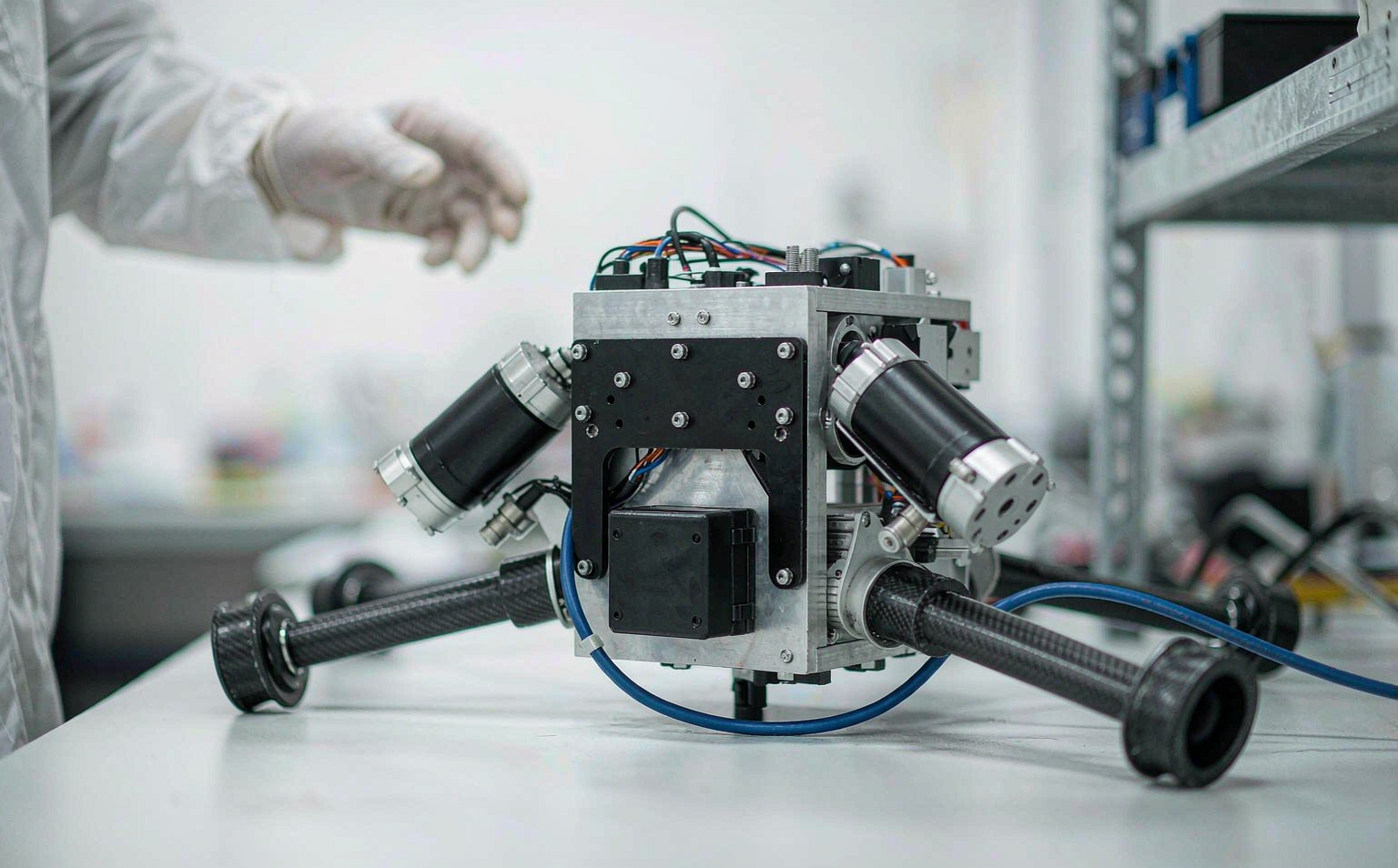
The rent market went first
The revenue mix is the vulnerability. Unitree’s prospectus shows hardware sales, split between humanoids, quadrupeds and components, account for 98.64 per cent of revenue.
The rental market that carried a large share of unit sales is collapsing. Daily rental for a base G1 has fallen below RMB 2,000, and robot dogs rent for under RMB 500 a day. When the rental arbitrage disappears, the buyers who were renting out units stop buying.
Inventory tells the same story from the other side. Stock on hand was RMB 1.019 billion at 30 September, against RMB 367 million at the end of 2025. A rising inventory line combined with a sales expense that tripled is not a demand signal.
The model everyone is copying
AgiBot went first. Across roughly eighteen months it invested in more than 20 companies, and the portfolio’s average annualised valuation grew 17 times. AgiBot launched its own venture programme in 2024 and has appeared as an investor in 47 deals between August 2024 and October 2026, mostly at upstream nodes of its own supply chain.
StarSeek teamed up with Cathay Capital on a plan to commit RMB 1 billion over five years across 100 early-stage embodied AI projects, covering components, data, algorithms and applications.
For Unitree the logic is straightforward. The supply chain spans motors, sensors and chips upstream, algorithms and motion control in the middle, and industrial, commercial and household applications downstream. Attempting all of it in-house means carrying all of the trial-and-error cost. Investing moves part of that cost and risk outside the company.
Wang Xingxing said at the World Physical AI Conference this year that an earlier in-house programme received more than 200 applications in a little over a month, and that the target is to incubate more than 200 companies over five years.
The other side of the ledger
Polarisation is accelerating at the top of the industry. UBTech posted a net loss of RMB 703 million in 2025 and RMB 311 million in the first half of 2026. Leju Robotics lost RMB 69.8 million in 2025, wider than the two prior years. Deep Robotics earned RMB 28.7 million in 2025 and then lost RMB 8.8 million in the first half of 2026.
Among 168 funded embodied AI companies in 2025, the top ten took RMB 13.47 billion, or 40.95 per cent of the total. Deal flow is thinning: IT Juzi counted 33 deals worth RMB 10.1 billion in October, against 60 deals worth RMB 11.0 billion in September and 55 deals worth RMB 30.9 billion at the June peak.
Secondary pricing has broken. Old shares in leading robot companies that cleared at 10 per cent discounts before August are now being offered at 50 per cent in some transactions. Securities Times reported that transfers in the previous two months clustered at 65 to 80 per cent of the last round.
A company that can still raise at the top of the market, and chooses to deploy that capital into other people’s startups rather than its own factory, is making a statement about where it thinks the return is. The hardware business it just reported is no longer the highest-returning use of its own money.
Editor’s note: This is an adapted translation of the original OFweek report. It has been trimmed and restructured for readability for an international business audience. The full original (in Chinese) is at https://robot.ofweek.com/2026-11/ART-898890-12003-30710802.html.