Valeo now generates RMB 28 billion of annual sales in China, about 15 per cent of group revenue, from 17,000 employees, including 4,300 R&D engineers spread across ten research centres and a further 1,300 engineers dedicated to systems and software.
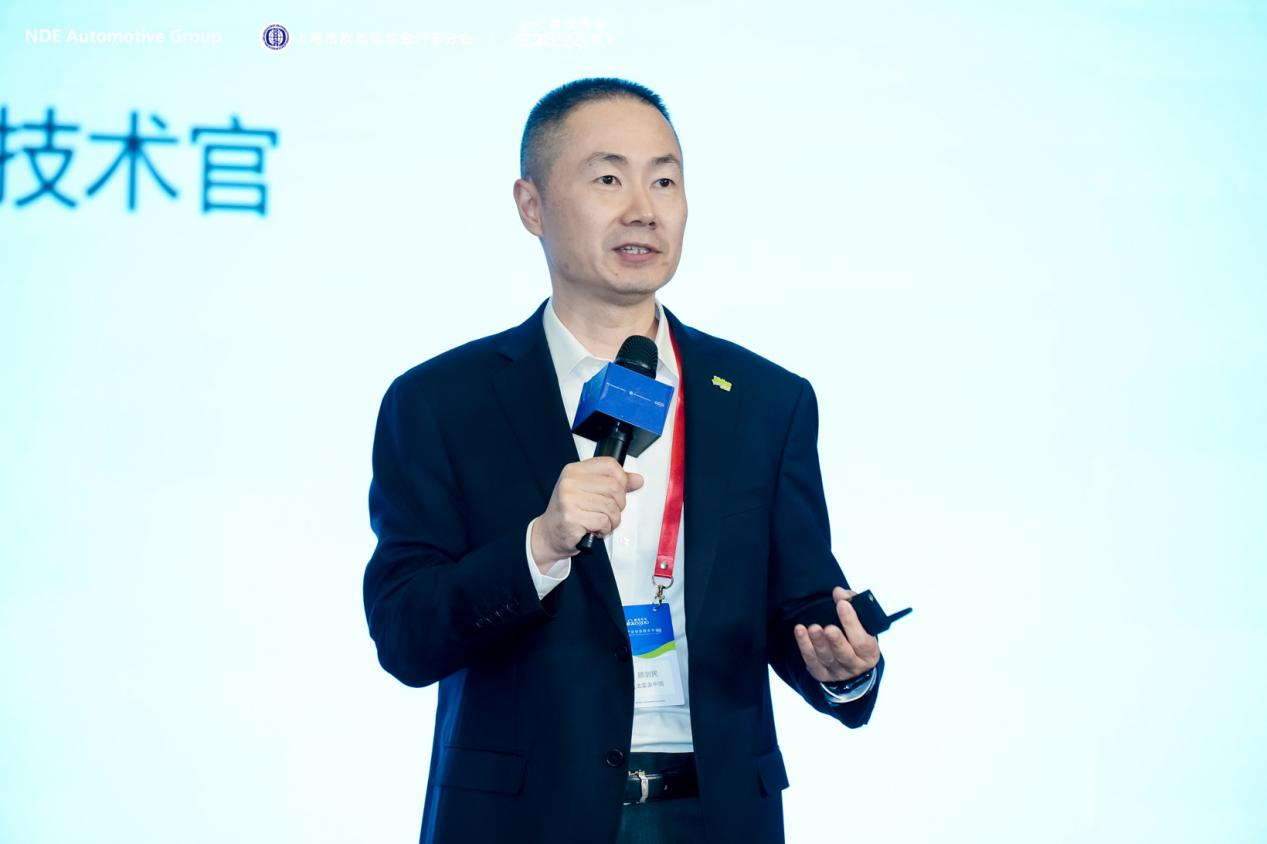
Gu Jianmin, the group’s China chief technology officer, told the 14th Automotive and Environment Innovation Forum in October that the company has moved from building in China for China to validating in China for the world. The French supplier, founded in Paris in 1923, entered China in 1994 and has run three distinct phases there: manufacturing in Hubei through the first decade, local R&D from 2004, and local innovation from 2014.
What actually gets exported
Gu described the export as a bundle of capabilities rather than products: scenario validation, platform architecture, cross-region adaptation and people. Last year Valeo filed 287 first patent applications in China, the second-highest count of any country in the group, and holds group-certified expertise across 35 core technology fields, again second only to France.
Three products illustrate the route. LED interior ambient lighting, developed for Geely’s Zeekr and Lynk vehicles, has moved to overseas customers. The PHUD head-up display began production with GAC in August and is scheduled for European and other global programmes. The Safety 360 system, an entry-level L2 package that can be upgraded to L2+, was developed by a Chinese team, launched on a Geely model, and that vehicle later earned a five-star Euro NCAP rating.
The traffic in people has reversed as well. In the 1990s Valeo posted large numbers of foreign engineers to China. Today the inbound expatriate count is in single digits, while more than 50 Chinese employees have been assigned to group roles in other regions.
Shorter cycles, more validation
Gu pushed back on the idea that compressed development cycles are inherently risky. Two thirds of Valeo’s recent products went from roughly 24 months to a matter of months, and headlamp development fell from 18 months to seven or eight. The risk, he argued, is not speed but a shortage of validation and market feedback.
The mechanism is early co-development. Valeo now works with customers before an order is placed, aligning function and performance targets up front, so some projects reach B-sample stage before the contract is signed. Counting only the order-to-production window therefore understates how much work moved earlier.
Valeo’s chief executive has described China as the gym for the global auto industry, a line Gu returned to twice. The logic is that products which survive Chinese competition and Chinese validation arrive in other markets with evidence already attached.
The manufacturing base supports that claim. Valeo’s Shenzhen plant was certified as a World Economic Forum lighthouse factory in January, the first in the group and the first in Shenzhen’s Bao’an district. Its Jingzhou site includes a two-kilometre high-speed test track built on a converted airport runway for ADAS and highway scenario testing, and the company has set up embodied AI robot training centres at its Shenzhen and Nanjing plants.
Editor’s note: This is an adapted translation of the original Gasgoo report. It has been trimmed and restructured for readability for an international business audience. The full original (in Chinese) is at https://auto.gasgoo.com/news/202610/31I70476491C106.shtml.