Geely Automobile reported third-quarter revenue of RMB 99.0 billion, up 10 per cent year on year, and core net profit attributable to shareholders of RMB 5.21 billion, up 32 per cent. For the first nine months, sales reached 2.2235 million units, revenue RMB 272.6 billion and core net profit RMB 14.9 billion, up 3, 13 and 41 per cent respectively.
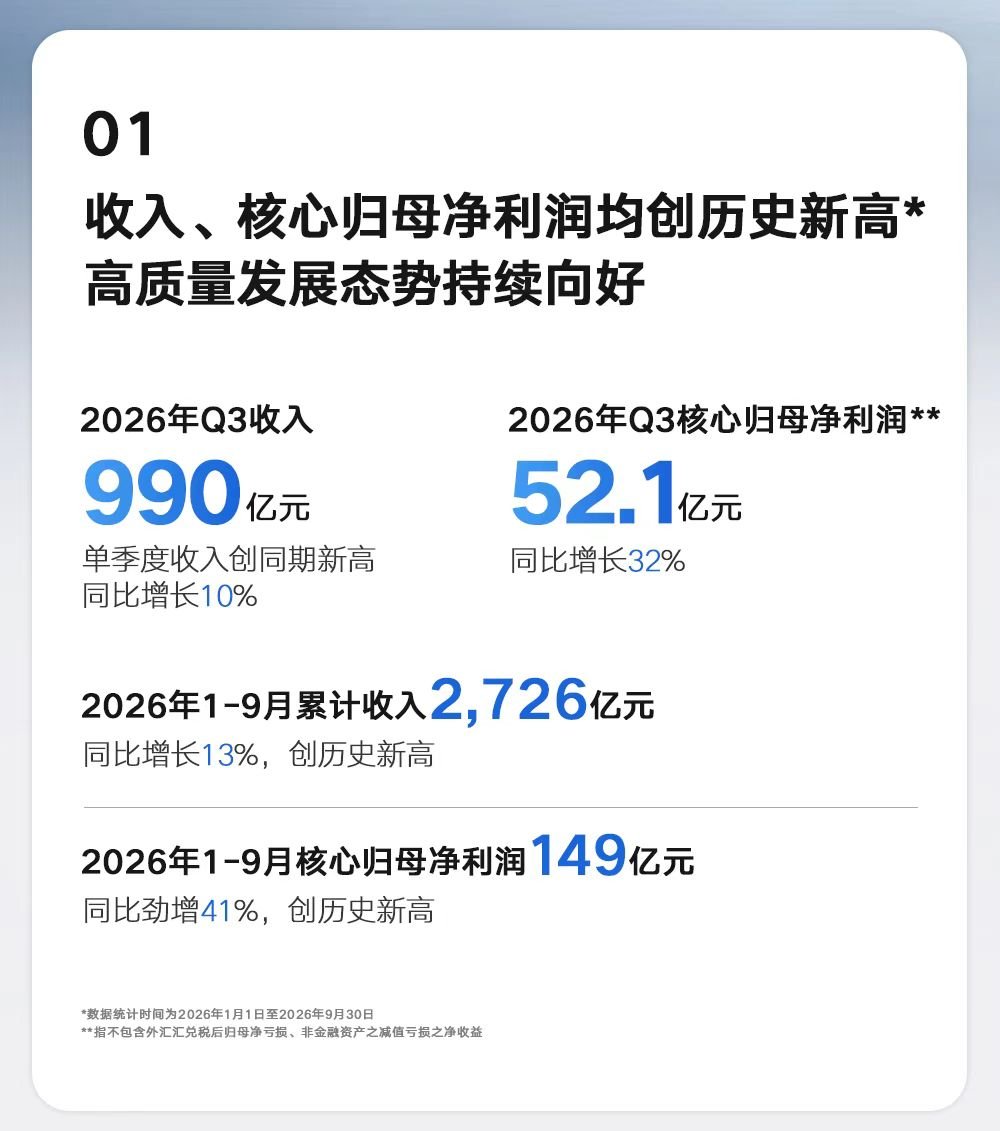
That ordering of growth rates, profit above revenue and revenue above volume, is the substantive result. It indicates that product mix, export mix and cost efficiency all moved at once, rather than volume being bought with discounts.
The tone on the earnings call was different. Vice chairman Gui Shengyue said the past three months were the most severe the company had faced in three years, and chief executive An Conghui told investors that the domestic market will shrink next year, making share and profit a fight inside a fixed pool.
A quarter that cleared its own bar
Third-quarter volume was 813,000 units, up 7 per cent year on year and 14 per cent quarter on quarter. Chief financial officer Dai Yong flagged a detail that distorts the headline: a new long-term incentive issued in August added RMB 270 million of share-based compensation in the quarter, and excluding it core net profit would have been RMB 5.48 billion.
Nine-month gross margin was 18.0 per cent, up 1.5 percentage points, with gross profit up 24 per cent. The third quarter alone came in at 18.0 per cent against 18.4 per cent in the second, which management attributed to the timing of cost reductions that cluster in the second quarter. Core net margin for the nine months reached 5.5 per cent, up 1.1 points, and core net profit per vehicle was RMB 6,664, up 37 per cent.
R&D spending of RMB 14.9 billion was roughly flat on revenue growth of 13 per cent, cutting R&D intensity to 5.5 per cent of sales. The capitalisation ratio fell from 32.1 per cent to 40.7 per cent expensed, meaning more development cost hit the income statement while profit still grew.
Four brands, four different problems
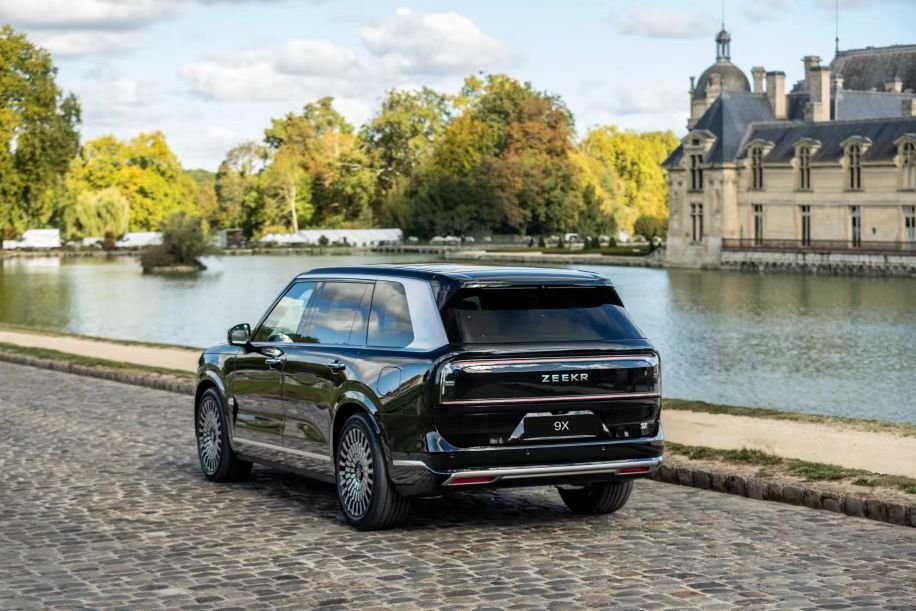
Zeekr carried the quarter, with 288,000 units in nine months, up 101 per cent and 96 per cent of its full-year target already booked. Its exports reached 83,000 units, up 533 per cent. Lynk & Co is in restructuring at 169,600 units with new energy at 71 per cent of sales, and management conceded that its positioning had blurred. Galaxy, the volume brand, sold 877,000 units and exported 344,000 on just three models. China Star held 874,000 units and remains the group’s combustion and hybrid base.
Exports, and the cost of localising them
Nine-month exports of 798,000 units rose 169 per cent against an industry average of 71 per cent. New energy exports were 484,000 units, up 531 per cent and 61 per cent of export volume, and the group has posted four consecutive months above 100,000 units abroad. Pan-Europe volume exceeded 140,000 units, up 298 per cent, with ASEAN above 170,000 and Latin America above 180,000.
Management was direct about what comes next. Chief executive Tu Jiayue said the export rebate cut is a structural trend, that Chinese competitiveness rests on electrical architecture and supply chains rather than cost alone, and that European local production currently costs 70 to 100 per cent more than Chinese production. Zeekr’s 9X carries a German price of EUR 126,000, above the comparable Porsche model.
Geely targets 3.45 million units and more than one million exports for the full year, with a 2030 strategy due in the fourth quarter.
Editor’s note: This is an adapted translation of the original Gasgoo report. It has been trimmed and restructured for readability for an international business audience. The full original (in Chinese) is at https://auto.gasgoo.com/news/202610/30I70476424C109.shtml.