Money came back into world models in the third quarter. Moxin Technology closed RMB 500 million in August. Sanqi Wanwu disclosed RMB 3 billion across a B and B-plus round in September. Wuwen Zhike finished a Series A in the hundreds of millions. A group of companies barely a year old picked up seed and angel cheques.
The unusual part is the timing of the commercial demand. World models have had less than a year of narrative. Investors and customers are already asking them to stop describing a capability and start solving a specific problem.
The framing has shifted from a universal brain to a tool that does one job well.
The deployments that exist
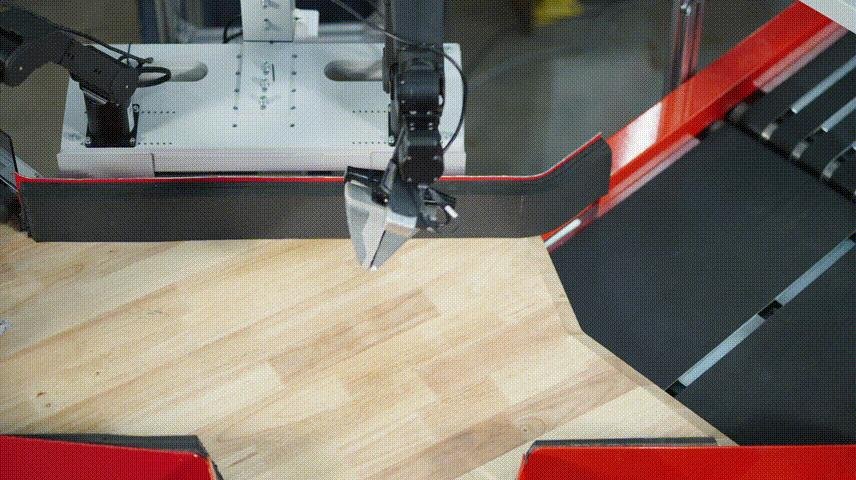
Liuxing Space signed a strategic agreement with JD Technology, with applying world models to JD’s scenarios as one of the work packages. Rimian Kaiwu put its Gravity 4D world model on a server manufacturing line.
At Yuanyu’s ICT test station, that deployment completed a proof of concept with a success rate above 99.5 per cent, and switching to a new material took 15 minutes of learning with no modification to the station. The company calls it the first industrial embodied solution built on a world model to reach POC.
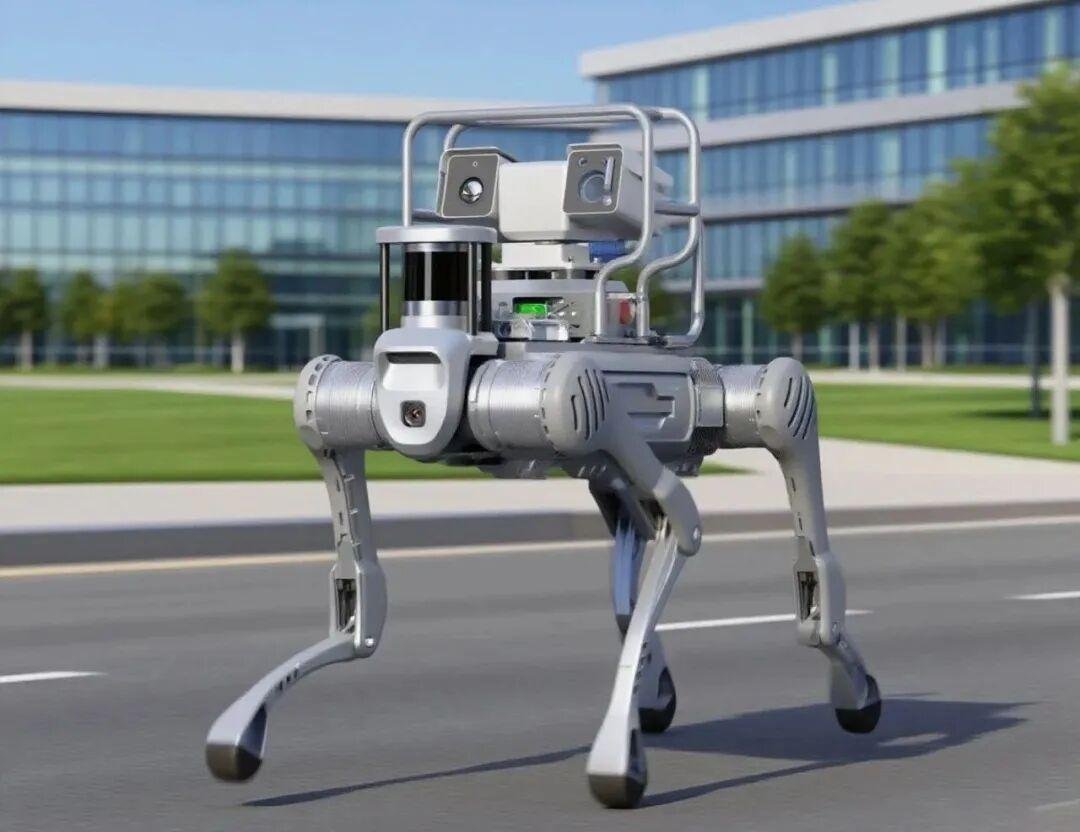
Others are narrower still. Kaola Youran is running workshop inspection and forest fire patrol, with a quadruped serving a large state-owned enterprise inspection site. Inverse Matrix is validating in data centres and chip fabrication. Gewu Tongzhi is looking at space robotics.
Three forces pushing at once
The first is that embodied AI deployment exposed a class of work that was never economic to automate. A logistics sorting system handles fixed sizes and shapes and needs human intervention the moment incoming goods vary. A production line runs a fixed programme that becomes invalid when the product changes and takes days to re-teach. Between those two there is a large volume of repetitive work that needs something that can adapt without being reprogrammed.
The second is commercial pressure. Funding buys research time but cannot substitute for revenue indefinitely. Finding a scenario that pays is now a question the company has to answer for itself, not only for its investors.
The third is technical. A universal world model has to cover a combinatorial space of objects, environments and physical rules, and the data, compute and causal modelling cost rises steeply with each addition. A vertical model has bounded constraints, so data collection, training and validation are all cheaper and more likely to converge inside a funding cycle.
The risk nobody has priced
Chen Boyuan, founder of Inverse Matrix, argues that autonomous driving, robotics and industrial simulation are the right fit because they demand physical correctness. The value also comes from places people cannot go, such as underground shafts and high-temperature zones.
The counter-argument arrived in September. GPT Astra turned out to be strong at spatial understanding and task planning when applied to robots, outperforming dedicated embodied models on those dimensions, though it remains weak on fine manipulation and speed. If a general model becomes good enough and cheap enough, the vertical model is acquired by default.
Wang Zeyuan, who leads world models at Shengshu Technology, has said as much publicly. In the large model era, general models already absorbed vertical ones. A general world model will follow the same path, though the date is far enough away to leave room.
The window that leaves is the whole business. Vertical world model companies are trying to accumulate scenario-specific know-how and defend it with a model-plus-service model that large vendors do not want to operate. That is a defensible position for as long as delivery remains manual, and not one day longer.
Editor’s note: This is an adapted translation of the original OFweek report. It has been trimmed and restructured for readability for an international business audience. The full original (in Chinese) is at https://robot.ofweek.com/2026-11/ART-8321202-8420-30711007.html.