A self-driving system can see a car, a pedestrian, a red light. What it struggles with is time. XPeng says its second-generation VLA model fixes exactly that, trading a static 3D view of the world for a moving 4D one.

From 3D space to 4D spacetime
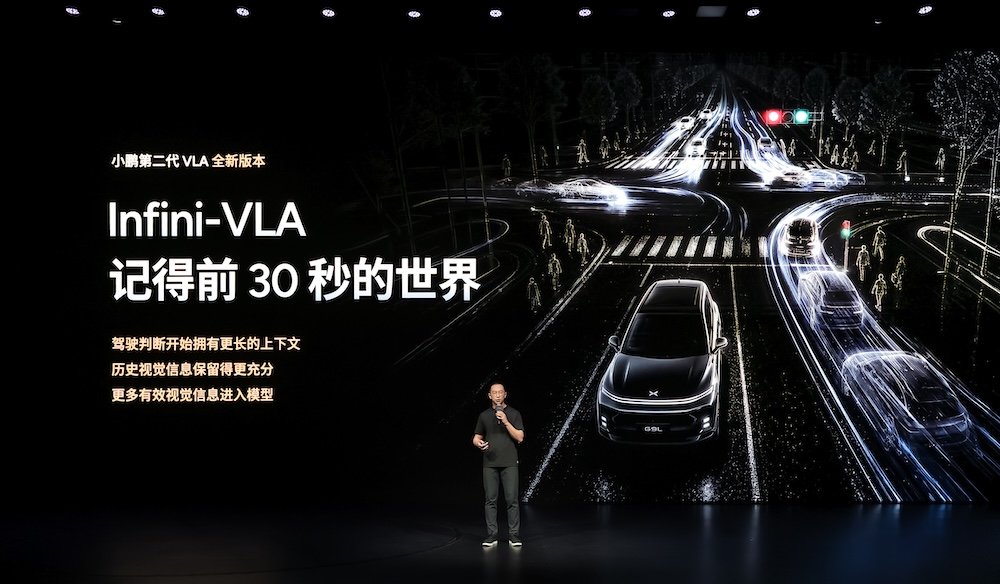
At a recent briefing, Liu Xianming, head of XPeng’s general intelligence centre, argued the industry over-indexed on spatial understanding: knowing where things are now. Physical AI, he said, also has to know how a situation developed and what comes next. The upgrade, shipped as XOS 6.3.0, builds “time” into the model through three capabilities: remember the past, predict the future, respond faster.
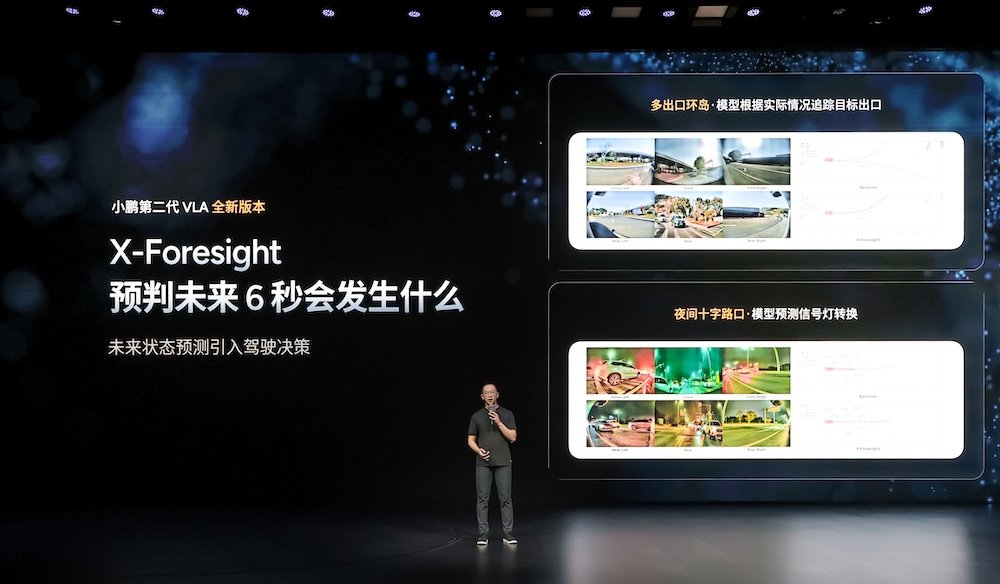
The Infini-VLA long-sequence architecture remembers the previous 30 seconds as one continuous event chain rather than disconnected frames. The X-Foresight world model predicts the next six seconds of road-user behaviour from position, speed, motion trend and road structure, with internal tests reaching up to 21 seconds. Streaming inference lets the model perceive, think and act at once, lifting end-to-end response by 300 per cent.
Together the three modules close a spatiotemporal decision loop: Infini-VLA owns the past, streaming inference the present, X-Foresight the future.
Why it matters for the driving stack
The harder problem is the compute bill. Holding 30 seconds of history and a six-second forecast on top of road structure, traffic participants, right-of-way and navigation intent pushes against the physical limit of in-car chips. XPeng’s answer is a tighter software and hardware co-design rather than bigger models for their own sake.
For European observers, the signal is that China’s smart-driving teams are competing on temporal reasoning, not just sensor counts. The car that understands time is the car that handles like a human, and that is where the next leg of the autonomy race is being run.
Image gallery



Editor’s note: This is an adapted translation of the original CheDongXi report. It has been trimmed and restructured for readability for an international business audience. The full original (in Chinese) is at https://chedongxi.com/p/375182.html.
Translated and adapted from CheDongXi (https://chedongxi.com/p/375182.html).