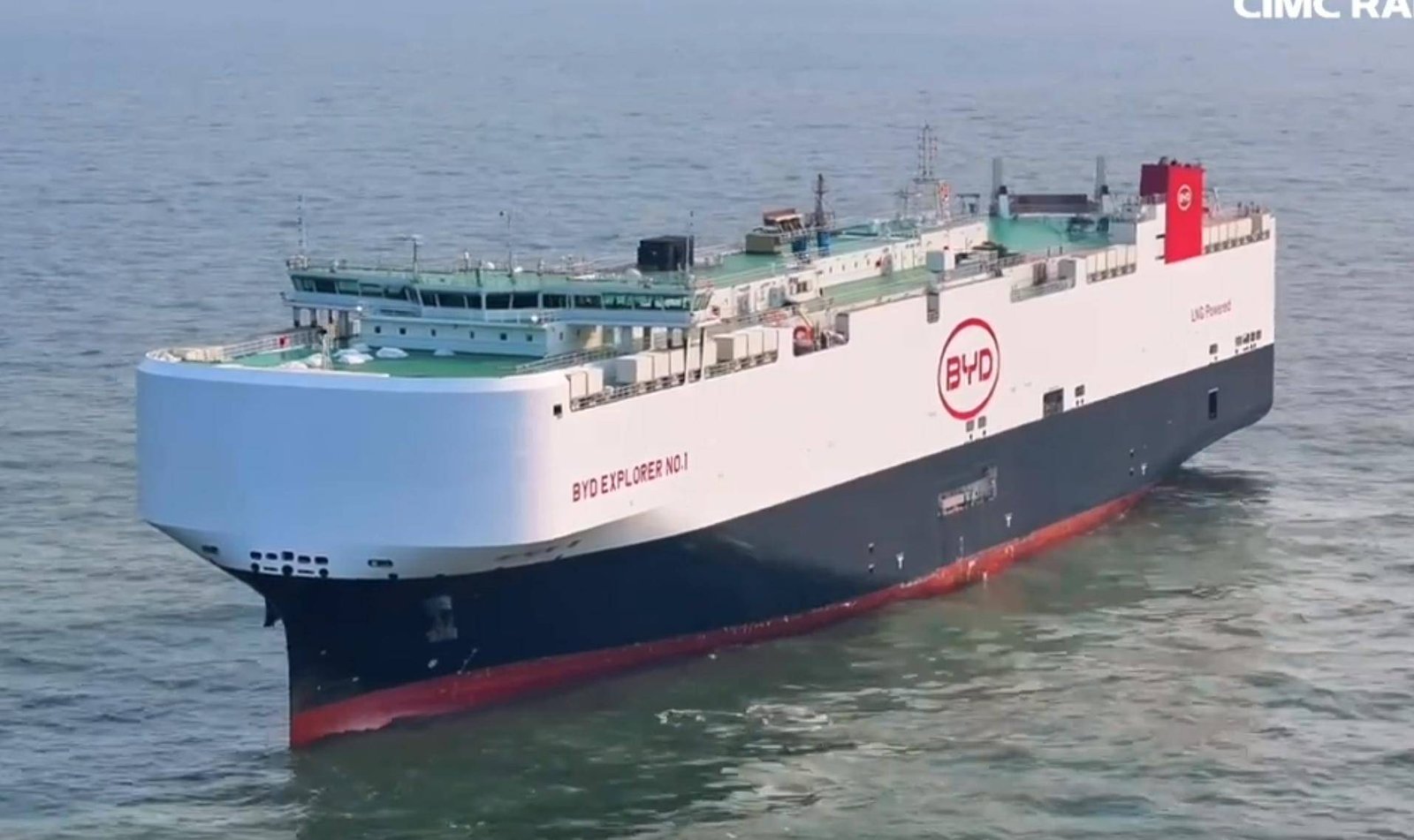
Chinese cars cost far more abroad than at home.
Take the Xpeng MONA L03, launched in Munich on July 16. Its pure-electric version starts at 35,600 euros in Germany (about 276,000 yuan); the extended-range version starts at 38,600 euros (about 299,000 yuan). In China, the same EV sells for just 123,800 to 156,800 yuan, and the extended-range version for 123,800 to 146,800 yuan. The overseas price is nearly double the domestic one.
The MONA L03’s “affordable at home, premium abroad” strategy is now the norm as China’s auto industry globalises. BYD’s premium Denza Z ran the same playbook: priced overseas at 142,900 to 172,900 pounds (1.3-1.58 million yuan), roughly double its Chinese pre-sale price. Geely’s Galaxy E5, BYD’s Han EV, Zeekr X and Xpeng X9 all follow the same model — high prices abroad, volume-driven low prices at home. With the domestic market locked in brutal price wars and industry-wide margins scraping bottom, chasing global profit has become the key route for Chinese automakers to escape the growth trap.
Reshaping the profit map
China’s passenger-car market has sunk into deep price competition. In January-May 2026, total industry profit was 144 billion yuan at a margin of just 3.4% — a five-year low, a state of “rising revenue, falling profit.” Overseas is the mirror image. China’s average NEV export price has reached $29,800, topping $40,000 in high-end European and US markets, and leading automakers’ overseas gross margins are near or above 20%. Goldman Sachs and others estimate Chinese carmakers’ overseas export margins run more than 40% higher than domestic ones.
Take BYD: its Q1 results show overseas revenue already at about 70% of vehicle revenue. Citi estimates BYD’s Q1 net profit per exported car at around 18,000 yuan; JPMorgan projects roughly 20,000 yuan per overseas car by 2030, versus about 6,000 yuan domestically. Geely, Changan and Xpeng have all stabilised and lifted overall profitability on high-margin overseas models. Europe is now the single largest and most profitable arena: China exported 1.511 million cars there in 2025, up 32%, the first overseas region past 1.5 million units. Chinese brands’ share in Europe rose from 9.5% in December 2025 to 10.7% by May 2026; AlixPartners forecasts 16% by 2030.
Globalisation accelerates
The profit windfall is driving Chinese carmakers to globalise faster, and exports have exploded. Per the China Association of Automobile Manufacturers, June exports topped one million units in a single month for the first time (1.037 million, up 75.1% year on year). H1 exports crossed five million for the first time, at 5.096 million (up 65.3%), with NEV exports of 2.355 million (up 120%).
The export map is diversifying while breaking into high-end markets. Half of the top ten NEV export destinations in early 2026 were European. The old “domestic first, then overseas” launch logic is being upended: the MONA L03 debuted directly in Germany, and Xpeng chairman He Xiaopeng says future global models will launch worldwide from day one. Rising European petrol prices — now above 2 euros a litre in major markets — only sharpen EVs’ cost advantage. AlixPartners predicts China’s 2026 auto exports could reach 10 million units, the first country ever to cross that line, about 2.5 times Japan’s exports. Even joint-venture brands are exporting in reverse from China: Ford’s China exports grew 265% over four years.
Challenges remain
Yet rising trade protectionism clouds the long term. The EU, China’s core overseas market, is preparing anti-subsidy tariffs on Chinese-made plug-in hybrids, covering BYD, Chery and SAIC — a follow-on to existing extra tariffs on pure EVs. The trigger: China’s PHEV exports to the EU surged 155% in 2025, far outpacing pure EVs, which Brussels reads as tariff circumvention. To soften friction, the EU has offered a “minimum price” commitment mechanism letting carmakers set price floors to avoid steep tariffs — a buffer that also compresses Chinese firms’ overseas pricing flexibility. Domestic price wars will persist and the shakeout is not over, but leading players, armed with technology, capacity and supply-chain advantages, look set to consolidate — pushing China’s auto industry from “exporting volume” to “profiting globally.”
Source: Sohu IT. Translated and adapted from Sohu IT (it.sohu.com).