China’s robotics sector ran hot again this week. By the midday close the flagship robot exchange traded fund was up 6.68 per cent, with the whole supply chain moving together. Orbbec climbed close to 20 per cent, core component makers Leaderdrive and Haozhi Mechatronic surged, and Leadshine Technology and Zhongda Leader both hit their daily limit.
This was not a pure theme trade. Behind it sits a set of hard industrial and policy signals arriving at once, and together they say something specific. Humanoid robots have stopped being a distant concept and have reached the point where scale deployment is the live question. More to the point, China has quietly taken a dominant position in the category.
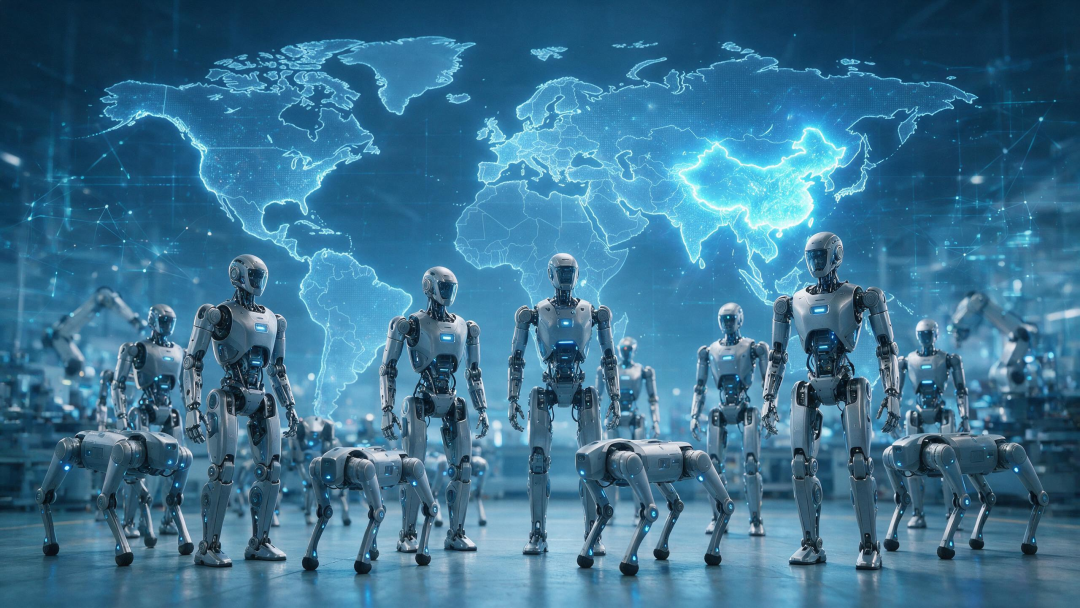
The number: eight out of ten
The confidence behind this move came from an official statement by the National Development and Reform Commission. The agency confirmed that of the humanoid and quadruped intelligent robots sold worldwide today, eight out of every ten are made in China.
That figure carries weight. A few years ago, humanoid robots were exhibition pieces, more spectacle than utility, with commercial deployment far out of reach. In a very short window, the domestic industry moved from follower to first tier.
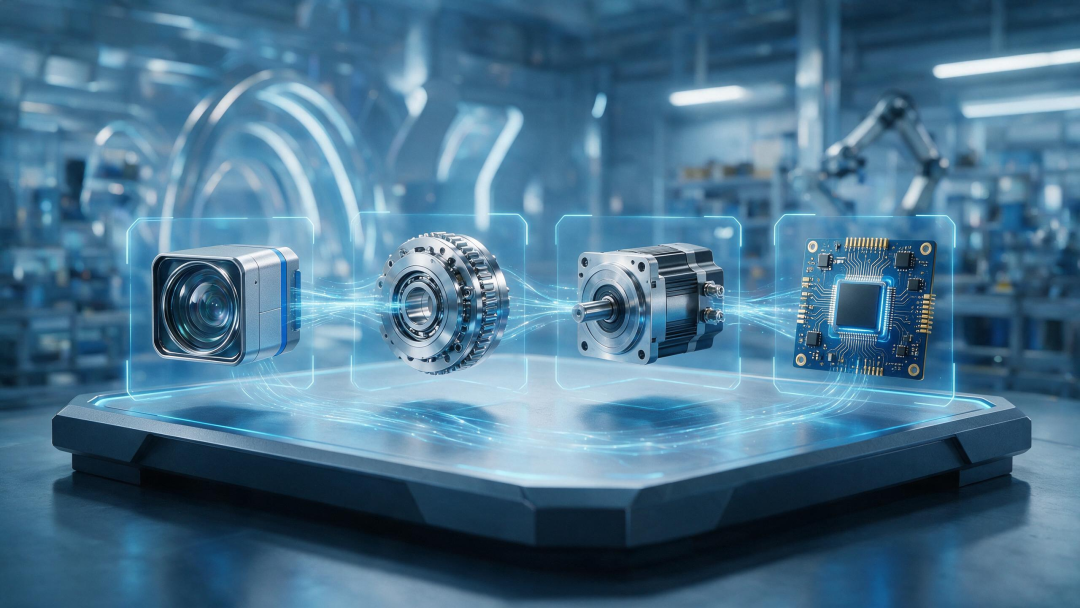
The advantage did not appear by accident. It is the product of manufacturing depth meeting domestic demand. On the supply side, China holds the most complete high-end equipment chain in the world. Three-dimensional vision, precision reducers, servo motors, control systems, all of them have mature domestic suppliers, which means fast matching, fast iteration and low volume cost. On the demand side, an ageing population and rising manufacturing labour costs have made repetitive, high-intensity roles hard to fill and expensive to keep, which hands domestic robot makers an enormous set of deployment scenarios and room to fail cheaply.
That is why the stocks that moved covered the whole stack. Orbbec supplies the eyes through three-dimensional vision. Leaderdrive and Zhongda Leader hold the joints through reducers. Haozhi Mechatronic and Leadshine handle motion through servo drives. Rising demand for finished machines feeds upstream first, and that is the honest logic behind the sector move.
The listing: the category enters its capital phase
If market share proves manufacturing capability, then a leading company’s earnings and listing plans prove commercial capability.
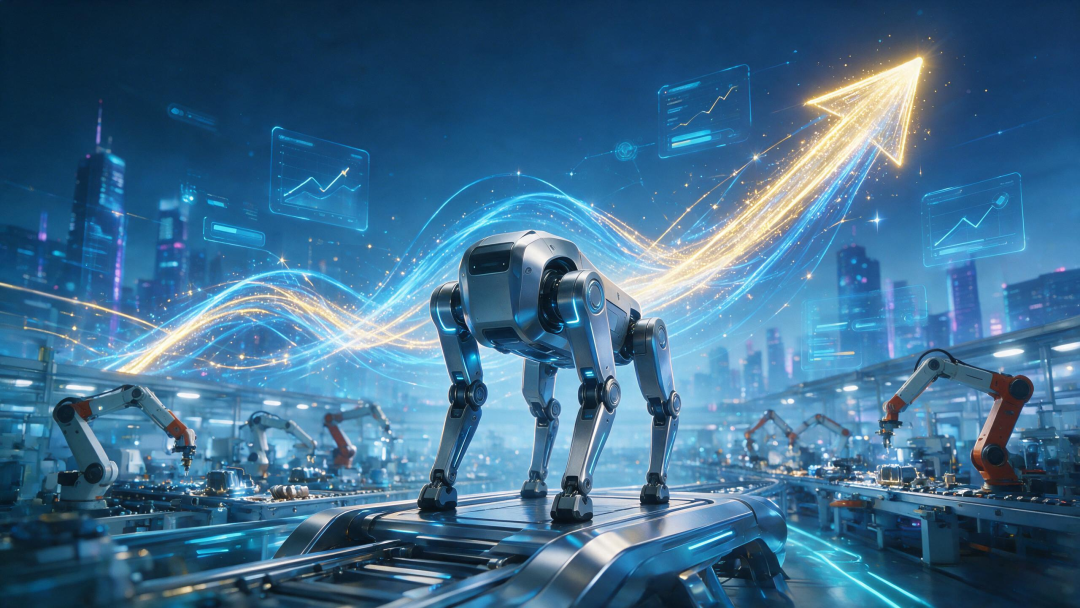
Quadruped robot leader Unitree has confirmed it is pursuing a listing on the Shanghai STAR Market, with pricing and subscription due in early August. The earnings guidance is the more striking part. First-half 2026 revenue is expected to break 1.05 billion yuan, roughly 147 million dollars, and could reach 1.128 billion yuan, growth of more than 35 per cent year on year and approaching 46 per cent at the top end.
The company’s explanation is direct. Demand in embodied intelligence has broken out and business scale keeps expanding.
That set of numbers dismantles the assumption that robotics only burns money. For most of the last decade, humanoid work sat in research and testing, funded by rounds rather than revenue. Now the leaders are posting scale revenue and steady growth, and the sector has left the slide-deck phase behind.
A leading listing matters beyond the company itself. Capital lets the firm spend more on research, expand lines and cut unit cost. Order growth at the whole-machine level then pushes upstream, pulling component suppliers into faster iteration and higher volume, which builds a loop of better technology, lower cost, wider deployment and stronger demand.
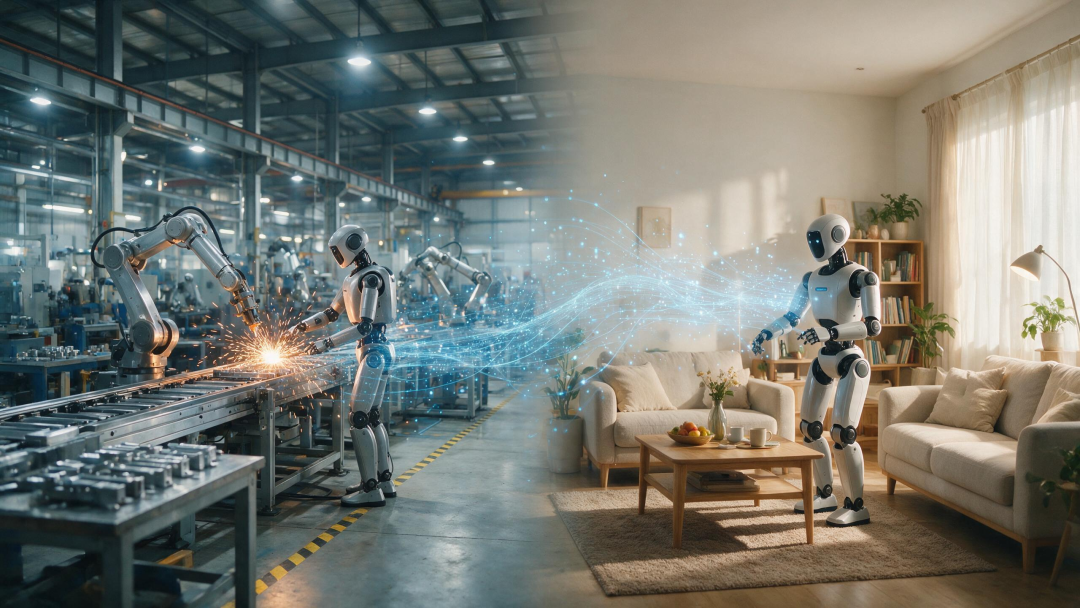
The turn: from the plant floor towards the household
The constraint on robotics used to be intelligence. Machines followed fixed programmes, could not adapt to messy environments, and were barely useful outside a cage. Large models and embodied intelligence changed that, giving machines autonomous perception, judgement and learning.
Layer in the structural drivers and the growth case is clear enough. Labour cost inflation and demographic ageing are not reversible, so replacing people in inspection, material handling and assembly has become a manufacturing necessity rather than a preference. On deployment pace, overseas leaders such as Tesla keep pushing mass production, which validates the commercial path, and Chinese firms follow and iterate fast. On market size, the sector is moving from industrial customers towards consumer service scenarios, which is where the imagination sits.
Put simply, the constraint used to be immature technology and too few use cases. Now technology is maturing, demand is breaking out, capital is engaged and policy is supportive.
The cold water
None of this makes the sector mature. A short-run price surge is not the same as a finished industry.
First, most humanoid work remains small-batch delivery and pilot deployment. Broad adoption and real profit still take time, and cost, stability and intelligence remain the three unsolved problems.
Second, iteration is brutally fast. New designs, new algorithms and new hardware keep arriving, research spending stays high, and a company that falls behind the cycle gets removed quickly.
Third, after this move the sector is crowded and valuations are not cheap. Whether the rally holds depends on real orders, real revenue and real profit. Theme trading does not last.
What it adds up to
Eighty per cent of global share, breakout earnings at the leaders, a capital market phase opening, and AI capability compounding. Those signals point at an industrial inflection rather than a passing technology fashion. Short-term price moves are sentiment. Long-term growth is the industry itself, and only the companies that hold core technology, deploy successfully and turn a profit will catch it.
Risk note: the original is an industry trend analysis and does not constitute investment advice.
Editor’s note: This is an adapted translation of the original OFweek report. It has been trimmed and restructured for readability for an international business audience.