Beijing Xiantu Qiyuan Technology has closed its first seed round worth tens of millions of yuan, led by Qifu Capital, with Scale Partners acting as exclusive financial adviser and several institutions still completing follow-on closings.
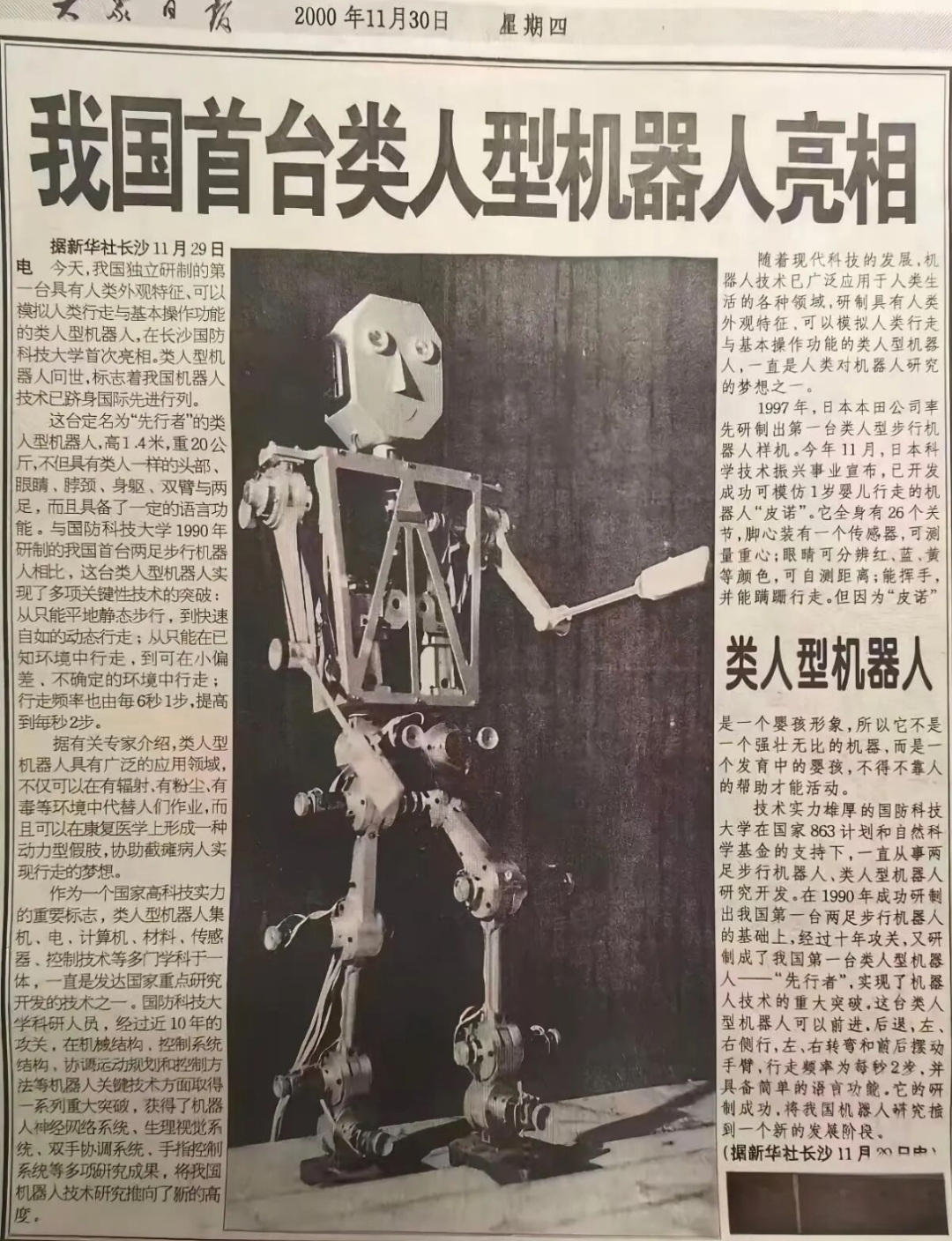
The core team comes entirely from the robotics laboratory of the National University of Defence Technology, which built China’s first humanoid robot, the Xianxingzhe, in 2000 and its first-generation quadruped, the Tiemao. For three decades the lab has run national robotics programmes, and many leading Chinese humanoid and quadruped firms drew their early engineers from it.
Chairman and chief executive Qin Haili brings 20 years of military equipment project management. Chief technology officer An Honglei formerly served as deputy director of the robotics lab and led national robotics projects, while chief financial officer Li Zepeng comes from robotics industry investment. The founders frame the move as a relay of lab technology into industrial productivity rather than a simple commercial spinout.
What the military pedigree brings
Most humanoid and quadruped units perform smooth running and jumping at launch events but fail at gravel, strong electromagnetic interference and extreme temperatures, struggling to hold a stable task loop. Xiantu Qiyuan’s moat is full-stack forward research: joint modules, mechanical hardware, motion control, multi-robot swarm coordination and a multimodal perception embodied brain, all self-developed, with the quadruped and humanoid platforms sharing a high degree of code.
Instead of chasing visual spectacle, the team ports military equipment reliability standards into civilian products, building extreme-condition stability, key-system redundancy and full-process quality verification into the specifications from the design stage.
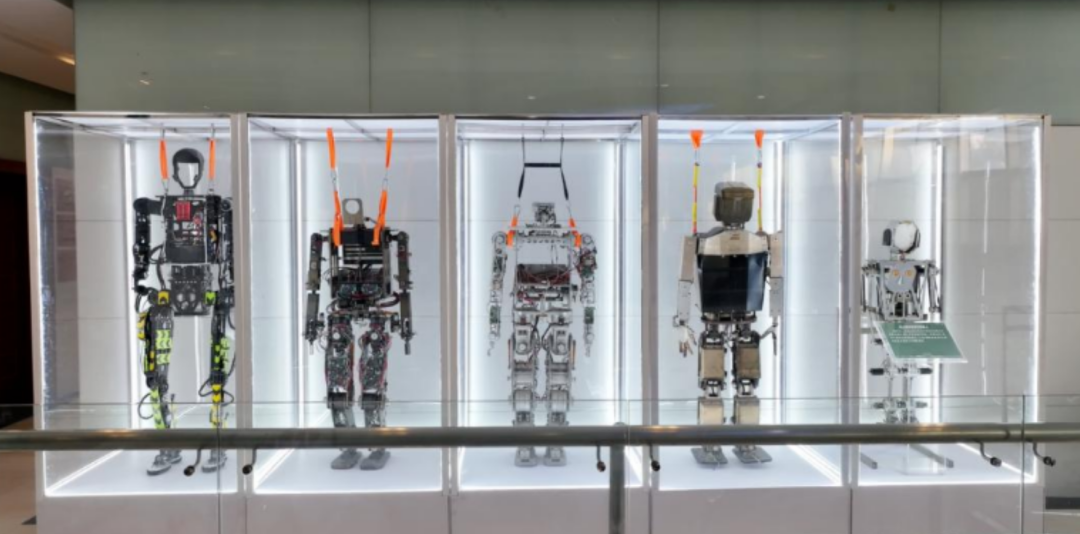
The capability maps to two clear tracks. The first is special high-risk quadrupeds for emergency rescue, power inspection and complex-terrain transport, working through rubble, mountains and jammed communications under heavy load. The second is industrial mobile-manipulation robots, where the team enters the power sector first, a scene with standardised workflows and high safety thresholds that demands tight coordination of hand, eye and brain.
Has the race already changed
Under the plan, Xiantu Qiyuan will finish a basic quadruped and ship it in small batches in 2026, then push scaled delivery in special and power scenarios in 2027. The fresh capital funds research-team expansion, quadruped production preparation and joint scenario research on the industrial mobile-manipulation robot.
The company’s entry reflects a shift in the embodied-intelligence sector. The first half rewarded the flashiest prototype. The second half rewards tools that complete tasks reliably, and paying industrial customers are the root of survival. Military-grade reliability methods transferred to civilian products answer the sector’s largest gap: long-term work in unstructured environments. A lab team with twenty years of robotics heritage now faces supply-chain polish, scenario customisation and cost balance, but the route from research to industry is open.
Editor’s note: This is an adapted translation of the original OFweek report. It has been trimmed and restructured for readability for an international business audience. The full original (in Chinese) is at https://robot.ofweek.com/2026-09/ART-8321202-8420-30704409.html.