A car that reads intent before you speak
At this year’s Apsara Conference, Banma Intelligent laid out how it plans to move from the car cockpit into embodied intelligence, opening with a deceptively ordinary scene. On a Friday evening you get into the car and say nothing. The AI already knows Saturday is your daughter’s birthday, suggests a countryside farm outing because she likes nature, and flags a top-rated Jiangzhe restaurant along the route after recalling you mentioned missing that cuisine. You answer with one line, and the task is done, no app opened, no search, no comparison.
Banma frames this as active intelligence: the machine reads intent directly and completes the task, rather than waiting for a translated search term or a tap.
Why the car is the pilot plant for embodied intelligence
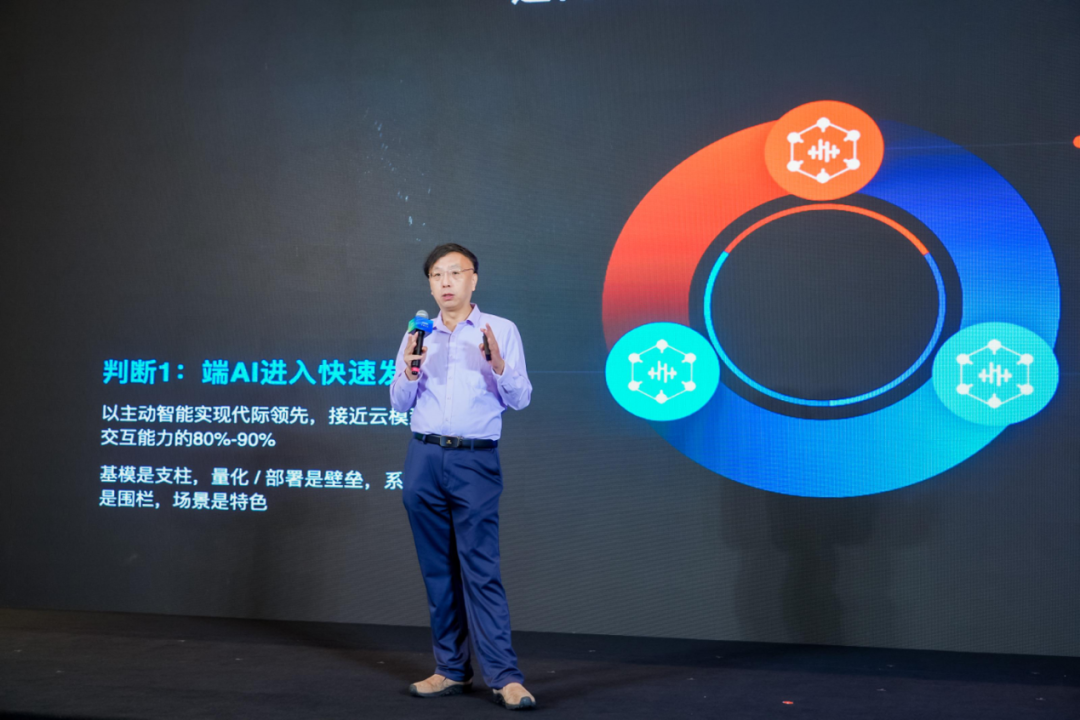
Alibaba chief executive Wu Yongming told the conference’s opening that machines are becoming the main force of thinking, and that thinking will be supplied at scale like power was in the industrial revolution. He put future machine thinking at 1,000 times that of humans, against under 3 per cent today, leaving tens of thousands of times of headroom.
The car is the largest and most mature setting for embodied intelligence, and Banma is the case study that entered through the vehicle, taught it to think, and is now pushing the validated skill to other hardware. Zhang Yongwei of the Che Bai Hui institute argues smart cars and embodied robots are already forming a connected industry group that shares a technology base, supply chain and innovation resources, and that the path from car to embodied has entered real validation.
Banma’s edge is that it has already landed at scale. Its cockpit system sits in tens of millions of vehicles, its in-car AI covers 68 per cent of mainstream carmakers, on-device intelligence has 63 per cent penetration, and it counts more than 400 ecosystem partners. Real users, real needs and real data are its scarcest asset, the kind a lab cannot reproduce.
From keyword to intent economy
Chief product officer Cai Ming argues that putting a large model in a car is not the same as winning users, and that deep usage is the true battleground. The industry has spent two years stuffing models into cockpits while users still issue a handful of fixed voice commands, and most firms dare not publish how often AI is actually called.
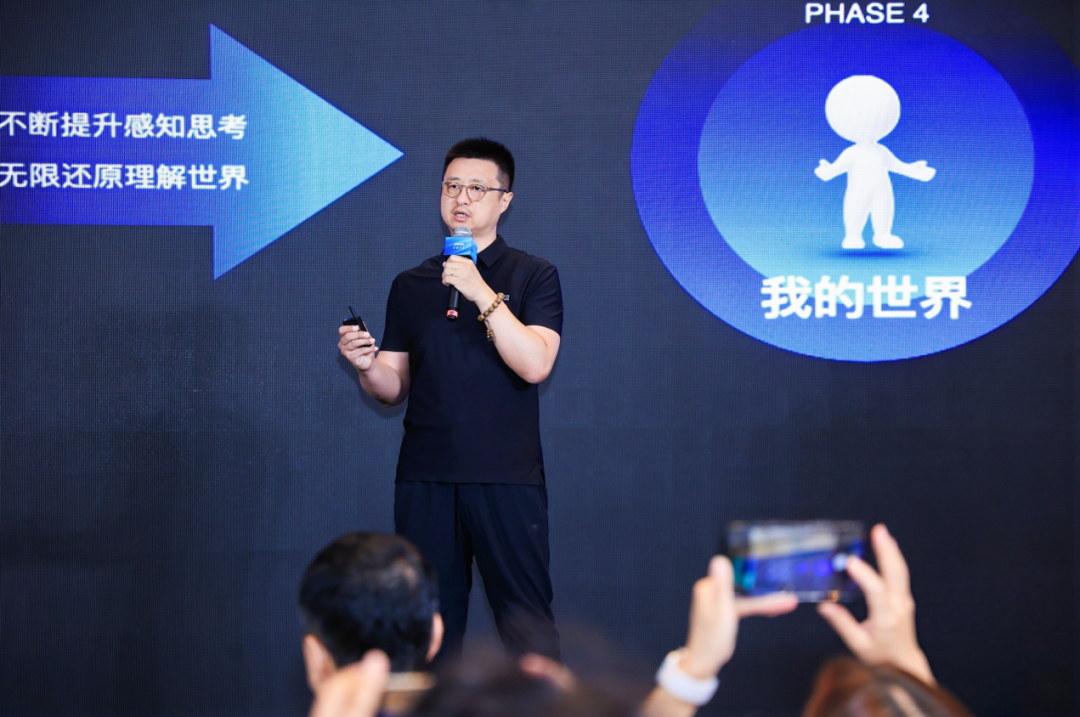
Banma’s answer is intent economy. The internet age was keyword economy, where search found information but did not act. Mobile was attention economy, with app loops that rarely crossed boundaries. The AI era, Banma says, lets a front-end model read intent through context and memory, then call back-end services directly, even across apps and devices.
In the car, with its high frequency, enclosed space and native link to payment, intent economy lands first. The full loop is intent recognised, agent completes the task, user pays, and carmaker with partners shares the take, much like the Android split between system, hardware and developers.
The AutoOmni stack and the ecosystem moat
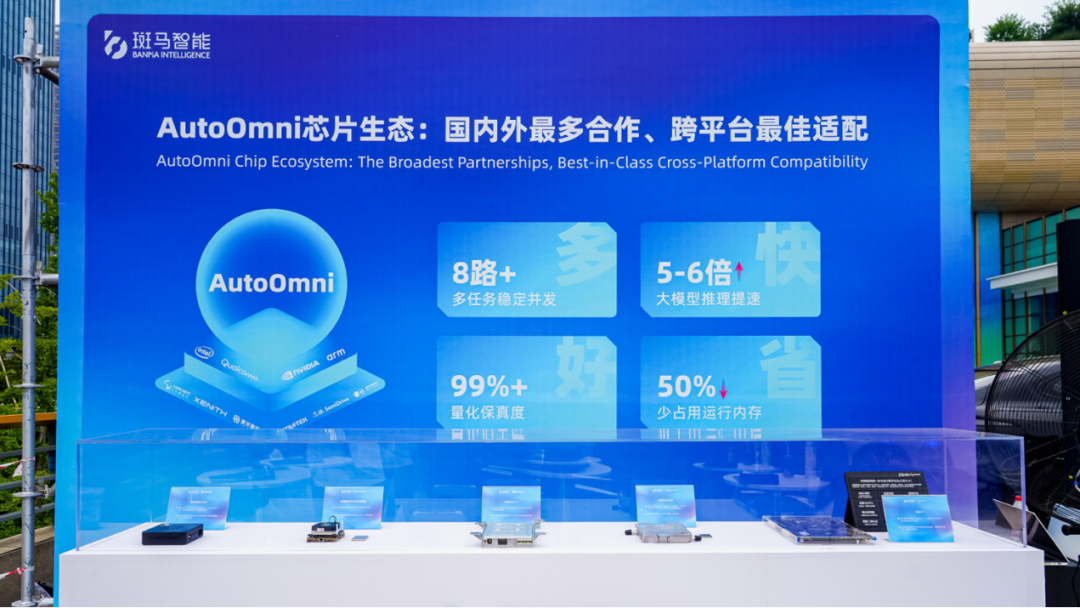
The engine behind that understanding is AutoOmni, a full-modal on-device model. AutoOmni-4B improves cockpit text, visual scene and voice-emotion understanding, and at Apsara Banma released AutoOmni 2.0-23B-A3B to push on-device ability further. Its chip ecosystem runs multi-task concurrency, speeds inference five to six times, keeps quantisation fidelity above 99 per cent, halves memory use, and adapts to Qualcomm, Nvidia, UNISOC and Xiaopeng Turing AI platforms.
Co-chief executive Hao Fei calls the shift an interaction-paradigm change built on two pillars: always-on, wake-free operation and context with memory. Where a wake word may capture a few minutes of intent a day, AutoOmni observes, listens and remembers across a full hour in the car and folds in cross-device context.
Above AutoOmni sits an end-cloud integrated agent architecture that links cloud and device compute, the user’s devices and the user with services. Banma’s three-layer business stacks AliOS and open Android at the base, cloud AutoClaw and on-device AutoOmni in the middle, and in-car ecosystem services on top, with more than 50 of its 400-plus content and service partners on revenue-share deals. Alipay’s AI cockpit plus AI payment is already connected, giving service finds user a direct way to earn.
Out of the cockpit, into the factory
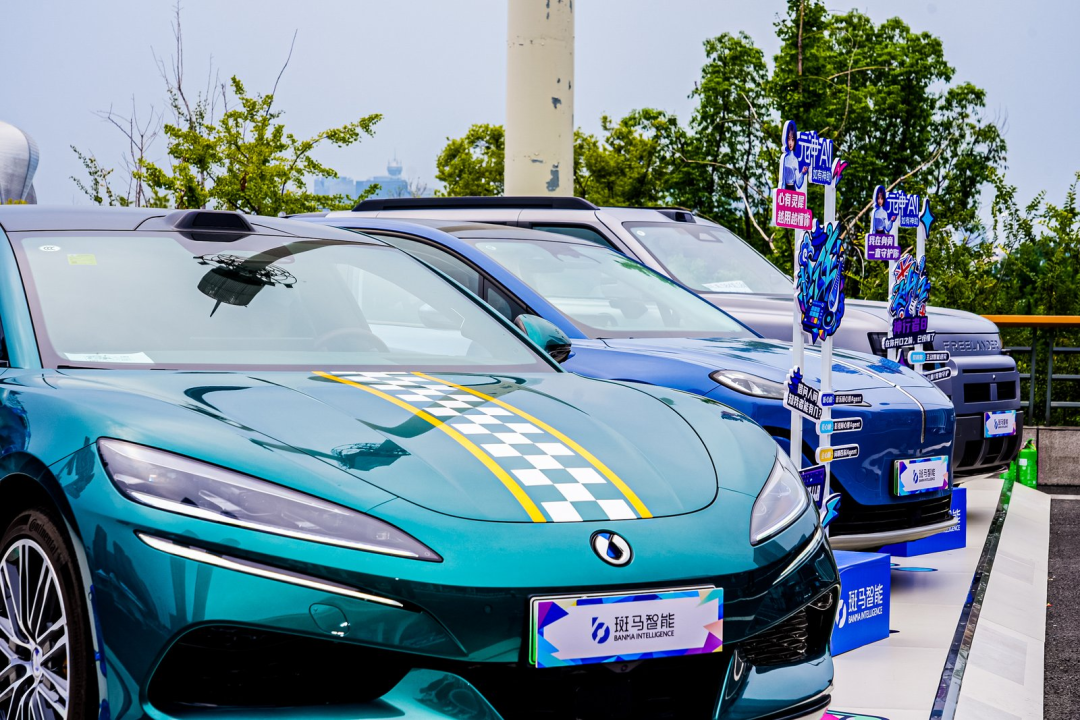
Banma has already run the car case through: the first full-modal on-device model car on the 8397 platform, a number-one on-device share and designated projects at ten carmakers. The next move is replication, extending end-AI interaction from cockpit to phone, smart home and wearables, and reusing the world model in robots, games and digital twins.
The cockpit, Banma argues, is simply the first scenario that worked. Once a model understands life inside one car, a home or a factory is not far behind. The real contest in embodied intelligence may not be who builds a robot first, but who proves intelligence in a mature setting and then copies the validated technology and ecosystem onto new devices.
For European automotive and industrial players, Banma shows a Chinese route where the car is treated as the cheapest, highest-volume laboratory for embodied AI, and where the prize is not a feature but a paid, cross-device ecosystem with the original equipment maker taking a cut of every transaction. That reframes the cockpit from a cost centre into a recurring-revenue platform, a model European brands will be pressed to match.
Editor’s note: This is an adapted translation of the original LeiPhone report. It has been trimmed and restructured for readability for an international business audience. The full original (in Chinese) is at https://www.leiphone.com/category/ai/c5xfhIwWHqSfnGrS.html.