China’s most expensive private humanoid company has a number problem, and it is not the valuation. Galaxea, the Beijing embodied-AI builder founded in September 2023, has been reported at a valuation above RMB 20 billion after two funding rounds in the first half of 2026, placing it at the top of the country’s unlisted robotics pack. What has not been produced is a set of accounts that anyone outside the company has seen.
The cap table is the argument
The company’s pitch starts with people. Three of its four co-founders came out of Tsinghua University. Chief executive Gao Jiyang read electronic engineering at Tsinghua, took a computer vision doctorate at the University of Southern California, then worked on autonomous driving production programmes at Waymo and Momenta. Within six months of incorporation the company had a tens-of-millions-dollar angel round led by IDG Capital. More than ten rounds later it has raised close to RMB 5 billion in total, with Ant Group, Gaorong Ventures, IDG, Meituan Longzhu and Baidu Ventures on the register.
The sector backdrop explains the multiples. Domestic embodied-AI startups raised RMB 93.5 billion in the first half of 2026, five times the same period a year earlier, across 322 deals, up 137 per cent. Chinese manufacturers pushed more than 400 humanoid models into the market in the same half year and built over 40,000 units, with full-year output expected to pass 100,000.
What the order book actually contains
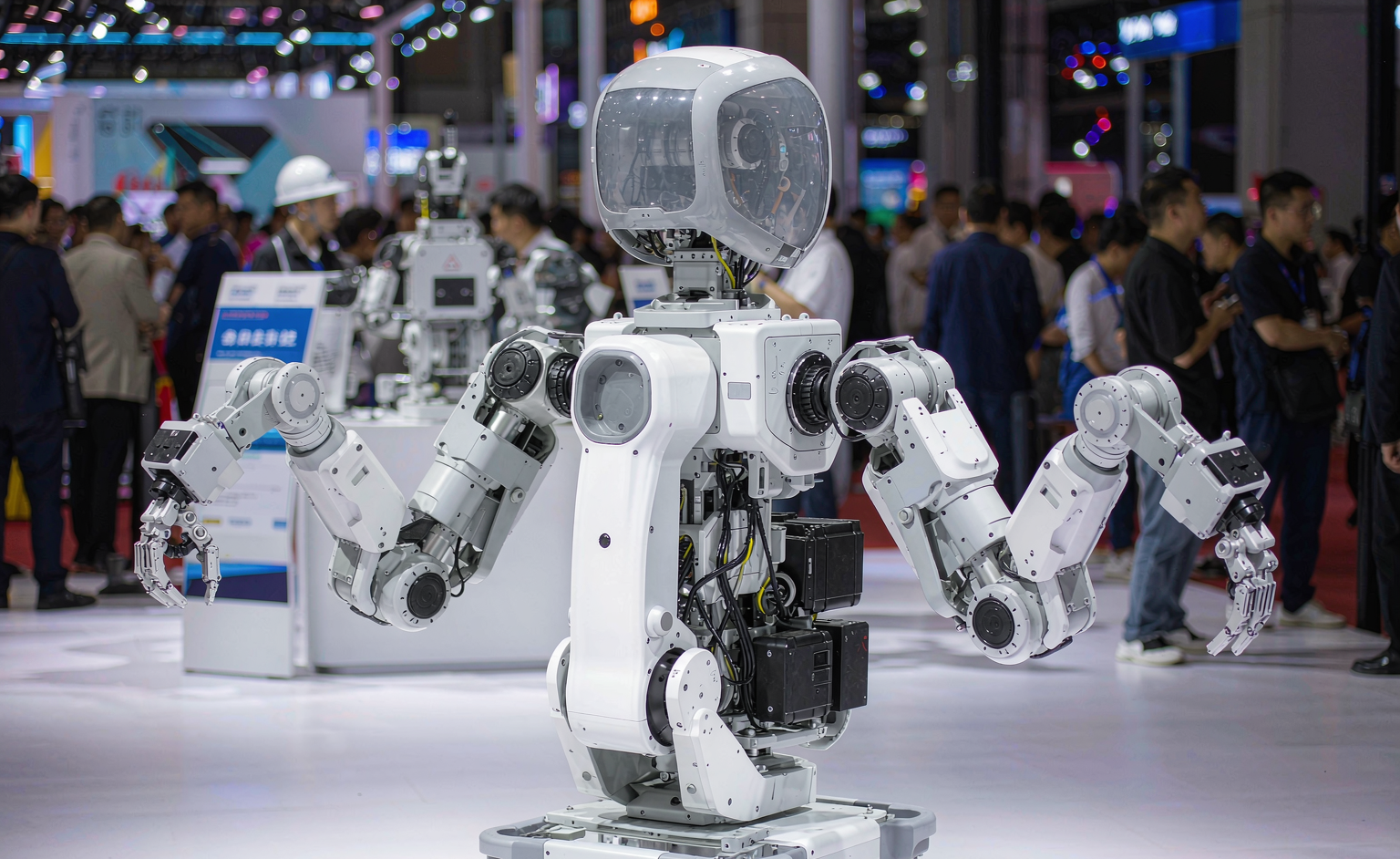
Galaxea’s technology story is coherent. It runs a one-brain-many-bodies architecture, builds its own wheeled dual-arm hardware across three product lines, open-sourced its G0.5 model in June and claims leading scores on LIBERO, BEHAVIOR-1K and RoboTwin 2.0. It serves more than 40 customers, including Samsung, Ant Group and Haier, plus Tsinghua and Zhejiang universities. In August it signed a three-year deal with JD.com to build robot-operated front warehouses.
The commercial numbers are softer. The company has never published audited revenue. Its delivery language has moved three times in six months. In April, alongside a RMB 2 billion B+ round, it said it had “run through” thousand-unit orders. In August the chief executive described delivering thousand-unit, model-driven productivity units and set a 10,000-unit target for next year. In September a commercial director said the company had taken “over a thousand units of real productivity orders” in 2026. None of those figures has been independently confirmed.
Public procurement records offer a scale check. Galaxea won three tenders from Beihang University and the Harbin Institute of Technology’s astronautics school this year, covering two wheeled dual-arm robots and one R1 Lite. The combined value was under RMB 900,000.
The related-party question
In June the company formed a data joint venture in Beijing’s E-Town district with the local government authority, called Yishu Intelligence, and launched a million-hour real-world data programme. In its first month the joint venture bought RMB 24.98 million of robot bodies from Galaxea on a single-source basis, without disclosing models or quantities. Galaxea is both investor and supplier.
That structure is now the industry’s sore point. More than 100 centralised data-collection centres have appeared across China in two years, and they have become a standard instrument in local government investment negotiations. Mech-Mind founder Shao Tianlan attacked the practice publicly in September, describing “assembled” embodied-AI companies that manufacture unsustainably connected revenue. Reports also circulated that three Hong Kong-bound robotics companies, Galaxea among them, had been reported to regulators by competitors. Galaxea said it was not aware of the situation.
The window is narrowing
The exit route is tightening at both ends. The China Securities Regulatory Commission has been reported to be raising the bar for humanoid startups seeking listings, requiring evidence of recurring revenue, narrowing losses or genuine technical differentiation. Hong Kong Exchanges will consult on amending Chapter 18C, including the market-capitalisation threshold, in the first half of next year. Four robotics candidates have already stumbled: Huandong withdrew its STAR Market application, Weiyi Intelligent paused its Hong Kong listing, and Hikrobot and Huake Precision were pushed to suspended status in late September.
Meanwhile the failure cases are stacking up. Wujing Dynamics raised RMB 110 million and claimed orders near RMB 1 billion, then ran into wage arrears and a production halt within six months. Four other names have gone into liquidation or pre-restructuring.
The Ministry of Industry and Information Technology’s science chief Wei Wei framed the official line at a State Council briefing: use humanoids as the small opening, and let the wider embodied-AI industry follow.
For investors, the question is no longer whether Chinese embodied AI can build a robot. It is whether a RMB 20 billion valuation can survive contact with an audited revenue line. Gao has said the company will not chase first place in hardware sales and would rather wait for the intelligence-subscription phase. Public markets are not usually that patient.
Editor’s note: This is an adapted translation of the original OFweek report. It has been trimmed and restructured for readability for an international business audience. The full original (in Chinese) is at https://robot.ofweek.com/2026-10/ART-898890-8420-30709522.html.