Baidu says one day of virtual road testing inside its new world model is equivalent to about three years of a real vehicle with a safety driver on board. The claim, disclosed on 3 November, is the clearest statement yet of where the robotaxi cost curve is being attacked.
ApolloWorld is an agent-driven omni-modal world model built for physical AI. In the simulated cities it generates, the robotaxi is not the only AI driving. Surrounding traffic participants make their own decisions and keep interacting with the robotaxi, so the system meets complex traffic conditions before it meets them on a road.
Why the industry needs it
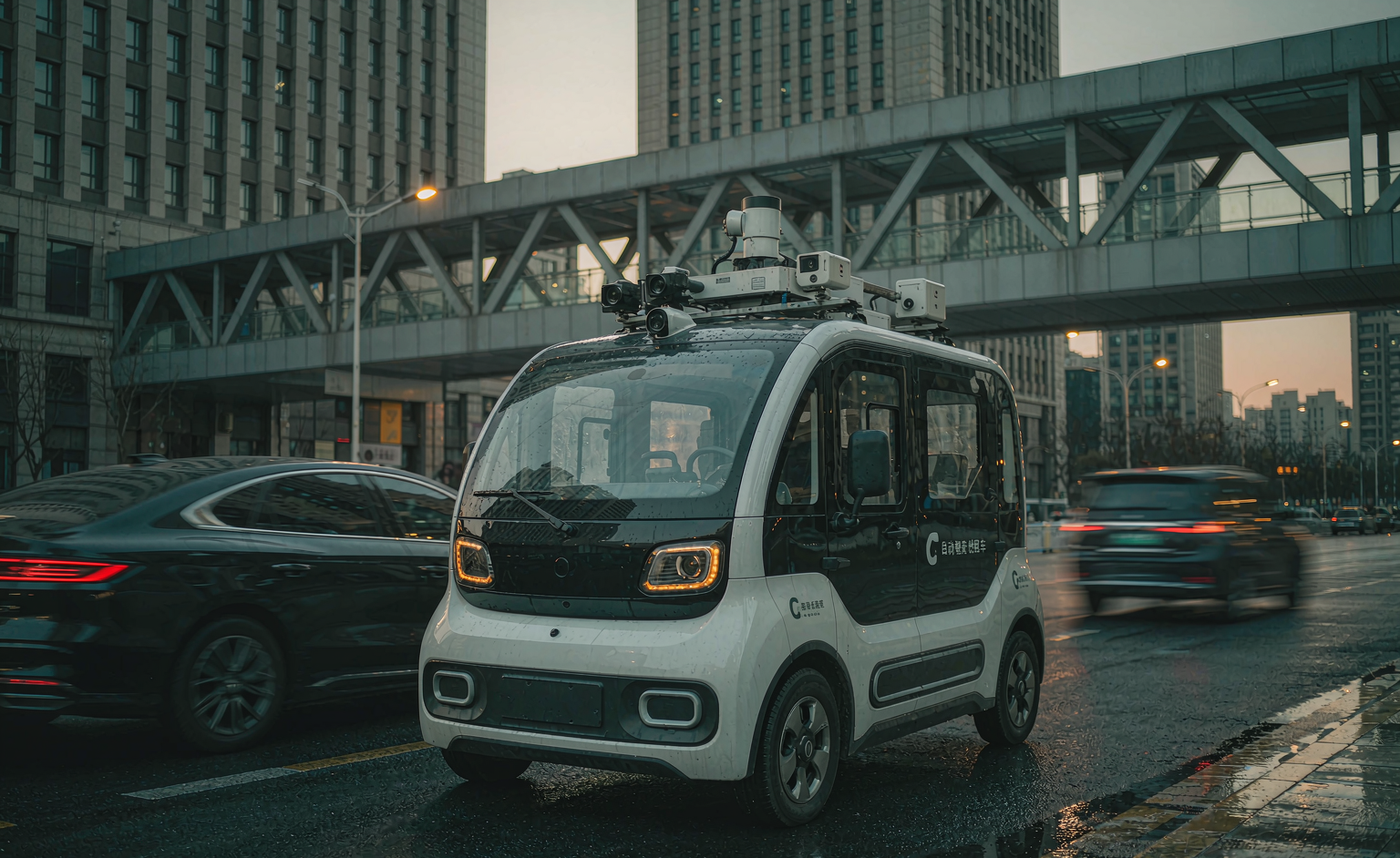
The numbers behind robotaxi expansion are large enough to hide the problem. Waymo raised USD 16 billion in February at a post-money valuation of USD 126 billion and added USD 5 billion of debt financing in October. Apollo Go operates in 28 cities, has completed more than 23 million rides and passed 350 million kilometres of driverless distance.
Every new city still costs vehicles, people and months of validation against local road layouts and driving habits. Every algorithm upgrade restarts part of that clock. Real-world mileage accumulates linearly and the dangerous cases are, by definition, rare, so the marginal return on more road testing falls.
World models offer a parallel path. Instead of waiting to encounter a rare event, generate it and drive through it. That changes validation from a mileage problem into a sampling problem, which is why it is being treated as the next competitive dividing line rather than an engineering convenience.
Baidu’s standard
The company has published a two-plus-three framework for what counts as a usable world model, and the framing is more useful than the product claim.
The two base requirements are causality and interactivity. A model must respond to the ego vehicle’s actions, not merely predict forward from the current state. In one demonstration, a robotaxi approaches an elevated expressway entrance. If it chooses the ramp, vehicles on the side road merge. If it stays on the service road, they stop and wait. Same junction, different world, because the decision changed.
The three advanced requirements are physical accuracy, persistence and real time. The model has to obey real physics, stay stable over long rollouts, and respond fast enough to matter. Baidu’s chief architect for its intelligent driving group, Wang Liang, argues that the hard part of driving is not understanding the road but predicting other participants’ choices and the chain reactions those choices trigger.
Sensor fidelity is part of the same problem. In rain or snow, droplets and flakes scatter lidar returns, weakening the signal and creating missing points and noise. A model that generates only convincing camera frames is not a test environment.
The competitive read
Waymo built its own world model on Google DeepMind’s Genie 3 in February, generating synchronised camera and lidar data for scenarios rarely encountered in real driving. Fei-Fei Li’s June taxonomy splits world models into renderers, simulators and planners, and Baidu’s pitch is squarely at the simulator layer, where virtual predictions have to connect to real action.
What is not yet public is the cost per generated scenario, the acceptance criteria a regulator would apply to synthetic validation, and how much of Apollo Go’s expansion Baidu intends to cover this way. Regulators in Dubai, Abu Dhabi, London, Switzerland and Hong Kong have so far accepted real-road evidence, and Hong Kong granted the company its first full driverless test licence on that basis.
The commercial logic points one way regardless. If validation cost per city falls by an order of magnitude, the number of cities a robotaxi operator can enter in a year stops being a function of fleet size and starts being a function of compute.
Editor’s note: This is an adapted translation of the original Chedongxi report. It has been trimmed and restructured for readability for an international business audience. The full original (in Chinese) is at https://chedongxi.com/p/379261.html.