A startup in Bengaluru has raised USD 47 million to do something unfashionable: pay people to work, film them, and sell the footage as robot training data.
Humyn Labs says the round splits into two parts. Accel led USD 26 million of equity. Another USD 21 million is venture debt, led by Lighthouse Canton with Trifecta participating. Debt accounts for nearly half the total, an unusual structure for an early-stage company. Valuation was not disclosed.
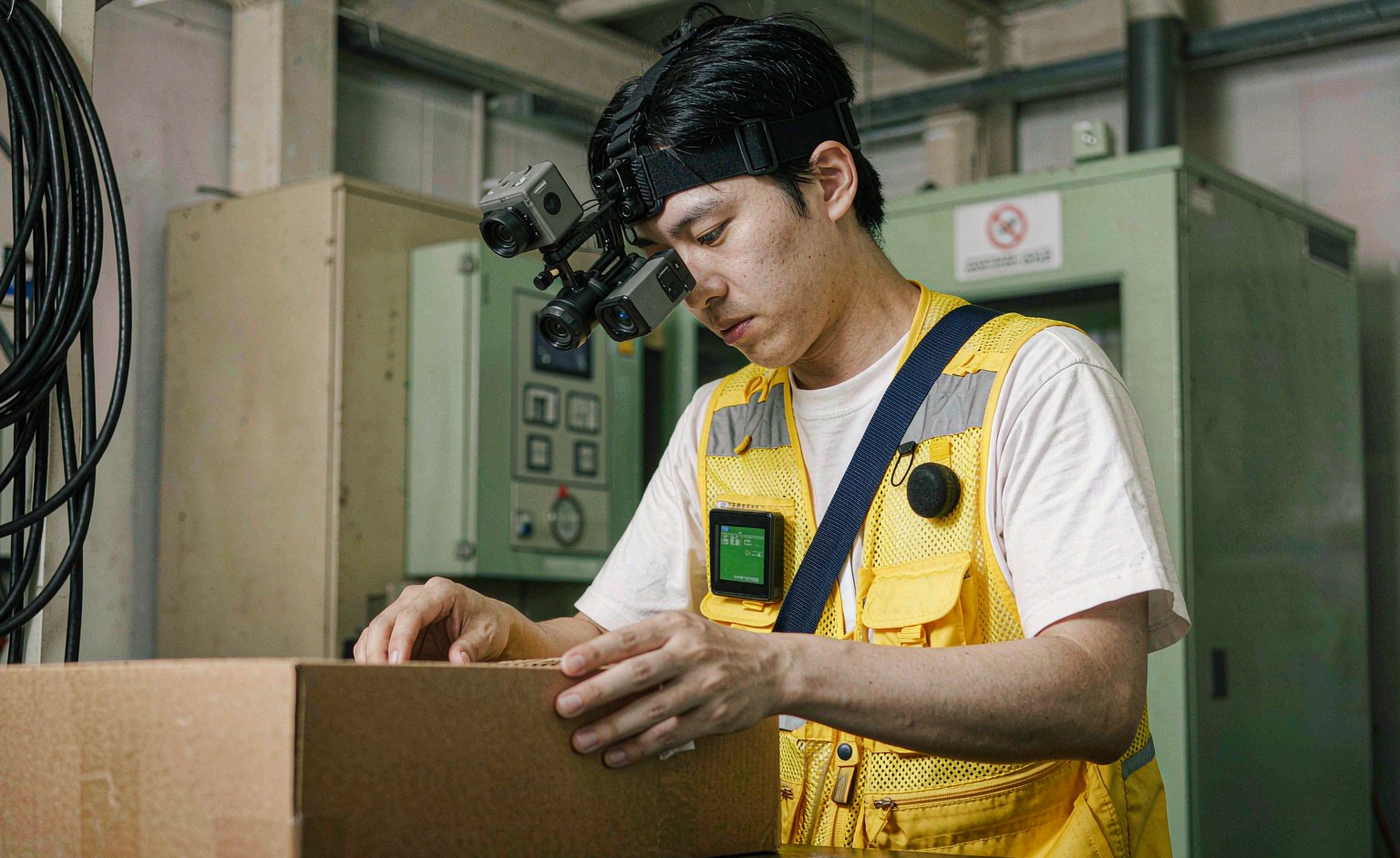
The company builds neither robots nor large models. It employs people to work in factories, warehouses, farms and homes while wearing dual cameras that record the task. Software then adds depth, hand trajectories and text descriptions, turning the recordings into datasets sold to frontier AI labs, robotics companies and world-model developers in the United States.
Incorporated only in February, the company claims it passed USD 50 million in annualised revenue after six months of operation. Founder Manish Agarwal explains the borrowing directly. Data collectors are paid daily or weekly, but AI lab clients take 30 to 60 days to settle invoices. Debt bridges that gap more cheaply than another equity round, he argues. In April he told Indian media the company was self-funded with no venture capital.
Cash flow, not a pitch deck
Figures obtained by TechCrunch show confirmed revenue of USD 10 million between April and October, with another USD 20 million under signed contracts and USD 20 million in discussion. Those numbers come from the company. Client names are withheld. Annualised revenue is not cash collected, and debt must be repaid. Still, contracts are harder to fake than demonstrations.
Neither founder came from robotics. Agarwal previously led Indian gaming company Nazara Technologies, while Ishank Gupta was an executive at Anheuser-Busch InBev. Their last joint venture, Kratos Studios, later renamed KGeN, built a contributor network across emerging markets. That network is why Humyn can place collection sites in more than twenty countries.
Of 51 full-time staff, most are in Bengaluru. The company has twelve paying customers and says about 90 per cent of revenue comes from the United States. Its method, called the Enrichment Engine, records a person working normally and adds depth, hand motion and object interaction to produce a labelled dataset.
Building the exam hall
Gupta puts the thesis plainly. Robots do not learn to work from the internet. They learn from the person who has done the job for twenty years, on the same floor where the robot will later work.
Humyn is going further than collection. It is building test facilities in Brazil, South Korea and India, starting with 5,000 to 10,000 square feet in Bengaluru or moving tests into company factories. A robot runs a real task, the gap is recorded, and the result feeds the next model. That matters because a video is only useful if it works on a specific robot body. Simulations can generate data in bulk, but the sim-to-real gap in household tasks can exceed 70 per cent.
Who owns the experience
There is a harder account. On 12 November India’s electronics and IT ministry held a meeting on in-home data collection, asking how recording is authorised, how the privacy of family members is protected, and whether footage is sold abroad. It was a question session, not a ban. At the meeting, some argued that harvesting Indian data for overseas developers diminished the country, while robotics firms said India should build its own physical AI rather than supply raw material.
Capital is repricing embodied intelligence. The old question was who could build a robot. The new one is who can translate human work into material a machine can learn from. That translation happens in Bengaluru, Brazil and Seoul, and the buyer sits across an ocean. What does not depreciate with the number of cameras sold is the labelling rule, the provenance check and the cross-body translation. As tools get cheaper, those become the scarce assets.
Editor’s note: This is an adapted translation of the original OFweek report. It has been trimmed and restructured for readability for an international business audience. The full original (in Chinese) is at https://robot.ofweek.com/2026-11/ART-8321205-12005-30712648.html.