A Chinese frozen-food supplier to Yum China, Haidilao and Hema is making an unusual bet: it is buying into robot hands.
Qianwei Central Kitchen, known as the first listed restaurant-supply chain company in China, is under pressure. In the first three quarters of 2026 it reported revenue of RMB 1.599 billion, up 16.07 per cent, but net profit attributable to shareholders fell 5.55 per cent to RMB 50.79 million.
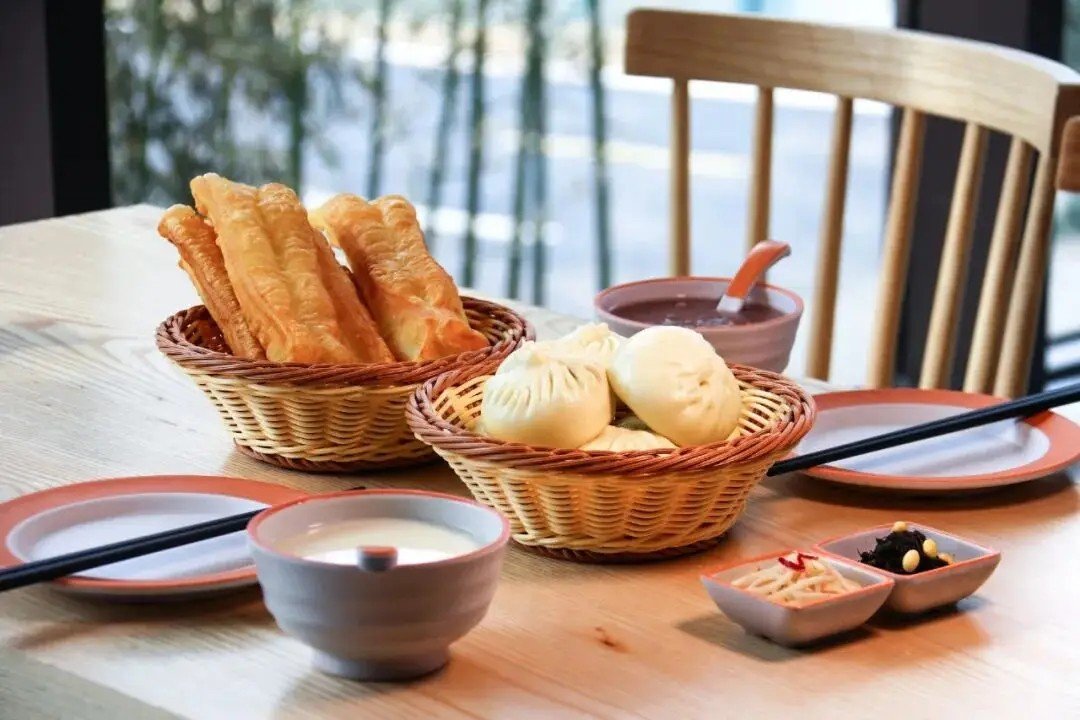
The company sells buns, spring rolls, sesame balls and egg tarts to restaurants. It traces its roots to Synear Food, was spun out in 2012, and now counts Yum China, Haidilao, Wallace, Hema and Walmart among its clients. Heavy spending on online traffic has lifted sales costs while eroding margin. Selling expenses hit RMB 120 million in the first three quarters, up 43.29 per cent year on year.
Profits under strain
Net profit has fallen for two years running, down 37.67 per cent in 2024 and 24.04 per cent in 2025, the lowest annual figures since the 2021 listing. By the middle of 2026 the number of distributors had dropped to 1,432 from 1,952 at the end of 2025, a fall of 520. Management says much of the change reflects different reporting windows rather than a deliberate channel clear-out.
Two food-processing projects have been delayed twice, one to June 2027 and another to October 2028, with the company citing weaker-than-expected output and revenue growth. Management has also replaced its securities representative, general manager, deputy general manager and several directors this year, several with ties to founder Li Wei’s earlier businesses.
The robot pivot
On 20 May the company said it would use RMB 50 million of its own funds to subscribe to a RMB 100.2 million equity fund focused on advanced and intelligent manufacturing. The stake makes Qianwei the largest limited partner at 49.9 per cent.
On 13 July it disclosed deep technical discussions with the team at Linkerbot, a Beijing dexterous-hand company, on using flexible hands for dough shaping, ingredient sorting and precision packaging. Reports said Qianwei had already invested in Linkerbot through the industrial fund.
A joint venture followed. Zhengzhou Qianqiao Technology was registered on 9 September with RMB 80 million in capital and Qianwei chairman Sun Jian as legal representative. It is positioned as a provider of embodied-intelligence equipment for restaurants and food production. Qianwei holds 66 per cent, a Beijing private-equity arm 25 per cent and Linkerbot 9 per cent.
A real test bed, a real funding question
Qianwei offers a standardised food-production environment and a large base of chain restaurant clients, both useful for robotics training and deployment. But the sector is capital-hungry, with long payback periods. At the end of September 2026 the company held about RMB 404 million in cash against RMB 60 million in short-term borrowings. That covers near-term debt, but it is not a deep war chest for robotics.
Whether this becomes a new growth curve or a new drag depends on execution. The company did not respond to questions about which products it plans to build or when they will reach the market. With core growth slowing and two plant projects delayed, its room for trial and error is limited.
Editor’s note: This is an adapted translation of the original OFweek report. It has been trimmed and restructured for readability for an international business audience. The full original (in Chinese) is at https://robot.ofweek.com/2026-11/ART-8321203-12003-30712682.html.