At the end of 2026, embodied AI finally seems to have found its breakthrough moment. For years the industry was stuck with a brain that was not smart enough to handle complex environments and a hand that was not dexterous enough, with painful learning costs. Two recent technical advances have changed the picture.
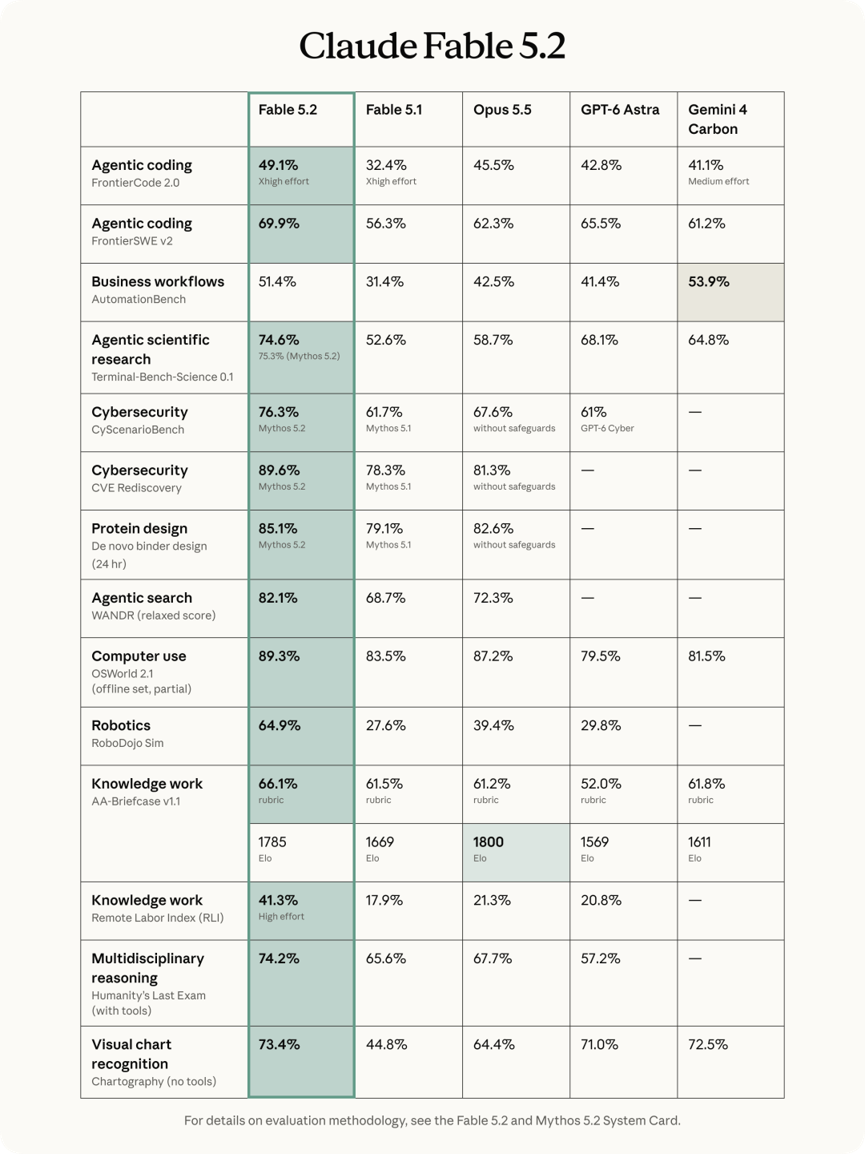
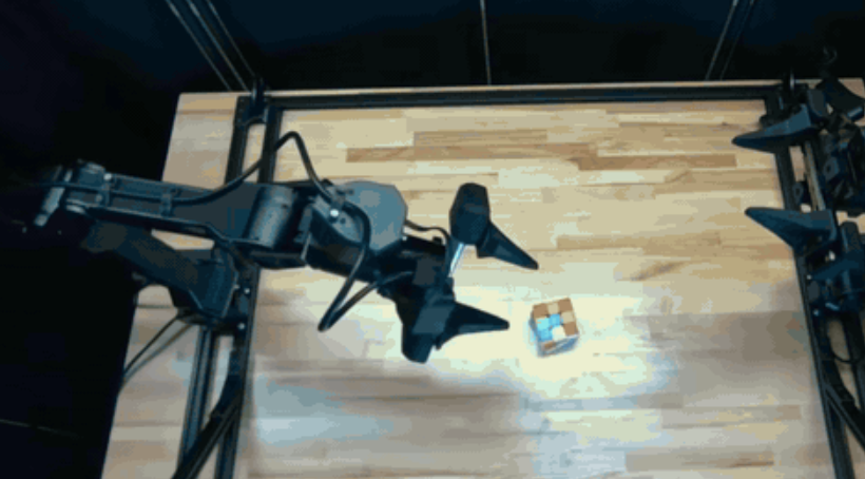
Anthropic’s general-purpose Fable 5.2, built mainly for coding and reasoning, lifted the task success rate on the dual-arm simulation benchmark RoboDojo from the previous generation’s 27.6 per cent to 64.9 per cent. More surprisingly, in demonstration videos it controlled a robotic arm without task-specific training, completing high-precision moves such as unscrewing a bottle cap and solving a Rubik’s cube.
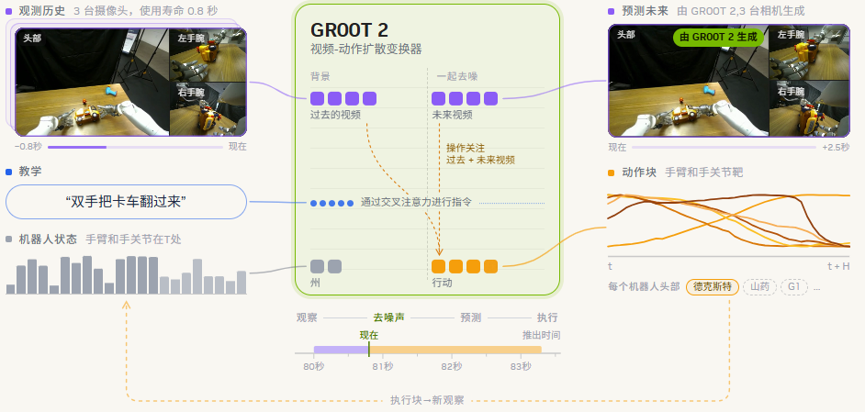
Nvidia’s robotics foundation model GR00T 2 takes the world-action model route. It does not need enormous data feeds. After five human demonstrations, its average task success rate climbed to 95 per cent. The brain has pushed past a boundary and the hand has lowered the barrier. Both bottlenecks are loosening. Whether that is enough for robots to hold their ground in the real world is another matter.
Look at the two new variables closely and the picture is less encouraging. Both are sprinting along their own capability frontiers, but they are not on the same track.
A brain that reasons, a hand that cannot keep up
Fable 5.2 genuinely broke through the ceiling on the brain side. In simulation it reached a 64.9 per cent success rate, driven by strong high-level spatial reasoning. In plain terms, it understands physical common sense. Asked to open a bottle cap, it knows to grip first, then turn anticlockwise, and can estimate how much force to apply. It forms a closed loop of judgement from vision and reasoning, far smarter than the specialised policies that memorise one motion and fail the moment the scene changes.
That intelligence looks weak in the real world. In third-party hardware tests, an LLM-guided arm playing checkers dropped or displaced pieces 14 times. The problem is execution frequency. For a robot finger to hold an object at the instant it starts to slip, the low-level force-control loop typically needs a reflex frequency of 20 to 100 Hz, meaning a force correction every 10 to 50 milliseconds. Fable 5.2’s planning loop runs at about 1 to 2 Hz.
The model issues a grip command once or twice a second. The finger needs dozens of micro-adjustments in that same second to stop a piece falling. At the moment of slip, the model cannot react in time or send a tighter-grip command. The finger freezes and the piece drops. It is a general issuing tactics once a second while frontline soldiers face bullets every ten milliseconds. However good the plan, the hand below cannot execute it.
The 64.9 per cent was measured in a perfect simulation with no light interference and no floor vibration. How it holds up against dust, reflections and other surprises is unknown. The company says it ran 18 real-machine test tasks but published no corresponding scores.
The floor under the hand
GR00T 2 genuinely lowered the barrier on the hand side. Five demonstrations reaching a 95 per cent average means a motion that once needed mass data collection and months of teaching can now be taught in a few minutes. On that measure it cut training and adaptation costs sharply.
But the 95 per cent needs its test conditions. Nvidia’s technical white paper says the 50 Dexter robot manipulation tasks were selected at test-set construction time from tasks the model already reached at least 80 per cent on after five demonstrations. The paper states plainly that the 95 per cent figure is affected by how the test set was chosen. In other words, the score came from a pre-filtered exam.
Another detail is easy to miss. After five demonstrations, only 37 of the 50 tasks succeeded on every trial. The remaining 13 still failed in repeated testing. The 37 out of 50 measure of execution stability largely disappeared from the official press material.
Training can become cheaper within a selected set of tasks, but drop the robot onto an unfamiliar production line and its reliability is still an unknown. The millisecond-level reflex needed for a real grip, at the seam between the model layer and the execution layer, remains unfilled by anyone.
Nvidia seems aware of the disconnect. It keeps GR00T 2 at the execution layer as a module called by an upper reasoning model through a WAM API. The upper layer decides the task, sequences skills and monitors progress. GR00T 2 turns intent into concrete grasp and assembly actions. With an upper reasoning model attached, a YAM arm reached a 97 per cent success rate in a continuous task assembling three types of toy.
That gives the two sides a communication protocol, not a finished bridge. In a real factory, what happens when the upper layer sends a command and the lower layer fails? What if the arm freezes mid-air and adds delay? The engineering answers on latency control and failure detection are in neither Fable 5.2’s glossy paper nor GR00T 2’s demo figures. In a lab a technical gap means one missing data set. On a factory floor it becomes a threshold on the road to commercialisation.
A production line bill that does not add up
When that threshold meets the production line, the first thing exposed is not technology. It is that the seller and the buyer of robots are not on the same wavelength. However impressive the model team’s scorecard, the factory owner’s first calculation before paying is how quickly a several-hundred-thousand-yuan machine will pay for itself.
A Morgan Stanley survey in November put a number on it. Eighty-two per cent of firms demand payback within three years, with an average acceptable period of 26 months. Only 18 per cent of adopters were satisfied with current robot performance, down five percentage points from a year earlier. Overall deployment expectations slipped by roughly a year.
Corporate patience is running out. The core of the customer’s problem is not the machine itself but the hidden costs. China’s Academy of Information and Communications Technology, in its 2026 embodied intelligence development report, puts the complete machine at only 40 to 60 per cent of total lifecycle cost. The rest goes to scene adaptation, systems integration, data collection, model training, operations staffing and downtime losses.
Fable 5.2 and GR00T 2 cut the early research and training cost. Neither touches the expensive later running cost. A core driver of that running cost is the gap between thinking and doing.
According to Qualcomm’s own statement, NEURA’s 4NE-1 humanoid collapsed at this year’s Taipei Computex after a brief communication fault triggered a safety shutdown. On a show floor that is a controlled fall. On a production line it is an unplanned stop, delaying output and adding repair cost.
Nissan’s Smyrna plant in Tennessee deployed OTTO mobile robots. Business Insider reported the hardware was fine but the software interface could not align with Nissan’s material flow. When two robots were dispatched to the same location, the line effectively developed traffic congestion.
Real stoppages could push customers to change how they judge these systems. Ai Wen, project director at AgiBot’s Genie business unit, told Jiemian that a traditional factory allows 4 to 5 per cent downtime a day and simply restarts a failed machine. Embodied AI is now measured on continuous working time, with a single-point failure expected to survive at least a month to count as passing.
Customers care about stability, and more plainly the stability of their own line. Morgan Stanley put it directly. Frontier models can now generate robot actions with zero samples, but cost, task success rate and latency all need improvement. Until firms see quantifiable productivity evidence, they will not place large repeat orders.
What the industry is building instead
If customers value only value and cost, chasing higher model scores stops fitting the immediate need. As the customer’s standard changes, the centre of vendor competition shifts with it. Robot makers are responding in different ways.
AgiBot’s answer attacks the time gap between brain and hand directly. Its asynchronous dual-system architecture splits thinking from execution into two teams. A slow system handles deep planning, updating direction once or twice a second. A fast system runs at high frequency, dozens of times a second. The fast system receives the slow system’s intent and makes local micro-adjustments and corrections using its own real-time observations between commands.
It is a buffer between the two. The slow system points the direction and the fast system holds the action steady underneath. The slow system does not wait for the fast system to finish before sending the next instruction, and the fast system does not sit idle waiting for an update. Different frequencies, separate roles, running together, offsetting part of the time gap.
Real-world surprises can outrun micro-adjustments, so a fault-tolerance mechanism is needed as a backstop. Figure AI treats error as a normal state. On low battery a robot swaps itself out. On detecting a hardware or software fault it walks out of the work zone and another takes over. No stop, no gap, no single-point failure dragging down the line. With that mechanism Figure AI processed nearly 250,000 parcels in 200 hours of continuous operation.
Keeping robots working as stable productivity is becoming a trend. On the business model side, players such as Qingtian Zu are moving to robot productivity services billed by outcome. The Ministry of Industry and Information Technology is encouraging RaaS models that charge by value delivered. Such models also shift reliability risk from the customer to the service provider.
The industry is tilting toward firms that close the interface and make execution stable. The window for vendors is visibly narrowing. Wang Xingxing puts the embodied intelligence ChatGPT moment as soon as 2027. Zheng Lingyin of Galaxea gives a sharper boundary: 2026 to 2027 is the watershed between telling a story and delivering.
Delivery is no longer about whose model scores higher. The urgent task right now is doing today’s job properly on a real production line. That is not a denial of model technology. Fable 5.2 and GR00T 2 remain the foundation, and models should keep iterating. Models are for a better tomorrow. Customers need a line that runs today. That is not a question of right or wrong, just a mismatch of time horizons.
At some future point the long-run technical spillover will land in the real production line ledger, and the engineering interfaces being completed now will become the base for the next model explosion. For now the score-chasing is over, and the real work begins.
Editor’s note: This is an adapted translation of the original 36Kr report. It has been trimmed and restructured for readability for an international business audience. The full original (in Chinese) is at https://36kr.com/p/4077960501008008.
The author’s views are their own and do not necessarily reflect the publisher’s position or constitute investment advice.