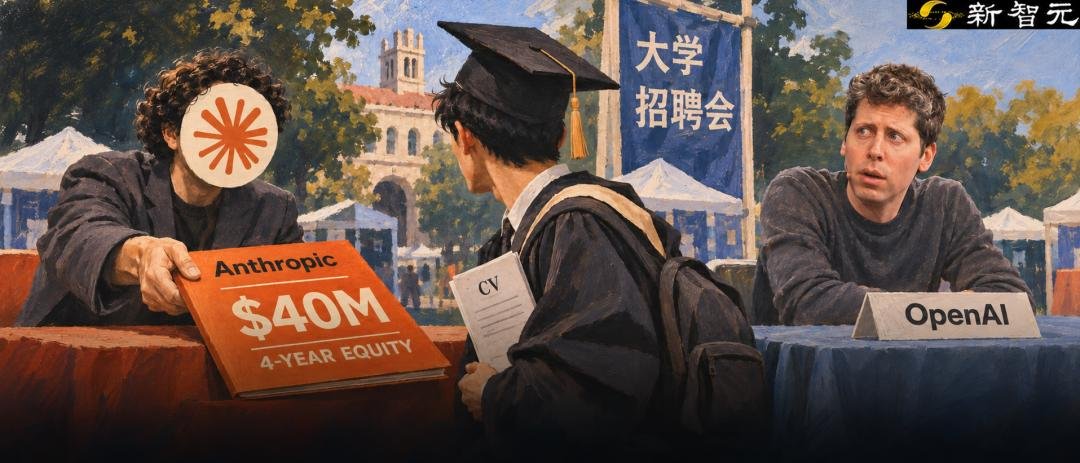
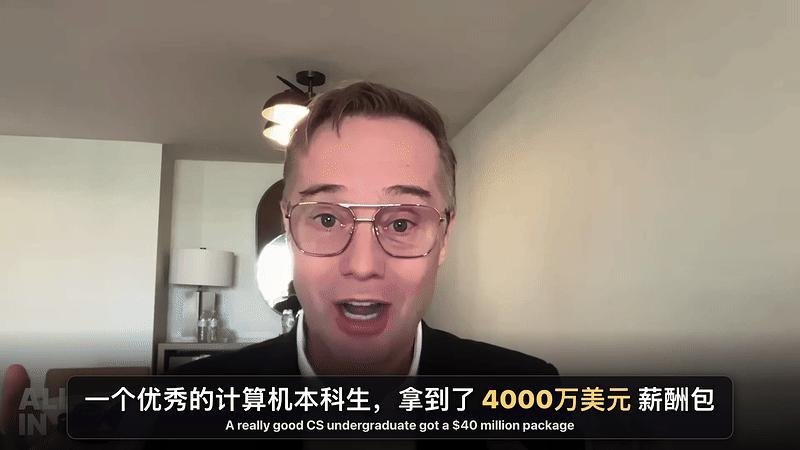
A computer science undergraduate straight out of campus has been offered four years of equity worth USD 40 million. That is USD 10 million a year, roughly RMB 67 million annually. Investor Jason Calacanis disclosed the offer on the latest episode of the All-In podcast, and followed it with a question aimed at his co-host David Friedberg: with incentives like these on the table, which computer science graduate would still choose OpenAI?
The remark landed at an awkward moment. On the same day the podcast aired, a long post on X with nearly 700,000 views described morale inside OpenAI as having collapsed. The author, posting as Binkg, called the preceding five days possibly the worst week in the company’s history. The bad news had arrived in sequence.
A flagship model that drew a public rebuke
OpenAI released GPT-6.2 Astra and Sol on the Tuesday. Thirty minutes after the official announcement, Theo, founder of T3 Code and a developer with early access, posted a three-sentence verdict calling Astra the worst model OpenAI had shipped. The post drew 602,000 views and outran the company’s own launch announcement.
Theo acknowledged genuine strengths. Astra caught code defects other models missed and performed at a high level on 3D and game development. In day-to-day engineering, though, it behaved erratically, stopping to ask about trivial matters or locking onto a course of action it would not abandon.
In one long-running test, he asked Astra to speed up and shrink a TypeScript compiler rewritten in Rust. After seven days, it had delivered no useful improvement and had made the compiler 56 per cent slower. A simplified speed-only task ran for four more days and produced no code changes at all.
Blind data from Arena.ai confirmed the imbalance. To climb the competitive coding leaderboard, OpenAI lifted Astra’s coding score by 50 points to third place, but its everyday conversation score fell 54 points to eleventh. The writing satisfaction rate among real users dropped from 91.2 per cent to 85.9 per cent. Sam Altman acknowledged on launch day that the company had more work to do to make the model pleasant to use, and the team patched its official guide, telling developers to delete instructions such as keep your answer short and adding a long template urging the model to make small decisions on its own.
Rivals closed the gap in days
Google released Gemini 4 Neon the following day. On the Artificial Analysis coding-agent index it scored 58.6 and took the top spot. It cost USD 3 per million input tokens and USD 15 per output token, less than half Astra’s USD 8 and USD 40, cutting the cost of the same development task by 50 to 80 per cent. Theo, a day after criticising Astra, posted that coding with Neon was far smoother.
On the Arena Agent benchmark, which tests planning and tool use on complex engineering tasks rather than single-turn answers, Astra ranked sixth, only nine points above its predecessor. The five models ahead included three from Anthropic and two from Google, with Claude Fable 5.2 leading by 157 points.
On Friday, Anthropic mathematician Levent Alpoge released 17 million lines of Lean code for a Riemann hypothesis proof produced with Claude. One day later the code passed joint verification by the Lean and Mathlib communities. The funding picture was equally stark. OpenAI had sought USD 30 billion at a USD 1.4 to 1.5 trillion valuation and closed at USD 15 billion on a USD 1.25 trillion valuation. Third-quarter revenue was about USD 10 billion against an operating loss of USD 10.9 billion, leaving roughly four months of runway.
Liquid stock changes the hiring game
Anthropic listed on Thursday under the ticker ANT at USD 83, opened 34.3 per cent higher at USD 111.50 and peaked near USD 115, pushing its market capitalisation above USD 2.09 trillion. Including the private placement, the debut raised more than USD 107 billion, the largest initial public offering on record. Employees could sell up to 10 per cent on day one, with a further 35 per cent unlocking after the 2026 results.
Calacanis said the graduate who received the offer was the child of a friend. Macro researcher Jim Bianco noted that a first job paying USD 10 million a year matches the contracts given to the fifth and sixth picks in the NBA or NFL draft. OpenAI, still private, can only price its shares through closed negotiations and internal buybacks.
OpenAI is far from out of the race. But the comfortable period in which a new release alone guaranteed a win ended in that five-day stretch.
Editor’s note: This is an adapted translation of the original 36Kr report. It has been trimmed and restructured for readability for an international business audience. The full original (in Chinese) is at https://36kr.com/p/4080641504875396.