Amid a humanoid sector where valuations inflate faster than deployments, one American company is pitched as the most commercially successful of the bunch, and it is taking that claim to the public market. On 24 June Agility Robotics signed a merger with Churchill Capital Corp XI to list on Nasdaq at a 2.5 billion dollar pre-money valuation through a SPAC, ticker AGLT, raising over 620 million dollars including a roughly 200 million dollar PIPE led by Foxconn. It also opened a 60,000 square foot physical-AI centre in Fremont with about 200 new technical roles.
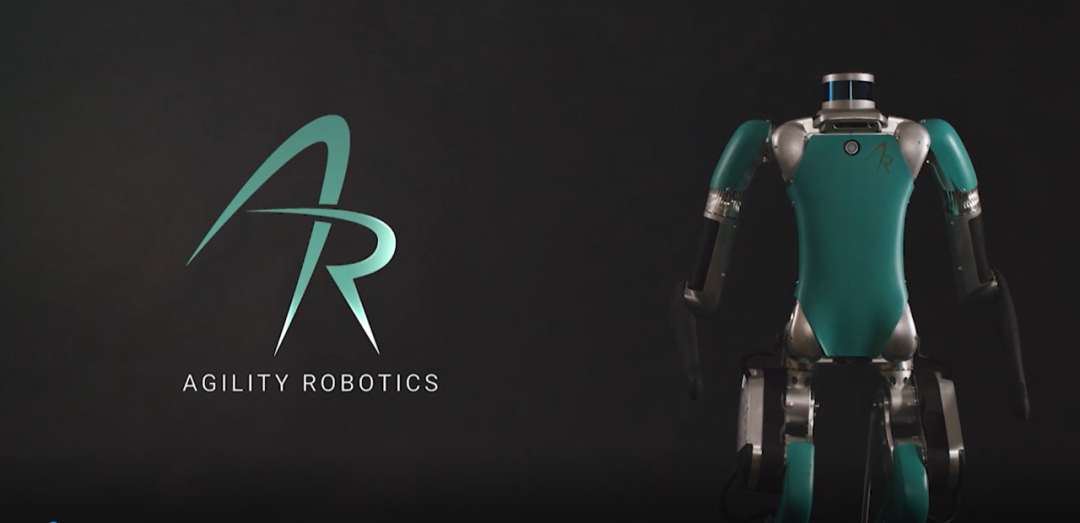
The core product is Digit, a bipedal humanoid built for logistics and manufacturing: handling, palletising, unloading, moving material. Its customers include GXO, the world’s largest contract logistics firm, Toyota Motor Manufacturing Canada, Germany’s Schaeffler, Latin America’s Mercado Libre and Amazon. Across customer sites Digit has run over 65,000 hours, moved more than 100,000 totes, and hit about 98 per cent accuracy on some tasks at GXO.
An anchor you can verify
Agility also disclosed over 300 million dollars of multi-year RaaS, robotics-as-a-service, contracts covering about 1,000 next-generation Digit v5 units, with delivery from autumn 2026. In a sector where Figure is reported near 39 billion dollars and Tesla Optimus rides a trillion-dollar parent, Agility’s 2.5 billion dollar tag is a statement: the market prices box-moving far more conservatively than world-changing.
The value is that Agility offers the first open-market pricing anchor cross-checkable against named customers and operating data. Others sell AGI narratives and distant forecasts; Agility sells named warehouses and logged hours.
From an Oregon lab to a SPAC
Agility began in 2015 at Oregon State University’s dynamic robotics lab. Founder Jonathan Hurst, a mechanical engineering professor, focused not on building a humanoid but on efficient movement in human environments. The lab spent seven years on ATRIAS, proved human-like gait dynamics at the 2015 DARPA challenge, then commercialised the legs as Cassie, which ran outdoor five kilometres and set a biped hundred-metre record. In 2018 the team added a torso, arms and sensing to make Digit.
Chief executive Peggy Johnson, formerly of Microsoft, frames Digit’s path in three steps: first mobility, then manipulation, then intelligence. That order is the reverse of most peers who leap straight to end-to-end general intelligence.
The narrow wedge
Themainstream narrative in humanoids is generality: one robot that packs boxes, folds laundry, cooks and chats. Agility picked the opposite. Digit’s list is short: handle, palletise, unload, move material. No open-world navigation, no homes, no conversation. Its whole value is doing the physical jobs nobody can hire for and where injury rates are high.
US logistics alone has over one million unfilled material-handling roles. That narrowness is the advantage: a controlled factory, standardised tasks, easy return-on-investment math. Digit need not understand the world, only the warehouse map and the shape of the goods. Johnson’s strategy is to earn the money available now, and the capital environment is starting to price that discipline.
Sixty-five thousand hours, read closely
The 65,000 hours span nine customer facilities and the whole Digit fleet including older models; v5 is still pre-delivery. The 100,000 totes likely come from a single deployment such as GXO. The 98 per cent is on some tasks there. The 300 million dollars is order commitments, not recognised revenue, covering about 1,000 v5 units. The unit economics, a roughly 500,000 dollar cumulative revenue per Digit over five years with payback just over a year, are company estimates still needing real-world proof.
In February 2026 Agility signed a RaaS deal with Toyota Canada to move material inside the assembly plant without safety cages, and positions v5 as the first collaboratively safe AI humanoid, with Nvidia’s Halos safety system as partner. Its Salem RoboFab is rated at 10,000 units a year with about 75 per cent US content. Under RaaS, Agility keeps ownership and maintenance, so failure and downtime data flow straight back to engineering; v1 to v5 iterated on factory reality, not lab papers.
Four questions after listing
Public markets are colder than venture capital. First, can 300 million dollars of orders become revenue as v5 ships on time and on spec; hardware ramps rarely track plans, and the 2020 to 2022 SPAC wave mostly broke below issue price within 18 months. Second, do the RaaS unit economics hold when attendance, failure and upkeep meet reality. Third, does cheap Chinese hardware undercut the bet; Unitree’s G1 at about 16,000 dollars is under a seventh of Digit’s material cost, and in 2025 Unitree and AgiBot held about 71 per cent of global humanoid shipments. Fourth, is the narrow scene a moat or a ceiling.
The sector is splitting into three valuation tiers: Figure and Optimus as narrative-driven, Agility as commercially verified, and Unitree and 1X as volume-price driven. Agility’s listing matters less for the 2.5 billion dollar number than for giving the whole field its first anchor built on pay slips rather than promises.
Editor’s note: translated and adapted for RobotBelt from OFweek Robotics. Read the original report here.