China’s Ministry of Industry and Information Technology, together with the ministries of public security and ecology and environment and the market regulator, has published a draft notice on vehicle innovation design and validation testing for public comment. It sets safety boundaries around the design language that has defined Chinese electric cars for five years.
The technical annex lists 25 requirements covering 21 design categories: combined driver assistance and autonomous driving, unusual steering wheels, virtual controls such as touch and pressure-sensitive keys, fully concealed door handles, new human-machine interfaces, soft-close doors, zero-gravity seats, pop-top cabin structures, lighting and light signals, displays, non-metallic doors, electronic mirrors, air suspension and unconventional bumpers.
The eight prohibitions that matter
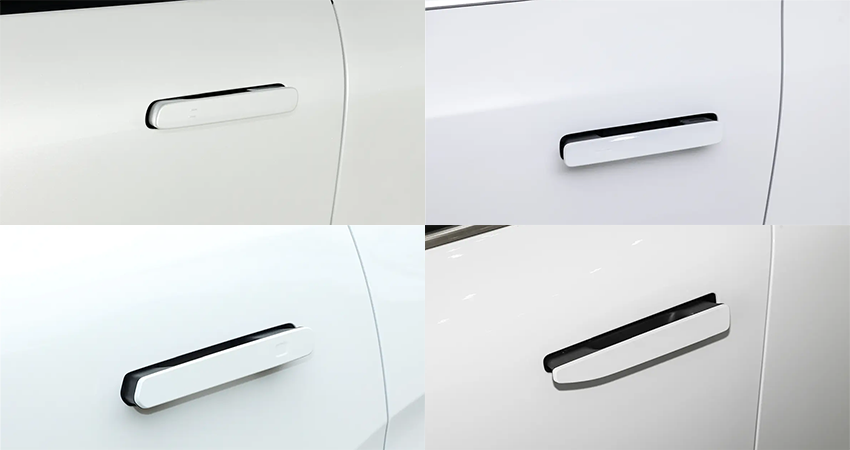
The clearest rules are also the most quotable. Fully concealed door handles are banned. Folding and flexible displays may not be used. Pop-top cabins cannot be operated while driving, and neither can zero-gravity seats, swivel seats or seats folded flat into beds. Soft-close doors must open manually after a power loss or fault. Lighting and light signatures must be assessed for their effect on other road users as well as repair cost. Non-drivers may not control the car by voice or gesture while it is moving. And any combined driver assistance or autonomous system must complete real-vehicle validation before it reaches the road.
Two deadlines and a recall clause
From 1 January 2027, models newly filed for the road vehicle manufacturer and product announcement must declare innovation-design technical parameters, and those declarations enter the ministry’s production-conformity regime. What a company files is what it must build.
Models already holding an announcement must submit supplementary parameters and validation evidence by 1 July 2027. Missing that date with an unresolved safety risk means production stops and the company must file a recall plan with the market regulator. Certification bodies must then stop accepting the affected certificates.
Validation itself gets a floor. New products must complete reliability and durability, structural reliability, software functional reliability, environmental adaptation, heating and cooling, and sealing tests. Environmental adaptation runs at least one year, and reliability testing covers at least 30,000 kilometres, which means real mileage across two winters and a summer rather than a laboratory cycle.
Responsibility moves onto the manufacturer
The notice also shifts accident duty. When a safety incident or crash involves a new design feature, the manufacturer must open its own investigation, preserve the key data and guarantee its integrity, and provide data and technical support to police investigations.
Marketing is covered too. Claims must state the boundaries, limits and validation status of innovation features honestly, may not use scenarios that breach traffic law to demonstrate capability, and may not encourage drivers to neglect responsibility.
The design freedom bill comes due
Concealed handles, flush surfaces and app-controlled everything were sold as premium cues. They also removed mechanical redundancy, and the regulatory response is mechanical: give the occupant a way out that does not depend on a 12-volt battery.
For suppliers, the cost lands in mechanics rather than software. Every affected part needs a manual release path, a validation file and a declared parameter, which is a specification change with a tooling bill attached.
For European regulators the draft is a ready-made template, because the failure modes it targets are not Chinese. Expect the argument over flush handles to reach Brussels and then Washington, and expect the first compliance filings to come from the companies with the most to lose.
Editor’s note: This is an adapted translation of the original Chedongxi report. It has been trimmed and restructured for readability for an international business audience. The full original (in Chinese) is at https://chedongxi.com/p/377562.html.