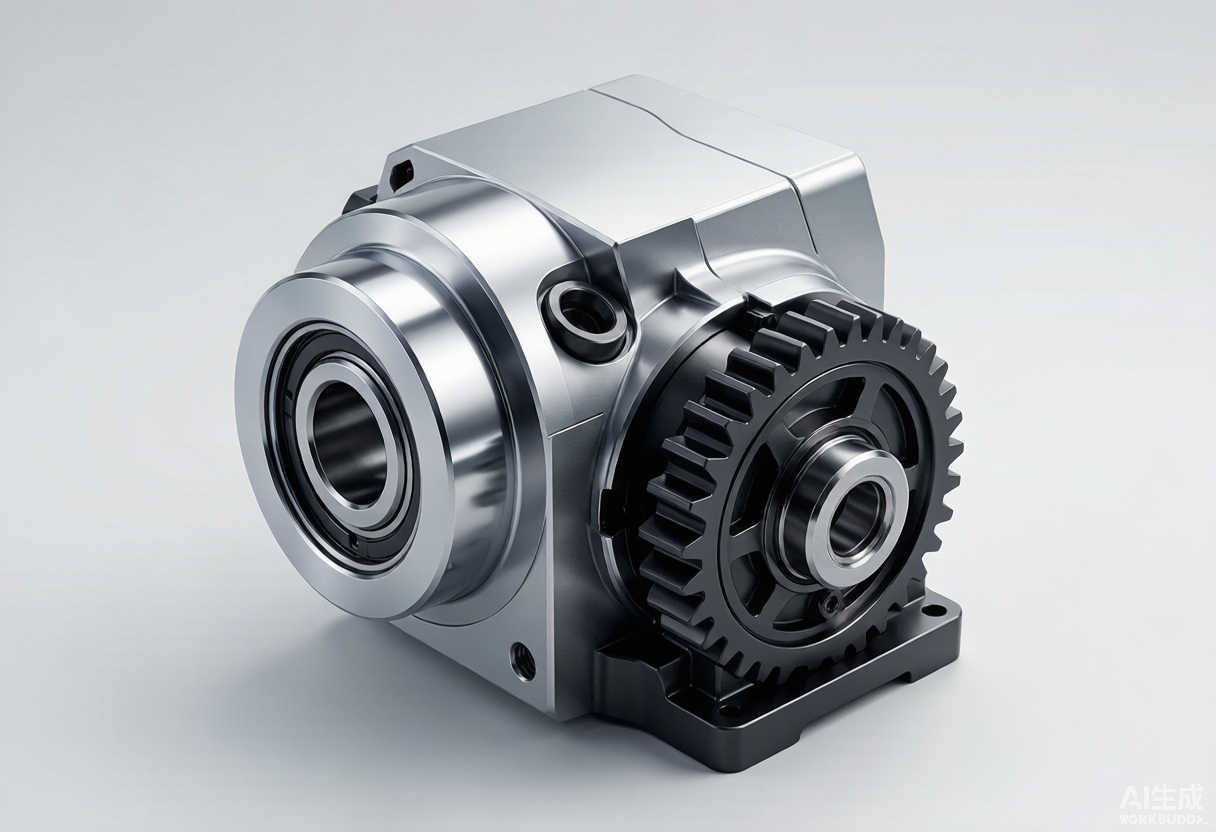
HaoNeng Technology, a Chengdu-based auto transmission parts maker and BYD supplier, will invest 1 billion yuan in a robot joint-reducer production base in Luzhou, Sichuan. Planned across 125 mu, the site targets 5 million joint reducers a year.
The move stretches HaoNeng’s cash. Its 2025 operating cash flow fell nearly 50 per cent year on year to about 309 million yuan, and by the end of the first quarter of 2026 its cash and equivalents stood at only 167 million yuan. Large project spending will tighten short-term liquidity.
HaoNeng is no newcomer to precision making. It supplies transmission parts to Mercedes, Volkswagen, Geely, FAW, BYD, Seres, Xiaomi and Nio, and has built a range of high-precision planetary and cycloidal reducers. Robot joint reducers are still at an early stage and have not yet moved the profit line, but the capability transfers directly.
This is not a trend-chasing pivot. Decades of automotive precision gear know-how map straight onto robot reducers, and HaoNeng’s car clients are all rushing into humanoids, creating a deep well of component demand. Moving up the reducer chain lets HaoNeng reuse mature capacity while binding itself to its clients’ new growth.
The opening is real. High-end robot reducers in China are still largely held by Japan’s Nabtesco, Harmonic Drive and Shinpo. A standard six-axis industrial robot needs about 3.5 harmonic and 4 RV reducers, and a humanoid carries more than 14, so per-unit demand is huge. Local reducers have closed much of the quality gap at better prices, and the swap to domestic supply is accelerating.
Zhiyan Consulting puts China’s precision reducer market at 3.5 billion yuan in 2025, rising to about 4.7 billion yuan in 2026 as humanoids scale and industrial robots get smarter.
Editor’s note: This is an adapted translation of the original OFweek report. It has been trimmed and restructured for readability for an international business audience. Source: OFweek.