LG Energy Solution reported third-quarter revenue of KRW 9,643.4 billion, equivalent to about USD 7.11 billion, with operating profit of KRW 756 billion, or roughly USD 557.2 million.
Revenue rose 59 per cent year on year and 27.6 per cent from the previous quarter. Operating profit increased 567.3 per cent against KRW 113.3 billion in the second quarter. The figures include KRW 416.9 billion, about USD 307.4 million, of North American production subsidies.
Vice-president Lee Chang-sil attributed revenue growth to higher energy storage system shipments and wider supply of pouch-type and cylindrical products for electric vehicles. Higher utilisation at the Polish plant and improved productivity at new storage manufacturing bases contributed to profit expansion.
Storage becomes the growth engine
In business development, LG Energy Solution signed its first direct battery energy storage system supply contract with a large technology company and became an Nvidia DSX Ready BESS partner.
In the electric vehicle business it added a contract for next-generation high-voltage mid-nickel products aimed at the European market.
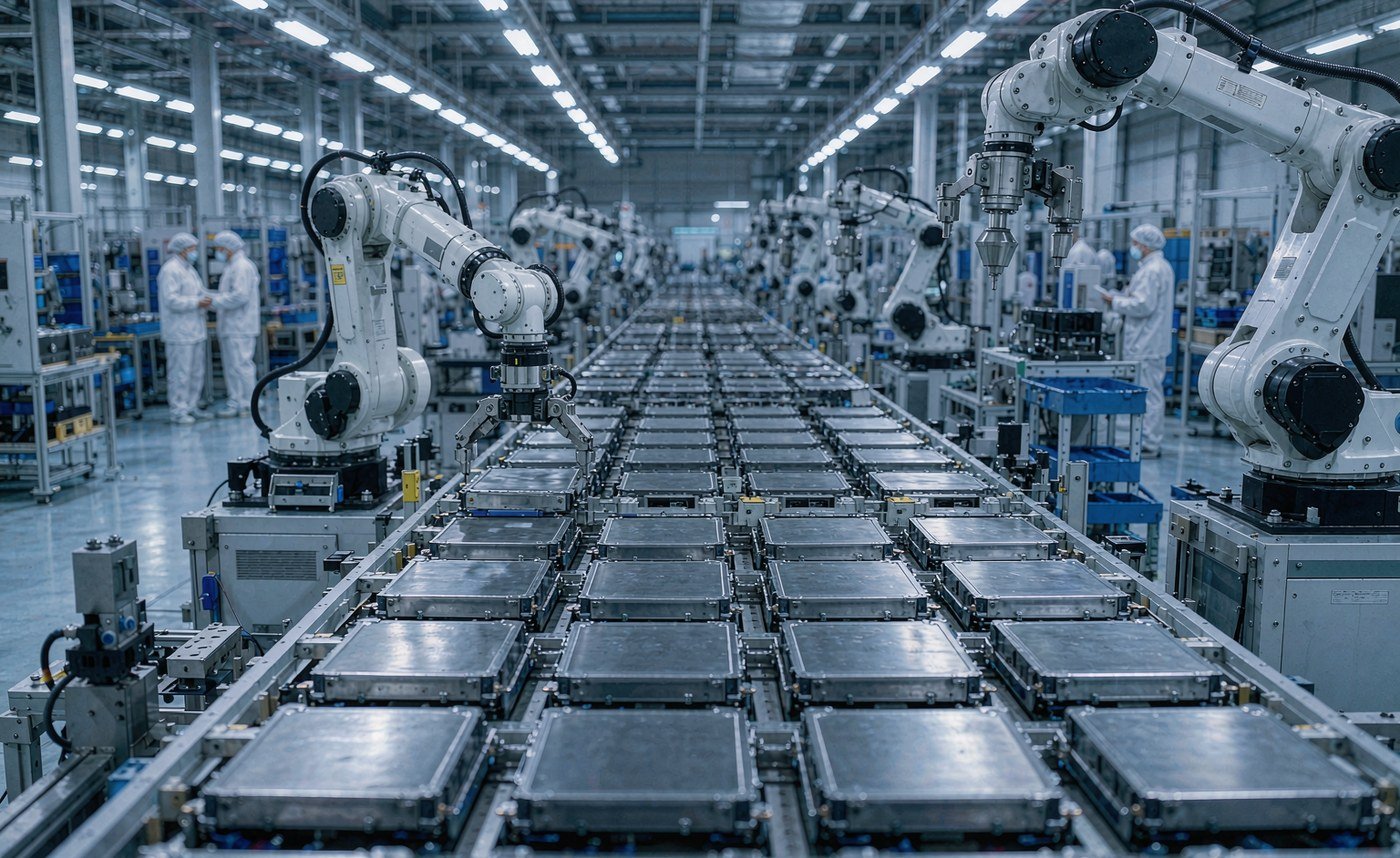
On the production side, North American storage cell lines and a containerised system assembly process known as the New Link line entered operation. The restart of its General Motors joint venture in the United States and steady cylindrical demand raised overall capacity utilisation.
Against tightening supply chain security requirements in the United States and Europe, LG Energy Solution plans to convert part of the Polish plant’s lines to storage and to start local production of 46-series cells in 2029.
The strategic weight of that decision is easy to miss. A plant originally built to serve European vehicle assembly is being repurposed to serve grid storage and data centre demand, because those customers are placing orders while some vehicle programmes are being delayed.
Poland keeps its role as LG Energy Solution’s European manufacturing base, but the product mix behind it is being rewritten around stationary storage rather than passenger cars.
Editor’s note: This is an adapted translation of the original Gasgoo report. It has been trimmed and restructured for readability for an international business audience. The full original (in Chinese) is at https://auto.gasgoo.com/news/202611/4I70476818C108.shtml.