The company that sells the chip inside somebody else’s robot raised $400 million on 17 September, and almost none of the money came from China alone. D-Robotics, the Shenzhen robot-computing spinout of Horizon Robotics, closed a Series C of $400 million, about RMB 2.68 billion, with close to 30 investors on the cap table.
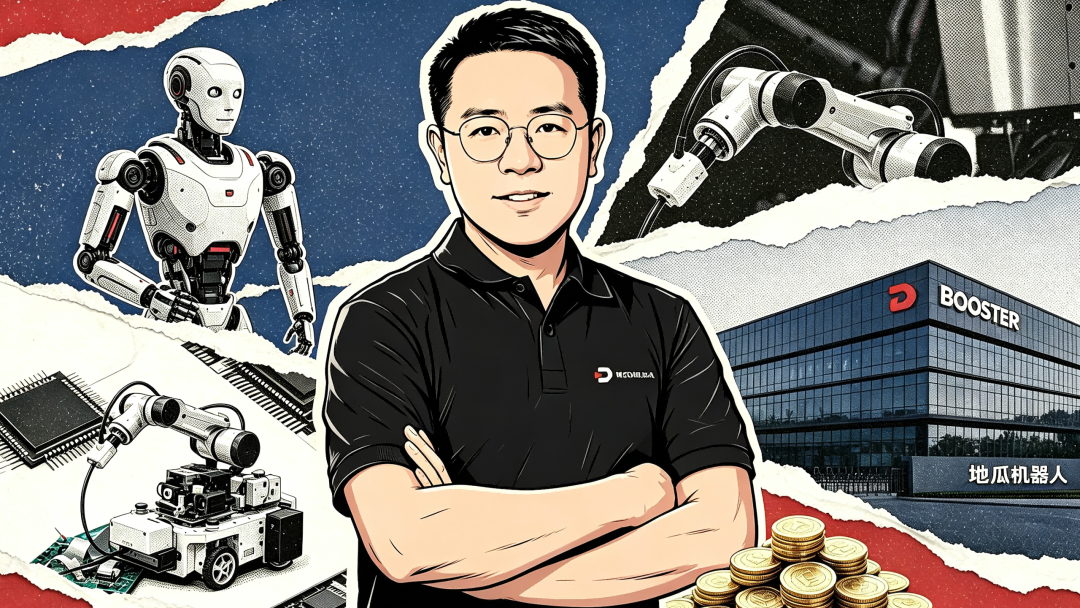
The round was led by Mirae Asset, the Korean financial group founded in 1997, and it came five months after a $150 million B2. Counting the $100 million A of May 2025 and two rounds in the spring, D-Robotics has pulled in close to RMB 5 billion during 2026. The investors sit in three camps that rarely share a term sheet: Meituan’s strategic arm and the state investment platforms of Beijing, Shenzhen and Hefei; Temasek’s Vertex Growth and Saudi Aramco’s Prosperity7; and Chinese venture funds Gaorong, 5Y Capital and Linear Capital.
Why Gulf money keeps landing on Chinese robot chips
Prosperity7 is not a tourist. The Aramco fund already holds positions in Qianxun Intelligent, Qiongche, Keenon, Fourier and JAKA. Dubai-based Stone Capital has backed Limx Dynamics and Neolix and has gone into EngineAI three rounds running. The logic is written into policy: the UAE’s Smart Dubai plan targets a 14 per cent contribution to the economy from artificial intelligence by 2031, and Gulf funds that spent decades overweight US assets now want hard-tech exposure that is not correlated to the same cycle.
The industrial case is simpler. Nvidia owns the training cluster. The chip that sits inside each robot and turns perception into motion is a separate market, sold in units rather than in megawatts, and Chinese humanoid builders have been buying it domestically. D-Robotics ships the Sunrise family, and its S600 part, launched last November, rates 560 TOPS at INT8 and has been designed into more than 20 named customers, among them Unitree, Tashi, Qianxun, Zibianliang and Youibot. By the company’s own count the S600 covers more than half of China’s embodied intelligence customers.
Eight million chips, four hundred customers
The volume story is not the humanoid. It is the robot vacuum. D-Robotics shipped eight million Sunrise chips cumulatively, with unit shipments up 180 per cent and customer count up 200 per cent in 2025, and revenue several times higher in the first half of 2026. The first customer was Ecovacs in 2021, which is the unglamorous base that paid for the humanoid bet. Today the company claims more than 400 customers across 100-plus robot form factors, and a developer platform of 100,000 people spanning 20 countries and 500 universities.
That installed base is the real asset. Wang Cong, who took over Horizon’s AIoT team in 2020 when it had shrunk from more than 400 staff to about 30, made the pivot to robotics in 2021 and spun the unit out in January 2024. His argument then was that robots would need a compute platform the way phones needed Qualcomm, and that the winner would be decided by software tooling rather than by silicon alone. He used Nvidia as the reference: engineers pay a premium for CUDA because they already know it.
Two cracks in the story
The first is customisation. Twenty-odd flagship customers across humanoids, industrial arms and logistics AMRs do not share data formats, task structures or motion stacks, and every deployment needs engineering hours that do not compound. The second is vertical integration: several top Chinese integrators have started designing their own inference silicon, which is exactly the move that erodes a merchant supplier’s margin over time.
The Gulf money is a vote that the merchant model survives long enough to matter. The tooling bill is what decides whether it does.
Editor’s note: This is an adapted translation of the original OFweek report. It has been trimmed and restructured for readability for an international business audience. The full original (in Chinese) is at https://mp.ofweek.com/robot/a356714007607.