Humanoid robot output in China was about 20,000 units in 2025. It passed 40,000 in the first half of 2026 and is expected to clear 100,000 for the full year, according to figures given by Vice-Minister of Industry and Information Technology Ke Jixin at a standards committee meeting in July 2026.
Normally that curve pulls component prices up. Planetary roller screws, the part that converts rotation into precise linear movement at every joint, went the other way. Three separate Chinese suppliers have now anchored the price of a production unit at RMB 400 to RMB 500.
The volume is real, the scale is not yet
Delivery data backs the output figure. Customs recorded 16,559 intelligent bionic robots exported in the first nine months of 2026, worth RMB 1.417 billion, with September volumes up roughly 176 per cent on January. National Bureau of Statistics data put industrial robot output up 29.1 per cent over the same period.
Mass production is a different threshold. Academician Xu Yangsheng’s yardstick is 100,000 units from a single company. By that measure the industry is at the starting line, and the capacity being built now is positioning rather than a response to orders already won.
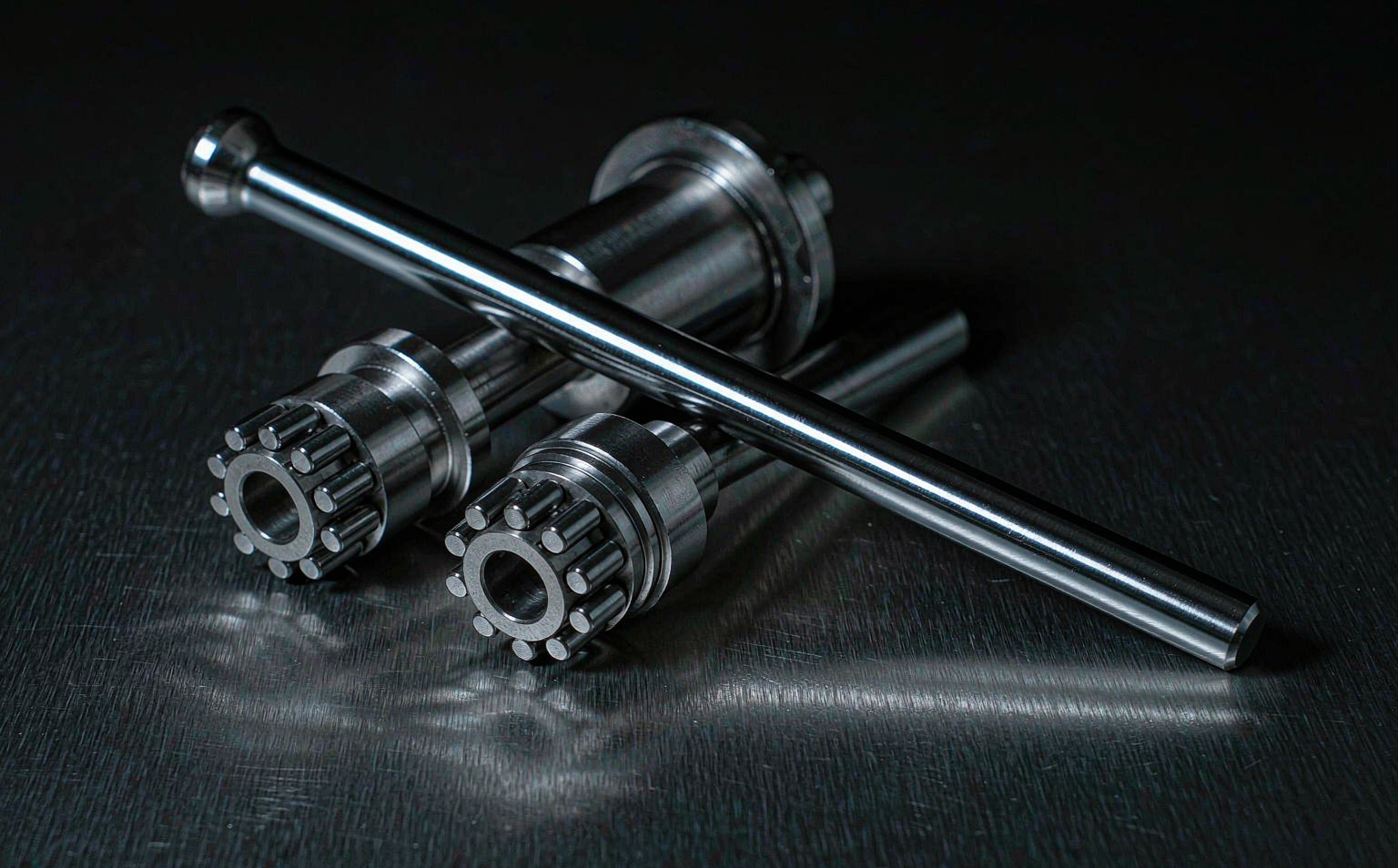
Capacity arrived ahead of demand
Xinjian Transmission’s prospectus shows capacity of about 1.5 million screws a year and 2025 sales of 982,200 units, a utilisation rate of 72.7 per cent. It is raising RMB 2.822 billion, of which RMB 2.519 billion goes to a project adding one million units of annual capacity for humanoid and automotive planetary roller screws.
It is not alone. Wuzhou Xinchun has planned 980,000 sets a year, Beite Technology’s first phase in Thailand reaches 800,000 sets, and Shuanglin has a 100,000-set line already capable of production. Add those up and planned capacity runs well past current sales. Xinjian’s own capacity plus its new project is about 2.5 times its 2025 volume.
Zhejiang Securities’ industry research arm makes the obvious point that capacity is not supply: yield and cost decide what actually ships. The revenue line agrees. Xinjian booked RMB 31.1 million from embodied-AI robots in 2025, 8.19 per cent of its main business. Wuzhou’s robot component revenue was about RMB 20 million in the first half of 2026 and is not yet profitable. Best reported RMB 223,000 of humanoid roller screw sample revenue, or 0.03 per cent of turnover.
The order book is the cleanest signal of the stage. At the end of August 2026, Xinjian held about RMB 91 million in orders, of which roughly RMB 9 million were firm and RMB 82 million were forecasts. Nine in ten are not yet orders.
Where the price anchor actually sits
Shuanglin has published RMB 499 for a C3-grade planetary roller screw, a precision class tight enough that the price refers to a production part rather than a sample. Wuzhou’s project model uses RMB 500 a set against a unit cost of RMB 318.77. Fuliwang models RMB 400 a set on the same basis, while noting it has no revenue from the product yet.
Three companies with different products, customers and modelling methods converged inside a narrow band. That is not one company’s pricing tactic.
Margin is what settles whether this is a price war. At RMB 500 against RMB 318.77, Wuzhou’s gross margin is 36.25 per cent, with a blended project margin of 31.08 per cent and a post-tax internal rate of return of 12.27 per cent. HIWIN’s 2024 blended gross margin was 29.59 per cent and Nanjing Gongyi’s ball screw line was 33.87 per cent. The modelled figure sits with the incumbents, not below them.
The same document shows the other two product lines landing between 28 and 37 per cent. Something near 30 per cent is the normal return on robot components, not an exception.
The curve that explains the headline
Xinjian’s embodied-AI segment margin traces the repricing directly: 62.37 per cent in 2023, 70.31 per cent in 2024, 59.53 per cent in 2025 and 50.13 per cent in the first half of 2026, a 20.18 percentage point fall from the peak. The company’s explanation is that sample pricing is high and falls as order volumes build, and it expects mass-production orders from major customers to hold above 30 per cent.
Its automotive screw business shows what happens without an anchor. That margin fell from 32.43 per cent in 2023 to 13.15 per cent in the first half of 2026 as carmakers pushed cost reductions upstream, and no floor has appeared.
The difference between the two is not the size of the cut. It is whether both sides accept a price they can live with for years.
The next contest is the cost curve
With the price fixed, the competition narrows to who can hold precision and consistency at 100,000 sets and above. Wuzhou’s project budgets 206 grinding machines at about RMB 133 million, which is why screw manufacturing has a higher entry barrier than general machining and why ramping takes time. Yield does the rest: scrap rate is a direct multiplier on unit cost at that volume.
Downstream sentiment decides whether the capacity fills. The machine tool association recorded first-half 2026 industry revenue of RMB 530.9 billion, up 7.6 per cent, with profit up 110.8 per cent and new orders up 20.5 per cent, and attributed part of that order growth to new industries including humanoid components moving into volume.
Two variables decide how much profit survives the cycle. Whether yield rises with scale, and whether unit cost falls faster than price. Whichever curve runs steeper sets the terms.
Editor’s note: This is an adapted translation of the original OFweek report. It has been trimmed and restructured for readability for an international business audience. The full original (in Chinese) is at https://robot.ofweek.com/2026-10/ART-898890-12003-30709293.html.