All over the world, people are acting as preschool teachers for robots. In Indian factories, workers wear cameras while assembling, sorting and moving goods, recording first-person footage of complete operations. Inside Tesla’s Optimus training arena, staff wear helmet- and backpack-mounted camera rigs, repeatedly picking up cups, wiping tables and drawing curtains. Data firms pay ordinary people to film themselves folding clothes, washing dishes and tidying rooms.
What they share is a belief that robots learn the physical world the way a child does, by watching, imitating and practising. But moving from a single demo to stable long-run operation means adapting to new environments, objects and tasks, and improving through failure. That depends on a data loop of collection, filtering, storage, training, simulation, verification and replay, and the link that jams the industry first is collection itself.
Language models drink from the internet’s sea of text and images. Robots have no equal-scale physical-world internet. Embodied training needs paired sight, action and the way each action changes the robot and its surroundings, and that data usually comes only from real hardware, teleoperation or dedicated capture.
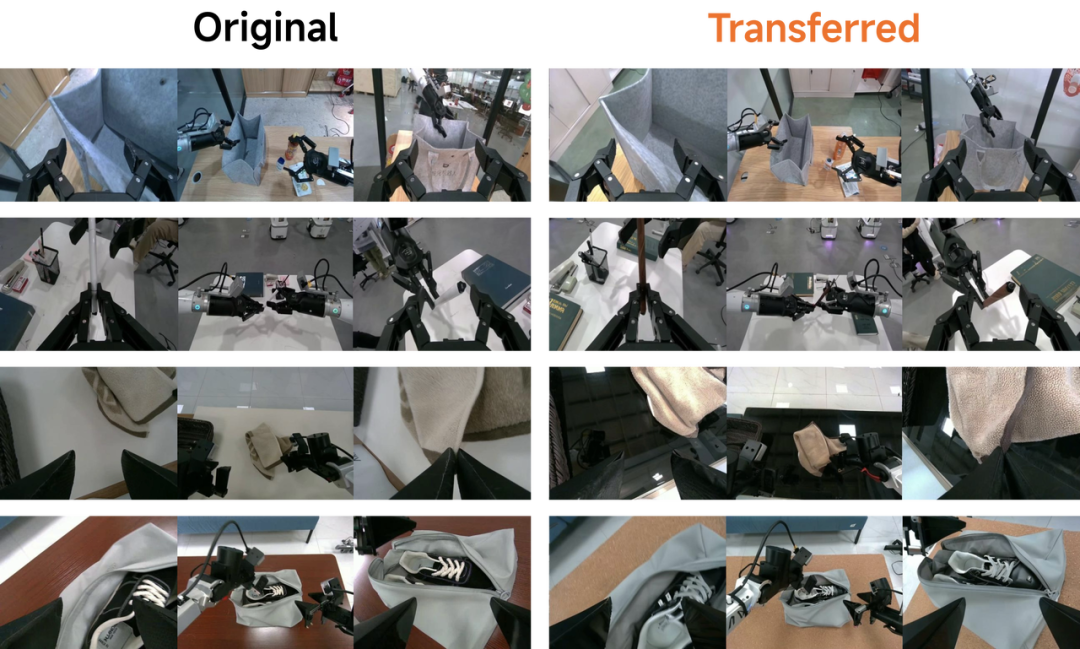
One model, three breakthroughs: unified, controllable, efficient
Xiaomi-Robotics-U0 is the first unified generative model for embodied intelligence. It folds four tasks into one framework: embodied scene generation, embodied transfer, robot-interaction video generation, and general text-to-image and image editing. Previously each task ran on its own model with its own data format, training method and inference chain, which raised cost and blocked scale.
U0 can take a captured arm trajectory and, while keeping the original motion relationships, swap the earphone’s look, adjust the lighting, change the desk background, or add a reflective object, with no fresh real-world capture. It can also generate new workbenches and object combinations from scratch, filling the rare, extreme or long-tail scenes robots seldom meet in reality.
To keep generated data usable for training, U0 uses five-dimensional decoupled control, splitting generation into workbench layout, foreground object, foreground clutter, lighting and background, each controllable in natural language while leaving the other structure and trajectory intact.
WorldArena number one, more controllable than GPT-Image-2.0
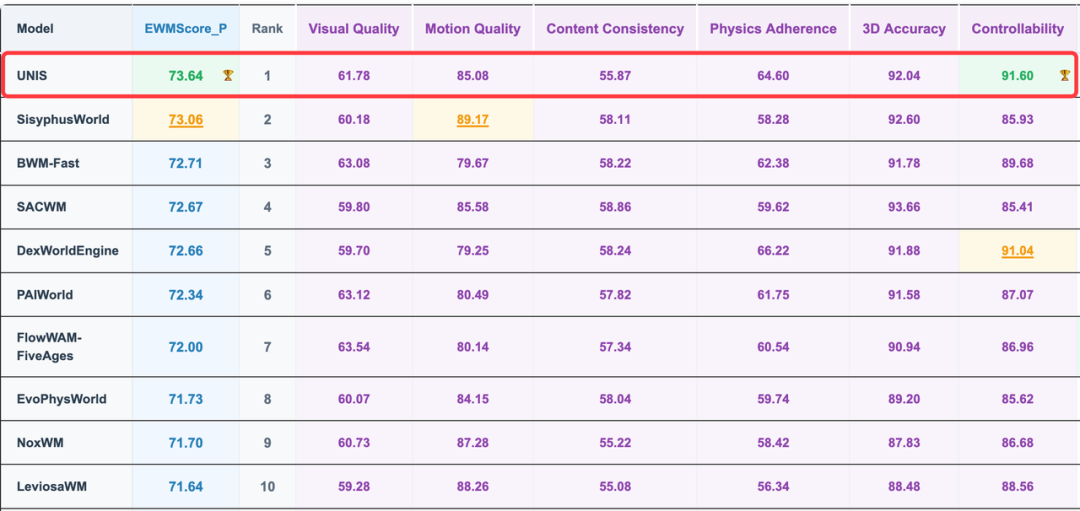
On the WorldArena benchmark built jointly by Tsinghua and Peking universities, U0 submitted under the anonymous code UNIS and ranked first overall among 126 models as of 15 July 2026, topping the instruction-following, interaction-quality and view-consistency sub-tests. In real-robot evaluation, policies trained on U0-augmented data improved average task completion by 26.3 per cent in out-of-distribution scenes such as unknown lighting and unfamiliar backgrounds, including fine operations like earphone packing, deformable tasks like towel folding, and long-horizon tasks like boxing.
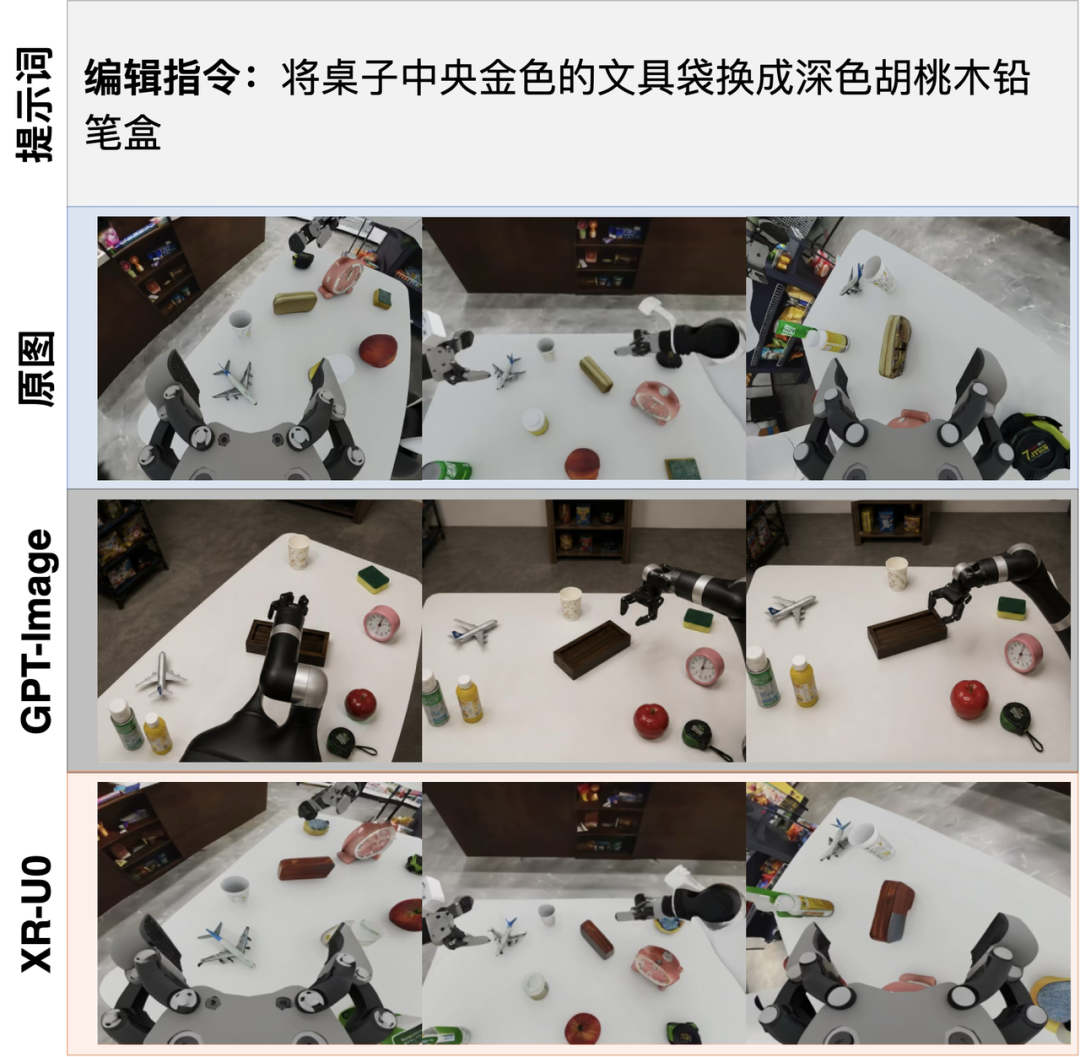
Against the top closed model GPT-Image-2.0, U0 held multi-view geometry and arm pose better. GPT-Image-2.0 can swap objects per text but sometimes shifts object position across cameras and deforms spatial structure, which breaks the strict geometric consistency embodied data requires.
A low-cost embodied data factory
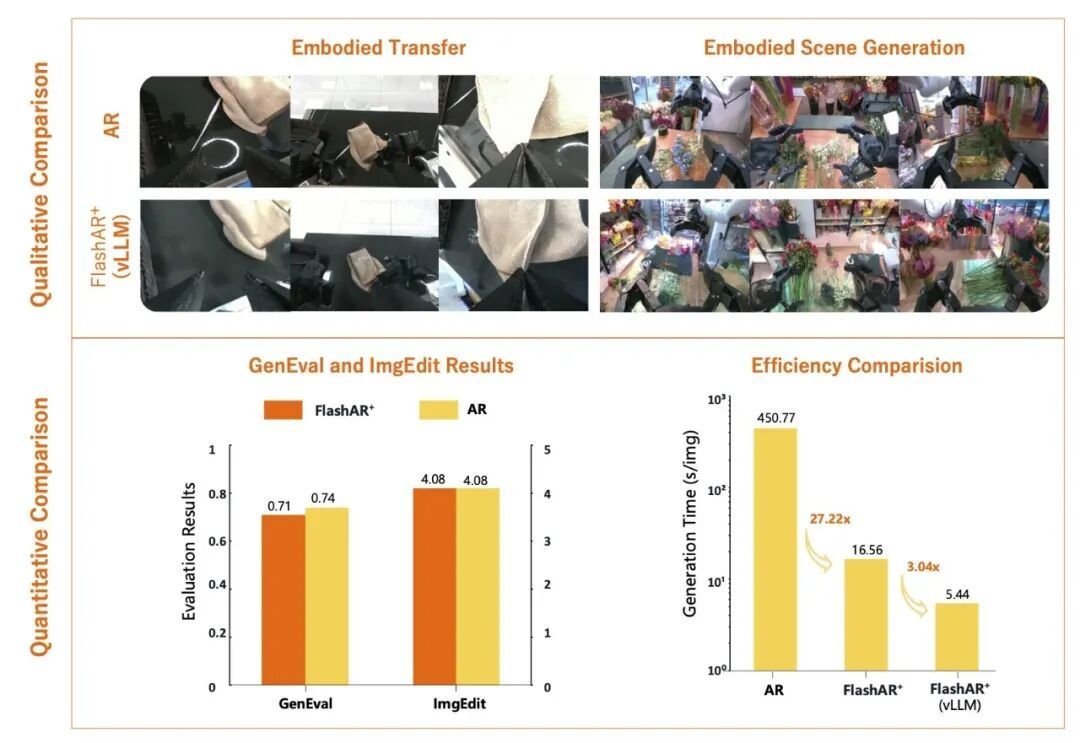
With the FlashAR+ acceleration scheme, U0 cuts single-sample generation at 1024 by 1024 resolution from 450.77 seconds to 5.44 seconds, an 82.9-fold speed-up, bringing the cost and time of mass-producing embodied data down to a level that supports large-scale use. Most companies are still pouring money into robot bodies, VLA models and real-world capture. Xiaomi has stepped earlier into the data-infrastructure layer, trying to solve the cost and long-tail coverage problem the whole industry faces.
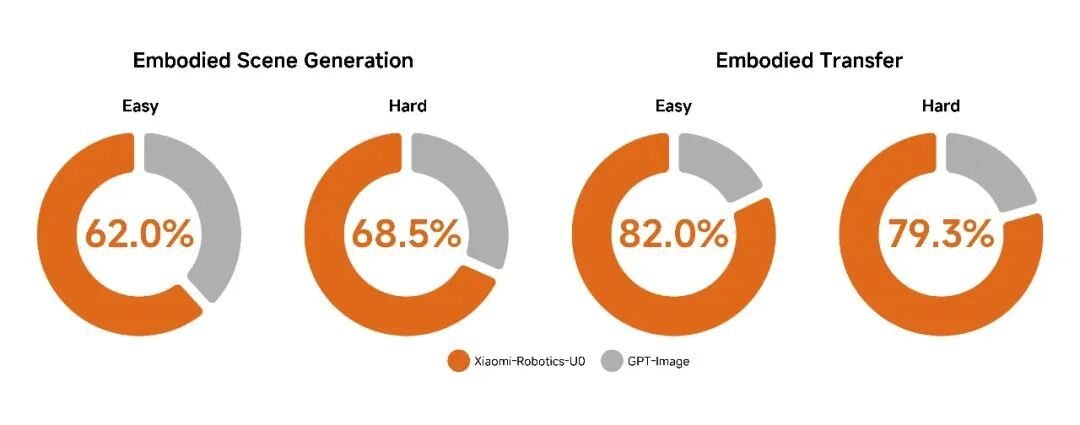
U0 is like a controllable, usable, low-cost embodied data factory. Real capture stays irreplaceable, and generative models must keep calibrating against it, but one real data point no longer maps to one fixed scene. It can spread across environments, objects and visual conditions into many training samples, giving the industry a base for larger data scale, better generalisation and ultimately robotic deployment at volume.
More from the original report
Editor’s note: This is an adapted translation of the original LeiPhone report. It has been trimmed and restructured for readability for an international business audience.