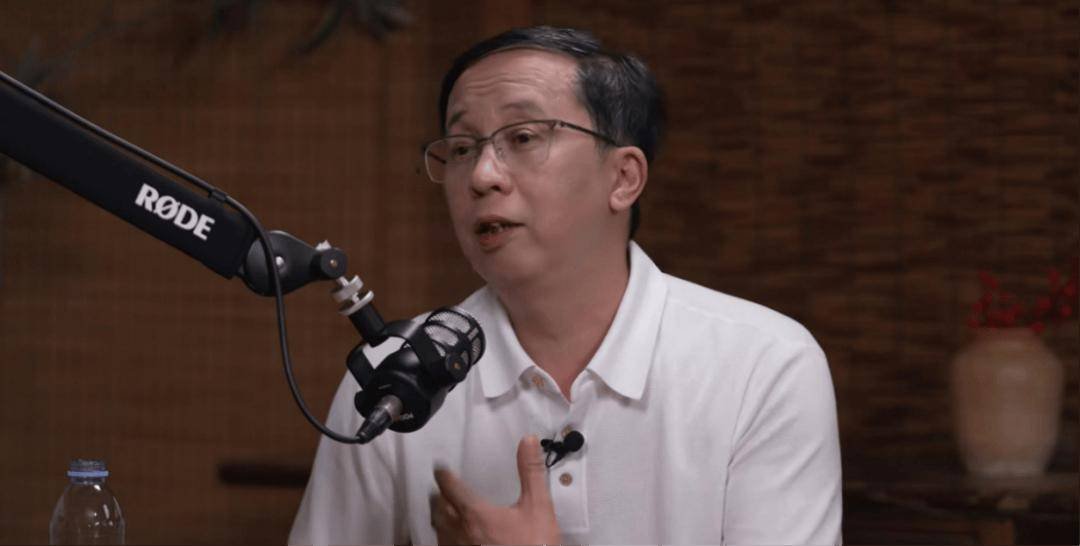
On 25 July, Huawei Fellow and chief semiconductor scientist Liao Heng gave a rare public interview lasting nearly five hours, walking from 30 years of chip history to how Ascend climbed out of its post-2020 low, and openly praised DeepSeek founder Liang Wenfeng for consciously choosing a higher-complexity, harder-to-converge algorithm. ‘That is the value of a forerunner,’ he said.
The forerunner’s bet
Liao frames the past 30 years as two vertical lines, the processor line from CPU to AI and the connectivity line from telephone to mobile network, with a counter-intuitive proposition: the more successful and monopolised the application layer, the more the underlying chip withers, because a dominant customer sets direction and a chip takes about three years from definition to deployment, a four-year calendar gap. He argues Moore’s law stalled on economics at 7 or 16 nanometres and that we should measure chips in atoms, time and energy rather than nanometres, since resistance worsens while capacitance barely improves.
An 18-layer pagoda
Liao describes the semiconductor chain as an 18-layer pagoda, against Jensen Huang’s five-layer cake: applications at the top, algorithms and system software below, chip architecture around layer seven, down to process, devices, equipment and ore at the base. The scarce skill is the person who can thread multiple layers vertically. On Ascend, after the supply cut, he says the team turned an ‘impossible’ problem into 10, then 100, then 1,000 concrete physics, chemistry and maths problems, and from day one refused to ‘copy the homework’, choosing a loose optical-interconnect design over Nvidia’s dense single-rack stacking.
Never copy the homework
The detail that explains the Liang Wenfeng praise: Ascend’s vector-to-matrix compute ratio is 8 to 1, while Nvidia’s Tensor core is 32 to 1. Liao’s analogy is an apartment versus a villa, scarce space forces efficiency, and DeepSeek’s sparse activation and long-sequence compression happen to match Huawei’s 8-to-1 chip. It is a rare public homage from Huawei’s chip chief to a rival lab, and a clear signal that China’s compute strategy is being built around algorithmic frugality, not brute density.
Read the original report (Sohu IT)
Translated and adapted from Sohu IT (it.sohu.com).