At the 2026 APEC discussions on embodied intelligence, two of the speakers were Wang Xingxing, founder and chief executive of Unitree, and Zhou Jian, founder, chairman and chief executive of UBTECH. UBTECH is headquartered in Shenzhen and listed, and it is a useful measure of where Chinese robotics stands.
Zhou said that industrial scale for humanoids still requires a working chain from research and development to mass production and real use. China’s embodied intelligence sector has a structural contradiction: single-point capabilities are improving fast, but research, manufacturing and deployment do not yet drive one another in a loop.
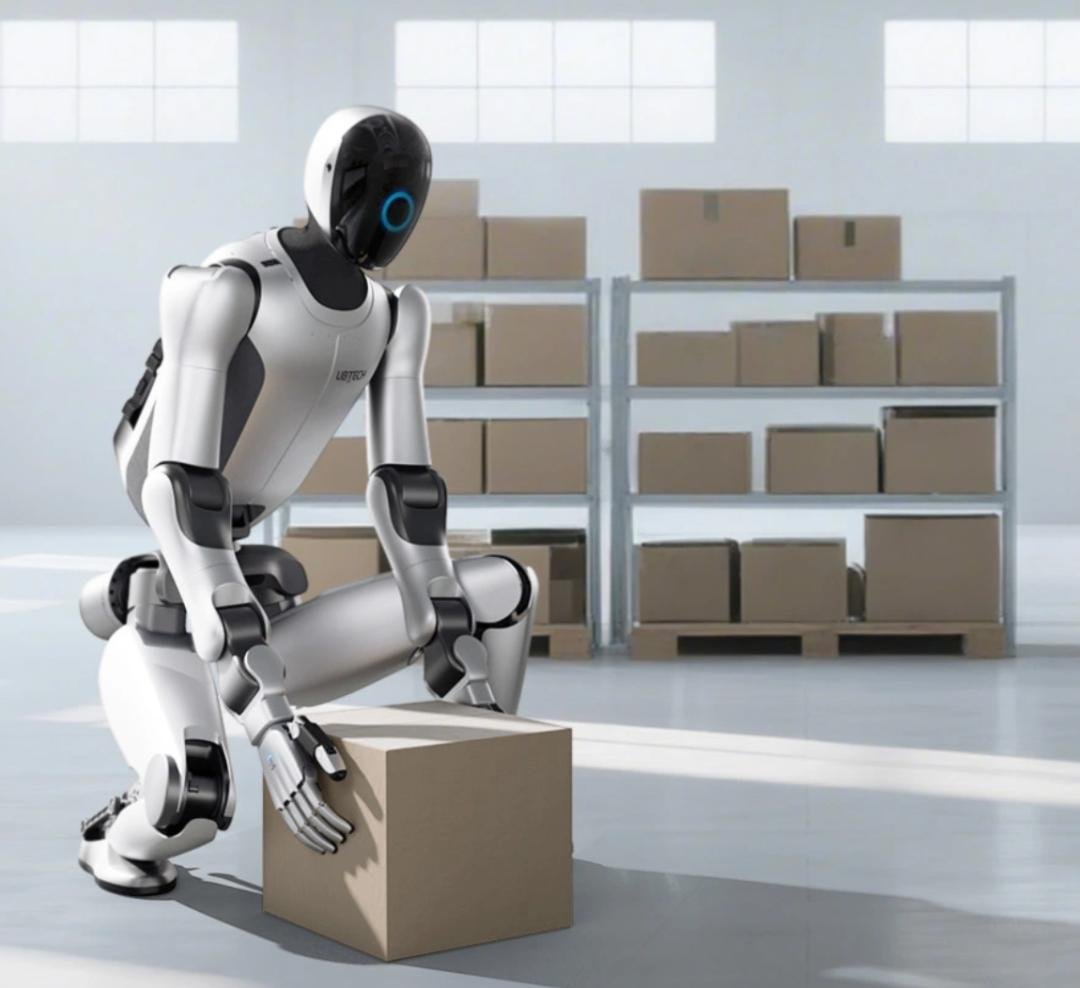
UBTECH has been closing that gap with a run of large orders.
A dealer network, not a living room
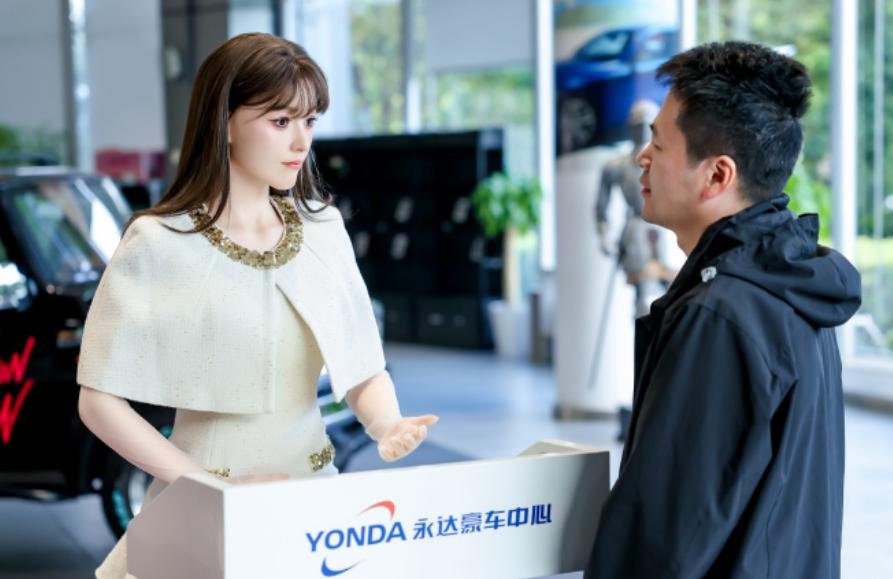
On 11 November, UBTECH announced that Yongda Automobile, a leading luxury car dealer in China, would buy 400 U1 Pro humanoid robots, with delivery planned before year end. It was the first bulk commercial order for the U1 series since its launch in June, and it marked a move from exhibition piece to business-to-business procurement.
What does a car dealer want with robots? The accompanying images show them working as sales assistants.
UBTECH’s market capitalisation rose that day, then gave back the whole gain the next. By 19 November it stood at about HKD 33.1 billion. With similar first-half revenue to Unitree, its market value was only 14 per cent of Unitree’s. The market did not read the order as good news, largely because it followed the same pattern as before: rely on distribution channels and target business customers.
That pattern is familiar. On 15 July the company placed U1 robots in 4S dealerships of Bosch Group, Mercedes-Benz’s strategic partner in China, for display and simple sales assistance. On 9 November it signed a three-year deal with China Telecom’s Tianyi terminal arm for 100,000 units. To sell robots, UBTECH is leaning hard on channel partners.
A company spokesperson said delivery into dealerships and robot parks lets consumers encounter and try the product in real settings, which may convert into household purchases later.
That is not what was promised at launch. In June, UBTECH positioned the U1 series as a robot for family emotional companionship, announced more than 13,361 orders across all channels, and had Zhou promise 10,000 deliveries that year. The claim drew wide attention: was romance with a robot about to arrive?
It was not. At the August results call, chief financial officer Zhang Ju cut the realistic 2026 delivery figure to 1,500 to 2,000 units, an 80 per cent reduction.
UBTECH blamed capacity. The head packs 19 degrees of freedom and two or three thousand components into a small space to make more than 30 micro-expressions. Silicone skin yields are low, eyebrows and lashes are implanted by hand, and the micro servos are non-standard with an unfinished supply chain. Zhou admitted that the Guangxi plant started two or three months late for natural reasons, beyond what the company had expected, so Shenzhen capacity was added urgently.
The order does not prove the home market
Even perfect capacity would not close the loop. These orders validate humanoids reaching end users through mature dealer networks, not humanoids entering households.
The product definition says as much. The U1 Pro does not do chores. It has bionic silicone skin, 88 degrees of freedom and more than 30 micro-expressions, but it cannot walk on its own, has no household functions, runs two to four hours per charge for conversation, and costs RMB 169,800, beyond an ordinary family’s reach.
At APEC, Zhou said a general humanoid with strong generalisation still needs time under current hardware and model conditions. Earlier this year he put a number on it: three to five years at best for emotional companionship, and seven to ten years for housework.
UBTECH is not alone. Robots currently entering homes, including Qiyuan’s Q1 and T1 and Noetix’s Xiaobumi, mostly sell companionship and emotional value. When people try mainstream small humanoids, the first question is what the machine actually does. After singing, dancing and chatting, the usual verdict is that it is a large toy.
UBTECH declined to disclose the commercial and household split of U1 deliveries, citing financial sensitivity. What supports the company today is factories. Industrial demand is clear, customers can pay, and the required robot form is relatively uniform. It is the most realistic path to revenue now.
Zhou’s logic is to refine technology, accumulate data and set standards in industry, then move into commercial and household scenes. The Walker series is the main product, and in the first half it entered several car plants for handling, quality inspection and assembly.
Unlike the broad embodied intelligence story, UBTECH’s industrial work is highly project-specific. In the first half of 2026, total revenue was RMB 1.269 billion, of which full-size embodied humanoids contributed RMB 590 million. Within that, about RMB 569 million came from custom robots and solutions for other industries, including projects with Airbus, BYD, Geely and Foxconn.
Supplying Airbus and winning leading carmaker orders proves the technology. The nature of the business also means slow money: hard to replicate, slow to sign and slow to recognise. Stay there too long and UBTECH is defined as a project integrator, with no right to a premium valuation.
The consumer market is the real prize, a vast space of hundreds of millions of households. The U1 series has not yet produced meaningful scale, but its strategic meaning runs deeper than a few extra industrial robots.
It opens a consumer category for UBTECH, and unlike Unitree or AgiBot, the company is taking a full-size bionic route. Even if the product is not the optimal answer, it owns part of the category definition. Later entrants must explain themselves against U1.
Unitree’s premium is not priced on robot dog sales but on expectations of general embodied intelligence. U1 may not make money, but as long as it exists UBTECH can still talk about homes, emotion and generality.
The next step is getting into homes sooner. The blocker is generalisation, or whether the embodied brain is smart enough to learn and decide on its own. UBTECH’s work on that brain is aimed mainly at industry. It developed and open-sourced Thinker, a hundred-billion-parameter embodied model it says ranks first on nine international benchmarks, alongside Thinker-VLA for millimetre-level loading, generalised grasping and dual-arm box handling, and Thinker-WM, a world model for industrial scenes.
For the household, UBTECH is plainly not ready. Zhou’s horizon is another three to five years of development before the company can emerge from industrial scenes.
Editor’s note: This is an adapted translation of the original 36Kr report. It has been trimmed and restructured for readability for an international business audience. The full original (in Chinese) is at https://36kr.com/p/4076727621457793.