OpenAI’s top model, released after a 75-day gap, drew a fierce reaction from developers. Some called it barely usable. Others complained it was over-cautious and hard to steer. At least one drew a cartoon mocking its defensive tone.
Tibo, a well-known commentator, said on X that he had already received feedback on the model’s language style and that OpenAI was working to improve it. In the replies, some users said they were switching to Gemini.
Google has been moving quickly. On 18 November US time it released Gemini 4 Neon, the fourth Gemini 4 model in under 50 days, following Argon in late September, Carbon in late October and Hydrogen just six days earlier. The company’s own tests put Neon ahead of Opus 5.5 and the newly released GPT-6.2 Sol across coding, office automation, scientific reasoning, multimodal understanding and long-context work.
A world model shipped alongside the language model
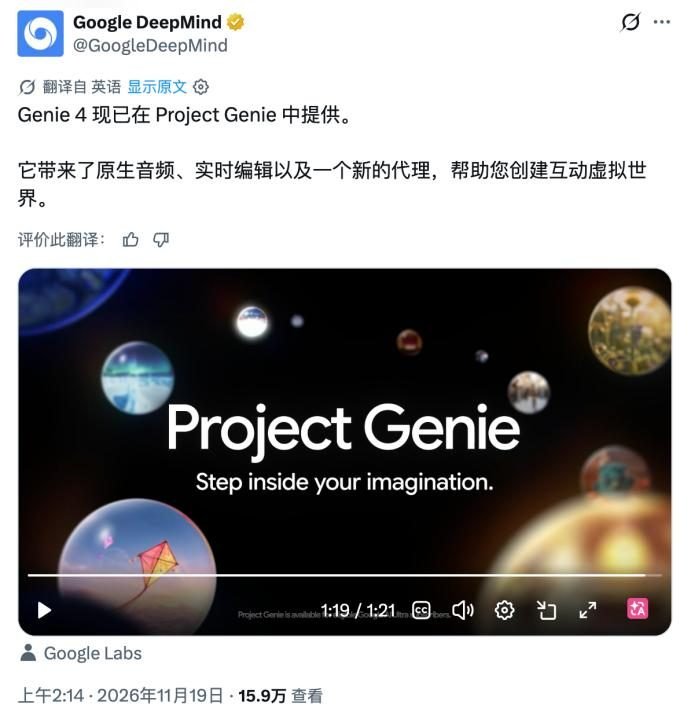
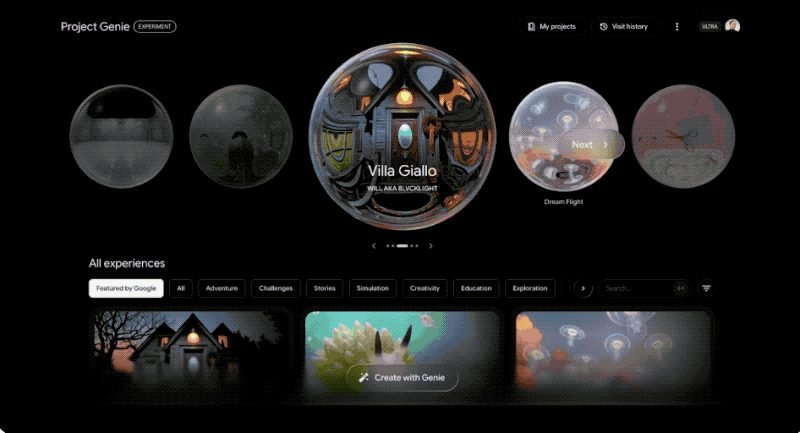
The same day, Google opened its Genie 4 world model to some paying users. They can generate and enter virtual worlds directly in a browser, change the weather, add characters, and watch scenes and sound respond.
Before Neon’s release, members of Google’s AI team joked in the community that the rush to ship every product was to free up time to play GTA 6. After launch, an executive reminded users to try it before GTA 6 arrived. The joke works only if the team believes the model can hold attention against a game everyone wants to play.
The cadence is the point. Four frontier models in 50 days is not a single product bet. It is a release engine, and it forces rivals to answer on timing as well as quality. Google is competing on how fast it can turn research into something developers can call, not only on who wins a benchmark.
Developers comparing note for note will find reasons to argue about any single release. The harder question is what a 50-day cycle does to a lab’s ability to iterate in public and absorb feedback before the next model lands.
Google is treating model releases like software sprints, and the competitors are being asked to match the clock.
Editor’s note: This is an adapted translation of the original 36Kr report. It has been trimmed and restructured for readability for an international business audience. The full original (in Chinese) is at https://36kr.com/p/4077865913407366.