On 20 September, at the 16th quarterly roundtable for small and medium enterprises convened by the Ministry of Industry and Information Technology (MIIT) and chaired by Minister Li Lecheng, Guo YanDong, founder and chief executive of Shenzhen embodied-intelligence company Zhifang, was among eight invited founders from fields including artificial intelligence, commercial space and quantum technology. Zhifang was the only robotics company at the table, and the only firm from Guangdong province.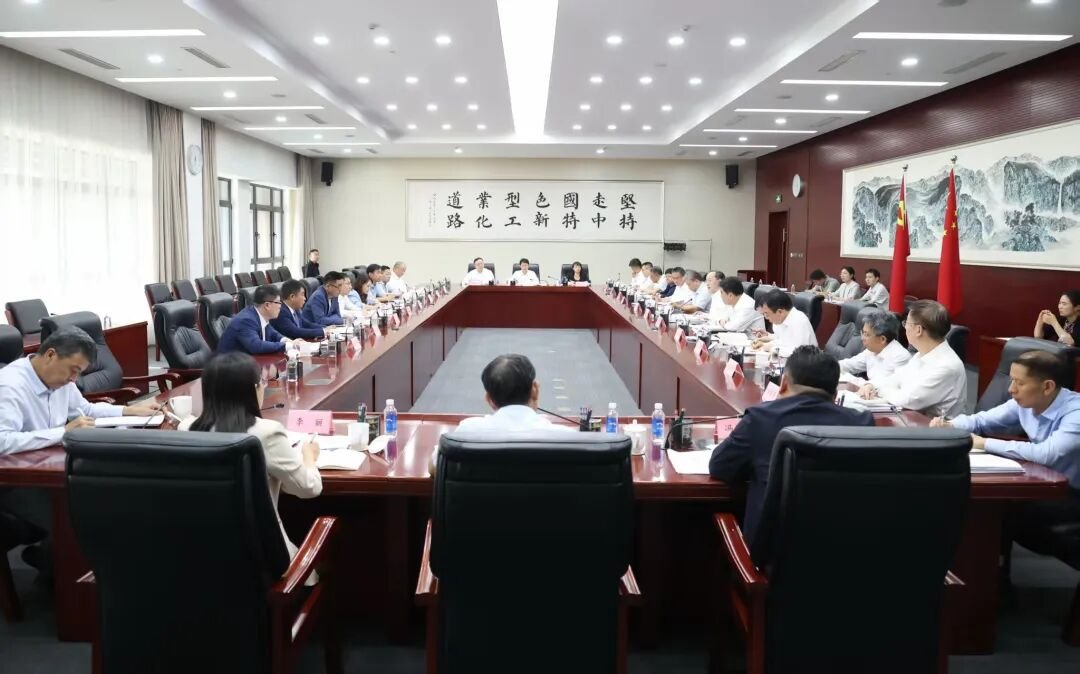
As a representative of the robotics industry and of Guangdong, Guo shared views on the scaled application of general-purpose embodied robots, arguing that the sector is moving from ‘can demo’ to ‘can work’. As robots leave the exhibition stand for real environments, he said, those environments become the main driver of continuous iteration and industrial scale.
What Zhifang is, and why Beijing noticed
Founded in April 2023, Zhifang is an AGI-native productivity robotics company built around its self-developed embodied large model, AlphaBrain, with the AlphaBot series as its hardware platform. Its strategy links model, hardware and scenario to push general-purpose robots into scale deployment.
AlphaBrain keeps iterating, and AlphaBot is designed front-to-back for mass production. The products have entered automotive manufacturing, semiconductors, biotech, public services and new retail, forming what the company calls a ‘data times business’ dual loop. Zhifang has been certified as a national high-tech enterprise and a specialised SME, carries an MIIT ‘open-call’ project, and won an award in China’s Innovation and Entrepreneurship Competition.
The policy signal
Minister Li told the meeting to improve the gradient cultivation system for quality firms, proactively surface promising early-stage companies, and shift support from ‘waiting for applications’ to ‘coming to the door’. He urged continued R&D investment, attacks on key core technologies, and a committed specialised-SME path.
Guo recommended deeper matching of real scenarios, with human-robot collaboration as a priority direction: robots should take dangerous, highly repetitive and labour-short tasks, lifting overall productivity through ‘one plus one is greater than two’ rather than pursuing full replacement of human labour.
The invite matters because it pulls a front-line robotics practice into a national conversation about cultivating quality SMEs. From factory to service scene, from lab to worksite, the industry is shifting from showing capability to creating value. Zhifang’s seat at the table is one marker of where Shenzhen’s robotics identity now sits in Beijing’s industrial plans.
Editor’s note: This is an adapted translation of the original Shenzhen News report. It has been trimmed and restructured for readability for an international business audience. The full original (in Chinese) is at https://www.sznews.com/news/content/2026-09/22/content_32177604.htm.