Lingyi iTech filed its third-quarter report on 29 October, and the headline numbers are the sort that get skimmed. Revenue of RMB 15.522 billion, up 11.15 per cent. Net profit attributable to shareholders of RMB 1.153 billion, up 14.00 per cent. Non-recurring net profit of RMB 1.058 billion, up 17.88 per cent. All three are quarterly records for the company.
Nine-month revenue reached RMB 40.671 billion, with net profit of RMB 1.917 billion and non-recurring net profit of RMB 1.447 billion.
The interesting line is not in the headline at all. It is in what the company says about robots.
A precision manufacturer that found a new customer
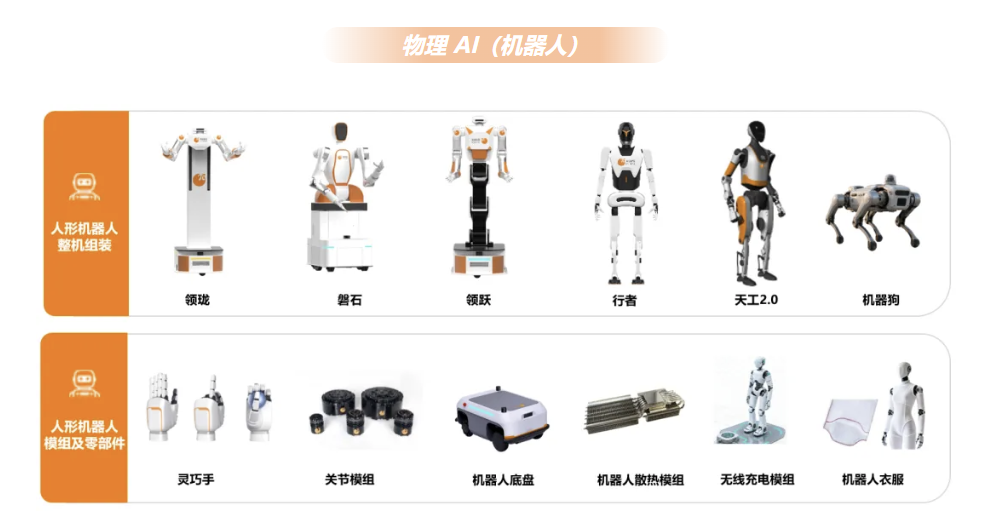
Lingyi is one of the world’s larger precision manufacturing groups, with lines running across edge AI devices, robotics, automotive and low-altitude hardware. Its stated ambition in robotics is to become a three-in-one hardware manufacturer for embodied intelligence, supplying terminal makers from component to finished unit.
The component list is concrete: servo motors, reducers, drivers and motion controllers, which is the actuation layer of a humanoid. On top of that the company supplies head assemblies, dexterous hand assemblies, limb assemblies, and the high-power charging and thermal solutions that keep a machine running through a shift.
Assembly capacity is spread across Beijing, Chengdu, Zhengzhou, Dongguan and sites overseas. The company says it has already moved into volume delivery of core humanoid components, joint modules and complete units.
The order of operations is the point
Most of the humanoid sector is still selling a schedule. A machine is promised for 2027, a production line is designed for a million units a year, and the revenue arrives long after the announcement.
Lingyi is selling parts now. That inverts the risk. A component supplier is paid on units shipped, not on prototypes demonstrated, and it does not carry the model risk that has repriced almost every humanoid listing in China this year. It also means the company’s robot revenue is already embedded in a business that would be profitable without robots at all.
There is a second layer the company is building. Lingyi says it is assembling an embodied data asset platform that pulls real-machine data, simulation data and internet data into one pipeline, so industrial scenarios can be turned into training material rather than left as one-off demonstrations.
It has also built working cells for its own use, running what it describes as multiple varieties of industrial embodied robots in loading and unloading, and in automated optical inspection, which is one of the harder visual tasks on a production line.
What this tells you about the sector
The Chinese humanoid trade has spent the year arguing about brains. Model releases, VLA papers and data pipelines have absorbed most of the attention and most of the capital.
Meanwhile the parts business has been quietly converting. A company that already makes hinges for phones and thermal modules for laptops finds that a humanoid’s joint module is a familiar problem: precision metal, tolerance control, and a customer who will audit the process rather than the pitch.
The constraint on humanoid output in 2027 will not be whether a model can fold laundry. It will be whether someone can deliver 40,000 joint modules a quarter to a tolerance and a price. That is a manufacturing question, and it has manufacturers answering it.
Editor’s note: This is an adapted translation of the original Gasgoo report. It has been trimmed and restructured for readability for an international business audience. The full original (in Chinese) is at https://www.gasgoo.com/apps/e060bad9eca91db7f01403fc7120041f/robot/news/70476385-1/.