Geek+ has announced a plan it calls the 24/7 autonomous intelligent warehouse, setting out the next stage of its development and the route it intends to take: deeper embodied intelligence and whole-warehouse intelligence, delivered through end-to-end robotic solutions and a warehouse brain, moving warehouses towards round-the-clock unmanned operation that improves itself.
The company frames the target as infrastructure rather than equipment. On its account, an autonomous warehouse becomes a layer of productive capacity that supports commerce and public services, built on the commercial base it has already established worldwide.
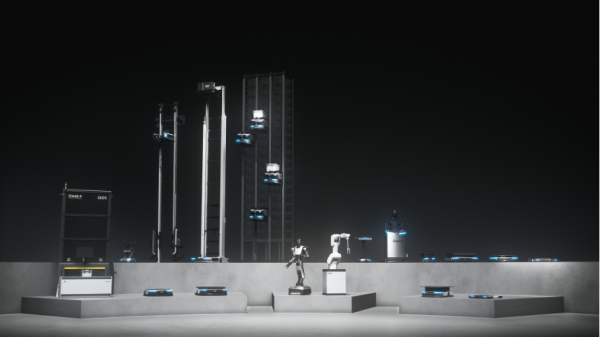
What breaks at three in the morning
A 24/7 autonomous warehouse removes the dependence on human shifts and on-site supervision. Whether it is night, weekend or peak season, the warehouse keeps answering demand, which raises fulfilment throughput, supply-chain response speed and operational resilience while relieving the pressure of night hiring and floor management.
Running unmanned around the clock sets a much higher technical bar. Real warehouses are messy. Long-tail scenarios and unknown exceptions demand scene generalisation, multimodal perception, physical world modelling and long-horizon task planning.
Large robot fleets, automation equipment and business processes are coupled dynamically, which tests real-time decision-making, adaptive scheduling and global optimisation. The deeper problem is resilience: tolerating faults, recovering autonomously and transferring knowledge across sites so the system keeps improving over years of operation.
Three foundations the company says it already has
Geek+ argues the plan builds on three long-standing strengths rather than starting from zero: end-to-end robotic solutions that cover a wide range of warehouse tasks and processes with embodied intelligence built in, a warehouse brain software platform that coordinates the whole building, and a delivery and local operations organisation proven in global markets.
The end-to-end layer extends the physical reach of the robots. A warehouse only becomes autonomous when robots cover enough of the physical work chain, not just the aisles that are easy to map.
The software layer handles the part that no single robot can: deciding what the fleet should do next when a conveyor jams, an order changes or a charging bay goes offline.
The delivery layer is the commercial test. Autonomous operation has to survive contact with real customers in real buildings, and Geek+ has spent eleven years doing exactly that, in the words of founder and chief executive Zheng Yong.
What to watch
The company points to its Gravity Control work as evidence that generalisation is improving, citing a rise in success rates on out-of-distribution tasks from 5 per cent to 95 per cent in its own testing. That is a laboratory claim, and the useful question is what happens on a customer floor in week forty.
Warehouse automation has always sold labour savings per hour. A fully autonomous site sells something harder to price, which is the removal of the shift structure itself. If that works, the sales conversation moves from headcount to capex, and the customer list moves from early adopters to operators who would never have bought robots at all.
Editor’s note: This is an adapted translation of the original OFweek report. It has been trimmed and restructured for readability for an international business audience. The full original (in Chinese) is at https://robot.ofweek.com/2026-11/ART-8321205-8460-30710008.html.