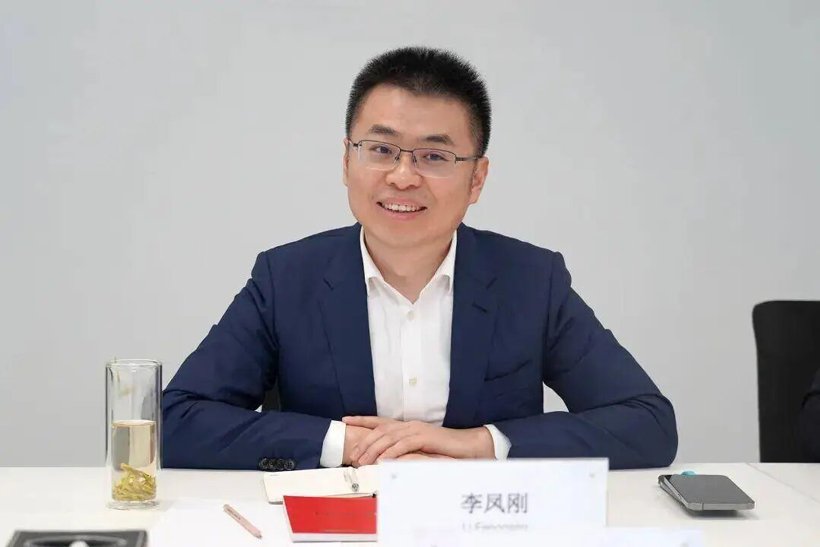
On 1 November Li Fenggang, general manager of Beijing Hyundai, chose to leave after a year in the job. It was one month after the launch of the brand’s strategic electric model.
For Beijing Hyundai, executive turnover is unremarkable when the Chinese market moves this fast. But across the joint-venture sector, his departure poses a question the industry has been avoiding.
The thesis everyone adopted
The accepted view is that China’s electrification taught the global car industry a lesson, that many foreign carmakers have been pushed out, and that joint ventures can only survive by abandoning the old playbook and handing decision-making to the Chinese side.
Foreign groups have discussed the case for split control for years. Volkswagen, Toyota and General Motors all debated it. Handing over a business you have run for decades is uncomfortable, but with share falling and technology advantages evaporating, no one could claim to have a route through on their own terms.
From 2025 the remaining joint ventures concluded together. A wave of locally developed electric cars arrived to move them onto China’s fast lane. Toyota’s bZ3X and Nissan’s N7 and N6 produced early results and lifted confidence across the camp.
A year ago Li replaced a Korean executive on the same reasoning. If a Chinese boss could give one brand a future, the world’s third-largest carmaker could copy the formula exactly.
Beijing Hyundai as the test case
Beijing Hyundai was founded on 18 October 2002 and quickly became a pillar of the local industry. Elantra, Sonata and Tucson were the names that carried Chinese car ownership from a planned system into a market one.
By 2023 the advantages had eroded, and the company knew it. It sold idle plants and cut dealer numbers, moves that were not cyclical housekeeping. Before Li, Beijing Hyundai had already tried strong-willed Korean managers. Like other Japanese and Korean joint ventures, it rotated its top executive roughly every year from 2013, which meant nobody stayed long enough to read the market.
Under Li the company launched the EO and then the Inokar V. Both were priced for Chinese value expectations rather than for margin, and neither changed the trajectory. Only one locally developed joint-venture model, Toyota’s bZ3X, has broken through.
Audi tries the same medicine
In 2026 more joint ventures have announced separate Chinese R&D teams and Chinese senior hires. After BMW and Mercedes-Benz, Audi recruited Zhang Jun from Chery as president of Audi China from 1 November, the first Chinese executive to hold that role in forty years of Audi in China.
Volkswagen Anhui also named Liu Zhanshu, its chief operating officer, as chief executive from 1 July.
The logic is that Chinese leadership makes a joint venture behave more like a Chinese carmaker, with thinking that matches current consumer trends. The problem is that the competitors causing the damage are all Chinese carmakers, so the joint venture now starts from the same line as they do.
The market underneath
The market offers no help. Passenger car retail was 1.618 million in September, down 28.0 per cent year on year, and 13.334 million for the first nine months, down 21.7 per cent. A decline of about 20 per cent for the year, roughly five million vehicles, now looks settled.
Volkswagen’s two Chinese joint ventures have pushed hard in the second half, launching electric models priced to undercut their own Lavida and Tayron combustion cars. Dealers supported them as they supported the bZ3X last year. That is a strategy working at the level of survival, not a comeback, because the price advantage now sits with the joint venture rather than the local brand.
Whether Li’s exit means Hyundai concluded that a Chinese team could not fix it either is unknown. What is clear is that for any joint venture running a fully Chinese playbook, the arrangement is temporary, and the purpose is profit rather than representation. A Chinese management team has not been given a showcase, it has been given a harder job than the local competitors it now resembles.
Editor’s note: This is an adapted translation of the original Gasgoo report. It has been trimmed and restructured for readability for an international business audience. The full original (in Chinese) is at https://auto.gasgoo.com/news/202611/3I70476723C108.shtml.