Every industry that wants to be priced needs a unit. Steam had horsepower. Electricity had the kilowatt hour. Software has the token. Robotics has had nothing, which is why buyers cannot compare quotes, lenders cannot model returns and founders cannot prove that a machine doing a dance is worth more than a machine standing still.
AgiBot used its A.I. DAY event in Shanghai on 29 October to propose one. The company calls it a Worken, defined as active robots multiplied by autonomous working hours multiplied by an output efficiency ratio. Each of the three terms is designed to remove a specific lie from the sales deck.
How the arithmetic punishes theatre
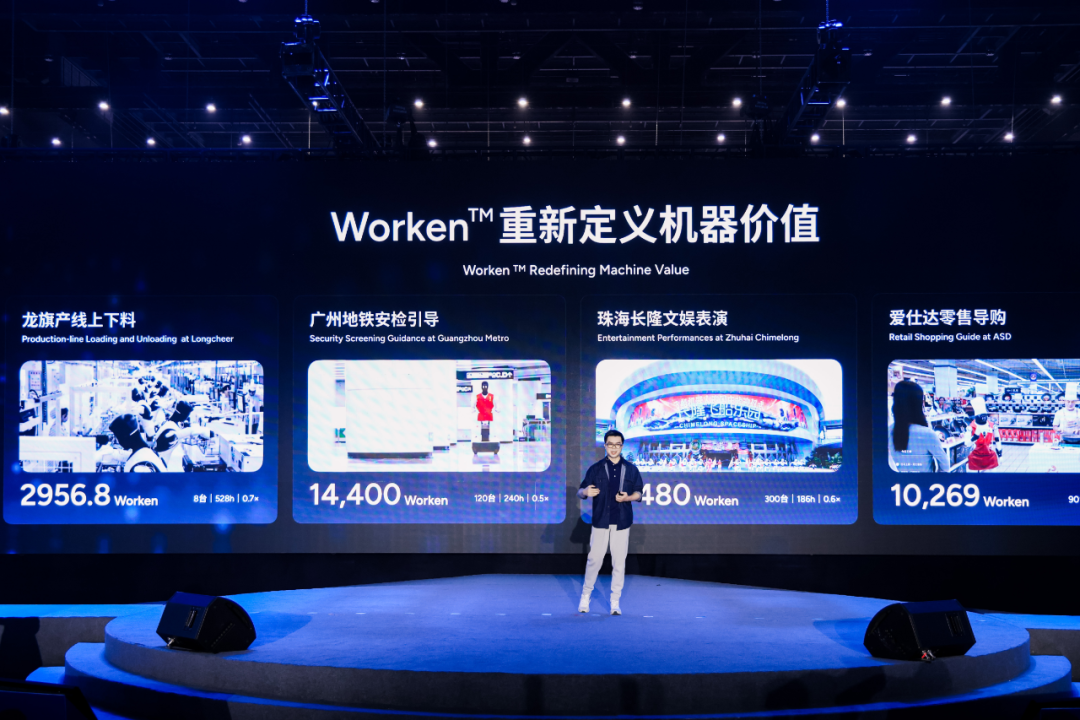
A machine that is down, offline or in maintenance is not active, so it stops counting. Time spent under teleoperation does not count as autonomous work, which means the robot that looks busy on camera while three people hold controllers behind the curtain scores zero. And output is normalised against a standard worker at 1.0, so a machine that is slower than the person it replaced fails the test outright.
Founder Peng Zhihui reached for the historical parallel himself. Tokens measure how much a machine thinks, he said. Worken measures how much a machine acts. The framing is convenient for a company that sells robots, but the underlying point is harder to dismiss. Without a unit, physical AI has no way to convert capability into a receivable.
The company did not stop at a definition. It published a live dashboard during the keynote showing accumulated hours for robots loading production lines at Longcheer, serving guests at a Shangri-La hotel and working visitor attractions at Chimelong. It also got the metric written into the 2026 Embodied Intelligence Industry Innovation Report compiled with the China Academy of Information and Communications Technology, which is the kind of endorsement that matters more in Beijing than a product launch.
The numbers behind the claim
AgiBot shipped 9,700 units in the first half of 2026, a share above 43 per cent of global volume on its own count. The 20,000th unit came off the line in September, six months after the 10,000th. First-half revenue was close to RMB 2 billion. Partner Wang Chuang attributed the ramp to a fully localised component chain, a supply circle measured in half-hours and 92 automotive-grade production tests.
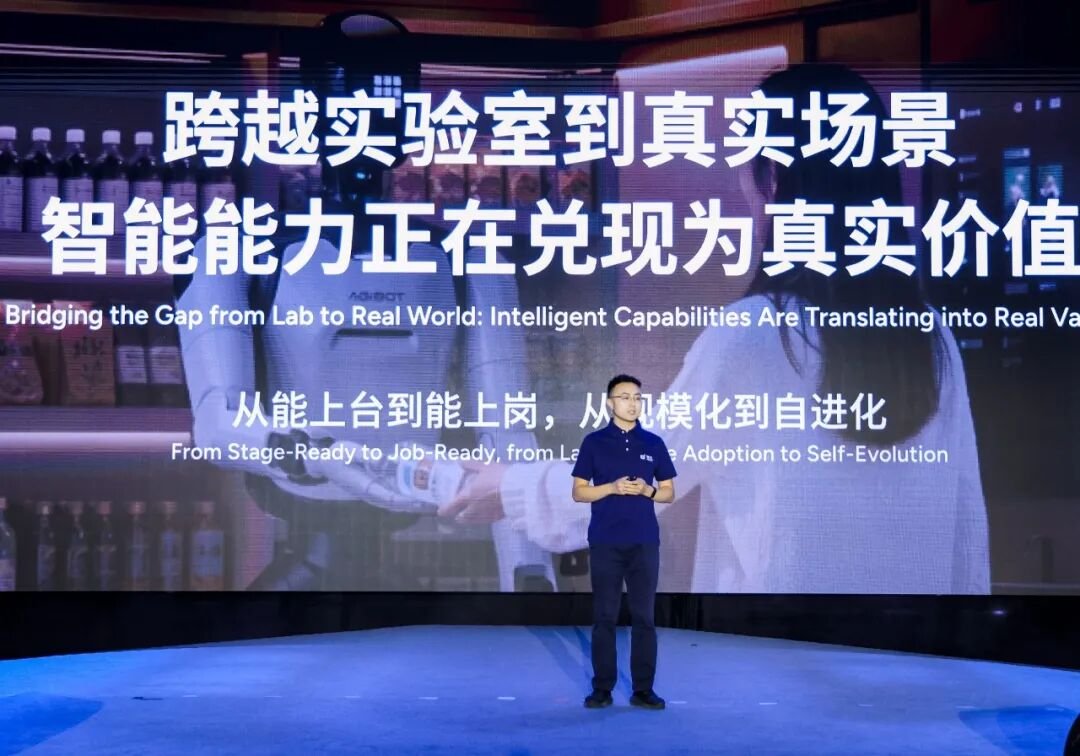
The Longcheer line is the reference case. One robot has been running there for over seven months. A six-day live stream logged more than 60 hours of operation, 17,625 laptops processed, 64,828 task executions and a cycle time of 22.5 seconds, roughly what a human operator achieves. Across sites, the robot-to-maintenance-technician ratio has fallen from 1:1 to 10:1, with a target of 30:1. That ratio, not the shipment count, is the number that decides whether deployment is a business or a portfolio of subsidised custom projects.
Deployment breadth has widened in parallel. Chimelong’s Hengqin resort runs close to 500 units and reports visitor traffic up nearly 40 per cent. Guangzhou Metro has more than 120 robots on inspection duty. A retail site in Chengdu’s Kuanzhai Alley runs the first vision-language-action biped doing shop-floor retail work, at 98 per cent accuracy.
The defensive argument
The obvious objection is that general models will swallow the intelligence layer, leaving body makers as contract manufacturers. Partner Yao Maoqing answered it with the least defensive line of the event: if the industry is going to be overrun by AI, we would rather be on the AI side.
Peng offered two futures instead of one rebuttal. In the first, frontier models become strong and open, everyone has access to the same intelligence, and competition shifts to who can put that intelligence into the physical world cheaply and reliably. In the second, models stay dependent on body-specific and site-specific data, no universal model appears, and whoever holds large-scale real deployment wins. Both endings favour the company with installations.
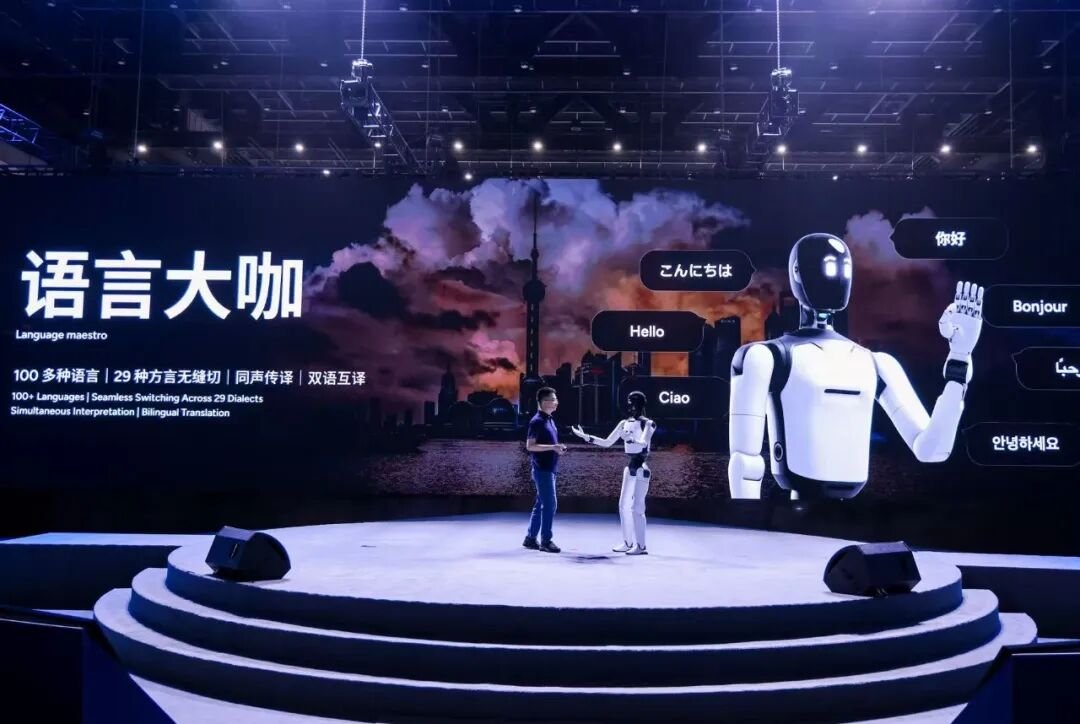
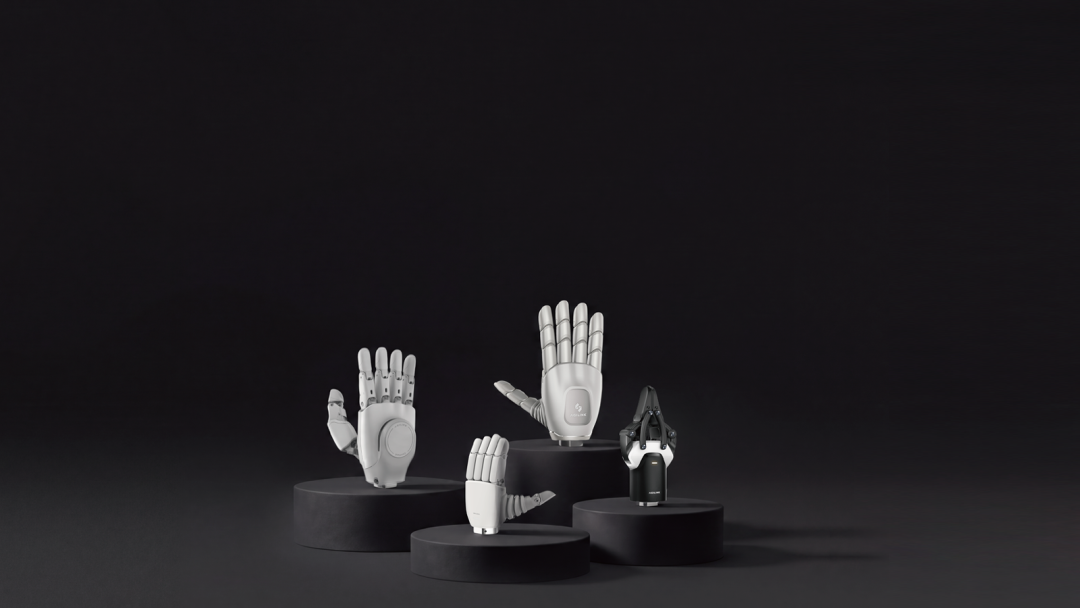
That argument holds only if the installations keep running. AgiBot’s answer is engineering detail: a motion engine with closed-loop recovery so a fall is not a terminal event, an interaction model that responds in 400 milliseconds at best and 600 on average across more than 100 languages and 29 dialects, liquid-cooled joints rated at seven times the cooling of air and three times the sustained torque, and a 50-kilogram dual-arm payload on the heavy platform. It has also promised to open-source its embodied operating system by the end of the year, with 80,000 developers already attached to its ecosystem programme.
What makes this more than marketing is the admission that opens it. China will build more than 100,000 robot units this year, and the number doing work that would otherwise have been done by a person is small. A company that says that out loud and then hands the market a stopwatch has at least picked the right thing to be judged on. The unit will be adopted or it will not, and both outcomes are informative.
Editor’s note: This is an adapted translation of the original Leiphone report. It has been trimmed and restructured for readability for an international business audience. The full original (in Chinese) is at https://www.leiphone.com/category/ai/d2myOaWdKKFW23lm.html.